
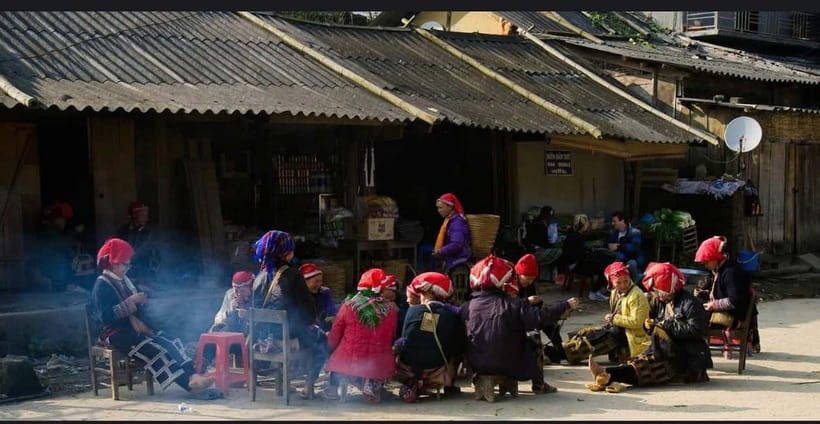
Reviewed · SAPA TREKKING & HOMESTAYS
Sapa: Ta Phin Village Trek & Red Dao Herbal Bath
A warm wooden tub ends this mountain day. You’ll walk between villages of the Black H’mong and Red Dao, led by guides like Su who can explain daily life clearly, then finish with a Red Dao herbal bath in a wooden tub. I love that this tour feels small group, not mass tourism, and that the cultural stops actually match what you see on the path. One thing to consider: the trek still covers about 12–14 km, so you need decent shoes and basic stamina.
My favorite part is the village-to-village pace. You start near Nhà Thờ Đá Sapa, then head to Suoi Ho, a quieter Black H’mong community where you can learn how farming and animal husbandry shape everyday routines. After that, you move on through Ma Tra and Ta Phin, where you’ll get a look at village customs, school life or local crafts, and Red Dao traditions tied to embroidery and herbal medicine.
The possible downside is the timing and the heat of the bath. You’re out for a full morning through early afternoon, and the herbal soak can be very hot, which can feel intense if you are sensitive to heat. Also, this is not listed as suitable for young kids under 6 or people with mobility impairments.
In This Review
- Key moments you’ll remember from the Ta Phin trek
- From Nhà Thờ Đá Sapa to Suoi Ho: the day starts with real footpath time
- Walking through rice and pine, with Ma Tra adding craft and community detail
- Ta Phin Village: where Red Dao embroidery and herbal medicine become personal
- Lunch in a homestay setting: local flavors, different dining styles
- The Red Dao herbal bath: hot, aromatic, and a little intimidating at first
- Pace, distance, timing, and what “easy to moderate” means on the ground
- Price and value: about $26 for guide, lunch, and herbal therapy
- Who should book this Ta Phin trek, and who might want a different plan
- Should you book this Ta Phin Village Trek and Red Dao Herbal Bath?
- FAQ
- Where do we meet for the Ta Phin Village trek?
- How long is the tour and how much do we walk?
- Is lunch included, and where is it served?
- What is included in the price?
- What languages are the guides speaking?
- What is the Red Dao herbal bath like?
- What should I bring for the trek?
- Is this tour suitable for kids or mobility needs?
Key moments you’ll remember from the Ta Phin trek

- Suoi Ho and Ma Tra village visits focused on daily life, not check-the-box sights
- Ta Phin stop for Red Dao culture, including embroidery and herbal medicine traditions
- A hot herbal bath in a wooden tub made with aromatic medicinal herbs
- Easy-moderate walking across rice fields, pine areas, and village paths for most fitness levels
- Lunch with real local food, sometimes with specialties like hotpot and even vegetarian options in some groups
From Nhà Thờ Đá Sapa to Suoi Ho: the day starts with real footpath time
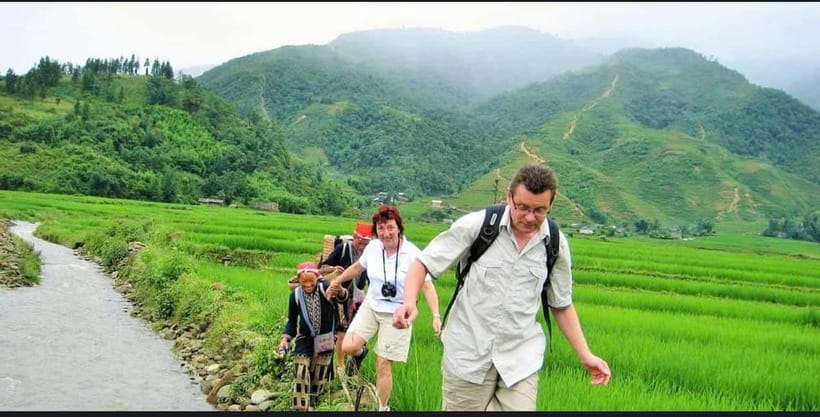
You’ll begin at Nhà Thờ Đá Sapa (Sapa Main Church) around 9:00am. Expect a quick meet-up, then a short walk to Suoi Ho Village. This first transfer matters. It helps you settle in before the longer walking starts, and you avoid the feeling of being dropped into the trek cold.
Suoi Ho is where the tone of the day clicks into place. Instead of jumping straight to a viewpoint, you walk into a village rhythm. You’ll learn how Black H’mong families organize their day around farming and animal care, and you’ll see the kind of local routine that does not need a script. I like this stop because it is calm. You can ask questions without the chaos that sometimes shows up in the most crowded areas of Sapa.
What to watch for here: the path can be uneven. Even with an “easy to moderate” rating, you want footwear with grip. If you get new shoes for this trip, break them in first, because your ankles will thank you later.
More Sapa treks and homestays:
- Sa Pa: Muong Hoa Valley Trek and Local Ethnic Villages
★ 4.6 · 864 reviews - Sapa: Eco Adventure Terrace Fields and Local Villages Trek
★ 4.9 · 636 reviews - From Sapa: 1-Day Guided Trek to Lao Chai & Ta Van with Lunch
★ 4.9 · 416 reviews
Walking through rice and pine, with Ma Tra adding craft and community detail
After Suoi Ho, you continue trekking toward Ma Tra Village. Around late morning, you reach the area where you can visit a local school or chat with villagers about customs and crafts. This is the part that makes the day feel like more than pretty scenery.
The reason this stop is valuable is simple: it gives you a human map of the place. When you can ask about something like school routines, or what people make and trade, you start to understand why the landscape looks the way it does. You also get a sense of how knowledge travels across generations, from practical skills to cultural identity.
This is also where the trek rhythm becomes clear. You are moving often enough to keep warm, but not so hard that you feel crushed. In multiple experiences, the walk was described as not too challenging, with people still able to enjoy the views and conversation. If you like a day where you can both walk and talk, this section tends to hit the sweet spot.
Practical tip: insect repellent is not optional here. Bring it and apply before you step out, not after you already feel bites.
Ta Phin Village: where Red Dao embroidery and herbal medicine become personal
By late morning or early afternoon, you’ll reach Ta Phin Village, home to the Red Dao ethnic group. This stop is one of the most meaningful parts of the day because it connects what you hear to what you can actually see.
In Ta Phin, you’ll explore Red Dao culture, with attention to embroidery techniques and herbal medicine traditions. Even if you do not speak the language, you can still pick up a lot through hands-on explanations and careful observation. Embroidery is not just decoration. It often reflects identity, skill, and what a community values enough to pass down.
Herbal medicine is another big theme. You’ll hear about how plants and remedies fit into local life. That theme matters even more because it shows up again at the end of the tour, when you soak in the herbal bath.
A small consideration: the cultural portion is not an indoor museum experience. You are outdoors and moving between points, so it helps to wear weather-appropriate clothing. In Sapa, conditions can change fast, and you do not want to be stuck cold or wet.
Lunch in a homestay setting: local flavors, different dining styles
Around midday, you’ll enjoy a picnic lunch or a meal at a local homestay. Which one you get can vary, but the intent stays the same: you eat somewhere connected to village life rather than a tourist restaurant stop.
From real experiences shared by guests, lunch can include local specialties. One group mentioned fresh sturgeon hotpot, which sounds fancy but actually fits the northern Vietnam food style of warming, hearty meals. Another shared that there were many food options, including vegetarian choices, which is a relief if you do not eat meat.
So how do you set your expectations? This is not a five-star tasting menu. Food quality is part of the charm, but it can be simple. Still, when lunch includes a view from a homestay or comes with local ingredients, it becomes one of the best pauses of the day. You’re not just refueling. You’re practicing the “slow down and watch” skill that makes village trips worth it.
If you have dietary needs, it helps to plan ahead. The tour does not list specific restrictions beyond what the meals can include, so I recommend telling your guide or operator your preferences before you go.
More treks around Sa Pa:
- Sapa 1 Day Long Trek: Trek to Hau Thao and Sa Seng Villages
★ 4.6 · 344 reviews - EXPLORE SAPA: 2D1N TREKKING & HMONG CULTURE WITH DINH
★ 4.9 · 191 reviews - Sa Pa: 6-Hours Muong Hoa Valley Trek with Local Ethnic guide
★ 4.5 · 178 reviews - Sa Pa: 2-Day Trekking Trip with Ethnic Minority Homestay
★ 4.7 · 145 reviews
The Red Dao herbal bath: hot, aromatic, and a little intimidating at first
The day’s finale is the traditional Red Dao herbal bath around early afternoon, followed by return to Sapa by car. The bath happens in a wooden tub filled with aromatic medicinal herbs.
What I like about this ending is that it closes the loop with the morning. You spend the first half learning about herbal medicine traditions in Ta Phin, then you experience the practical version of that knowledge. People describe the bath as calming and relaxing, and it’s believed to relieve muscle pain and improve circulation.
Here’s what you need to know to enjoy it rather than survive it. First, it can be very hot. If you are sensitive to heat, take your time. Step in slowly, and ask for guidance if the water temperature feels too intense. Second, expect a soak, not a quick rinse. You’re going to sit there long enough to feel the effect, which means you should plan on being comfortable in a wet, warm setting.
Because the tour is not listed for people with mobility impairments, it’s also worth noticing the practical side of the tub. Wooden tubs can be tricky to step into, especially if you have balance issues. If you have any doubt, ask your guide before committing.
Pace, distance, timing, and what “easy to moderate” means on the ground
The trek is labeled easy to moderate, with a trekking distance around 12–14 km over the course of the day. That range matters because “easy” does not mean “effortless.” It means the route is manageable for most people who walk regularly, but you still get the kind of uphill and downhill that challenges your legs.
The tour runs about 6 hours, ending with return to Sapa around 3:30pm. This is a good length for a day trip. You get enough time to feel like you left the town behind, but you still have your afternoon free to eat, shop, or rest.
I also like that the group size is limited to 10 participants. Smaller groups usually mean fewer long pauses and better interaction with your guide. In experiences with guides such as Su and Gao, guests specifically highlighted the quality of explanations and the ability to answer questions. That is the real payoff of a small group, because you are not just listening to a script.
Price and value: about $26 for guide, lunch, and herbal therapy
At about $26 per person, this tour is positioned as a value option for Sapa. The reason it feels fair is what you get bundled into one day: local guiding, village visits, transport back to Sapa, either a picnic lunch or homestay meal, and the herbal bath.
If you tried to DIY this, you would still need a guide to navigate the cultural context, and you would spend time arranging transport and finding a meal situation that feels connected to village life. Here, those pieces are aligned to create a coherent day.
Is it perfect value? Only if you want a structured cultural walk. If you are mainly chasing distant mountain viewpoints and you hate guided conversations, you might prefer a different hike. But if you enjoy learning through people and routines, the price makes sense fast.
Who should book this Ta Phin trek, and who might want a different plan
This tour is a strong fit if you want:
- A culture-first day in Sapa, with Black H’mong and Red Dao communities at the center
- An easy-moderate walk with enough stops for questions, photos, and short breaks
- A relaxing finish that is not just “another viewpoint,” namely the herbal bath
You might think twice if:
- You need a route that is gentle enough for mobility limits, because it is not listed as suitable for mobility impairments
- You are traveling with a child under 6, since it is not suitable for that age group
- Heat and soaking are uncomfortable for you, since the herbal bath is reported as very hot
Also, if you are the type who enjoys asking questions about food, family life, farming, and daily customs, this tour is set up for that. In experiences with guides like Su, guests noted the guides could explain details about crops, daily knowledge, and even make food recommendations afterward.
Should you book this Ta Phin Village Trek and Red Dao Herbal Bath?
I would book it if you want a day that feels human, not just scenic. The mix of village visits, a guided walking pace, and a meaningful end at a Red Dao herbal bath is hard to beat for the price. It is also a rare situation where you learn about herbal medicine traditions and then experience a bath made with aromatic medicinal herbs right after.
Skip or choose carefully if you are not comfortable with warm heat in a wooden tub, or if your mobility needs make uneven village paths a concern. In that case, your money may be better spent on a more accessible half-day plan.
If you do book, show up with comfortable shoes, water, insect repellent, and clothing that can handle changing conditions. And when your guide starts talking about crops, crafts, and village life, ask questions. That is where the whole day becomes memorable.
FAQ
Where do we meet for the Ta Phin Village trek?
You meet at Nhà Thờ Đá Sapa (Sapa Main Church) around 9:00am.
How long is the tour and how much do we walk?
The tour runs about 6 hours. Trekking distance is roughly 12–14 km at an easy to moderate level.
Is lunch included, and where is it served?
Yes. You either have a picnic lunch or a meal at a local homestay. The meal is traditional local food.
What is included in the price?
Included are a local guide, picnic lunch or a homestay meal, the traditional Red Dao herbal bath, and transportation back to Sapa.
What languages are the guides speaking?
The live tour guide offers English and Vietnamese.
What is the Red Dao herbal bath like?
You soak in a wooden tub with aromatic medicinal herbs. It is believed to help relieve muscle pain and improve circulation.
What should I bring for the trek?
Bring comfortable shoes, water, insect repellent, weather-appropriate clothing, and a daypack.
Is this tour suitable for kids or mobility needs?
It is not suitable for children under 6. It is also not listed as suitable for people with mobility impairments.
More Hiking & Trekking in Sa Pa
- SAPA: 2-DAY 1-NIGHT TREKKING & CULTURE WITH HMONG GUIDE LINH
★ 4.9 · 126 reviews - Half Day Sapa Trekking to Visit Lao Chai – Ta Van
★ 4.7 · 126 reviews - From Sapa: Waterfalls, Trekking and Tribal Villages Tour
★ 4.6 · 91 reviews - From Sapa: Guided Full-Day Trekking with Lunch and Drop-Off
★ 4.2 · 86 reviews
New listings around Sa Pa
- Sapa: Private The Most Beautiful Terraced Fields Trekking★ 4.8 · 42 reviews
- Sapa: Trekking Sapa One Day With Group Tour★ 4.7 · 55 reviews
- Sapa3D2N TrekkingAdventures,Valleys,Bambooforest,Waterfall★ 4.8 · 24 reviews
- Sapa: Y Linh Ho – Lao Chai, and Ta Van Trekking Day Tour★ 5.0 · 25 reviews
- From Sapa: Guided Full-Day Trekking with Lunch and Drop-Off★ 4.2 · 86 reviews
- Sapa: Ta Phin Village Trek with Lunch and Bathing Experience★ 4.7 · 13 reviews
- Sapa Trekking Private Tour With Ethnic Female Tour Guide★ 4.9 · 24 reviews
- Sapa One Day Motorbike Tour★ 4.8 · 13 reviews
Sapa Trekking & Homestays, compared.
Sapa 2 Days 1 Night From Hanoi – Overnight in Ta Van Village
Read our review →

Muong Hoa Valley Trek and Local Ethnic Villages
Read our review →

Sapa 3 Days 2 Nights Trekking Tour (1 Night In Ta Van Village, 1 Night In Hotel)
Read our review →
Eco Adventure Terrace Fields and Local Villages Trek
Read our review →
3-Day Trekking Adventure of Sapa from Hanoi – Stay Ta Van Village
Read our review →
Number one top rated ethical cultural trekking and homestay by ETHOS
Read our review →Browse the lists this tour appears in