
Reviewed · SAPA TREKKING & HOMESTAYS
H’Mong traditional beeswax batik
Beeswax patterns start the color story. In Sa Pa, this small-group workshop pairs Hmong batik techniques with natural materials so you make something you can actually keep, not just watch. You work face-to-face with a local H’mong artisan and learn how the wax resist method and the dye connect to everyday culture and ethnic identity.
I especially like that you get real instruction on the tools, including the traditional tjanting wax-pen, so your lines feel intentional instead of random. I also love the payoff: you leave with your own hand-drawn batik as a meaningful souvenir, plus a tea or herbal drink during the session.
One thing to consider: depending on how your class runs, you might only handle the beeswax drawing while the indigo staining is limited or finished for you, so confirm how much dye time you get.
In This Review
- Key highlights you will care about
- Beeswax batik in Sa Pa, $25, and why it feels worth it
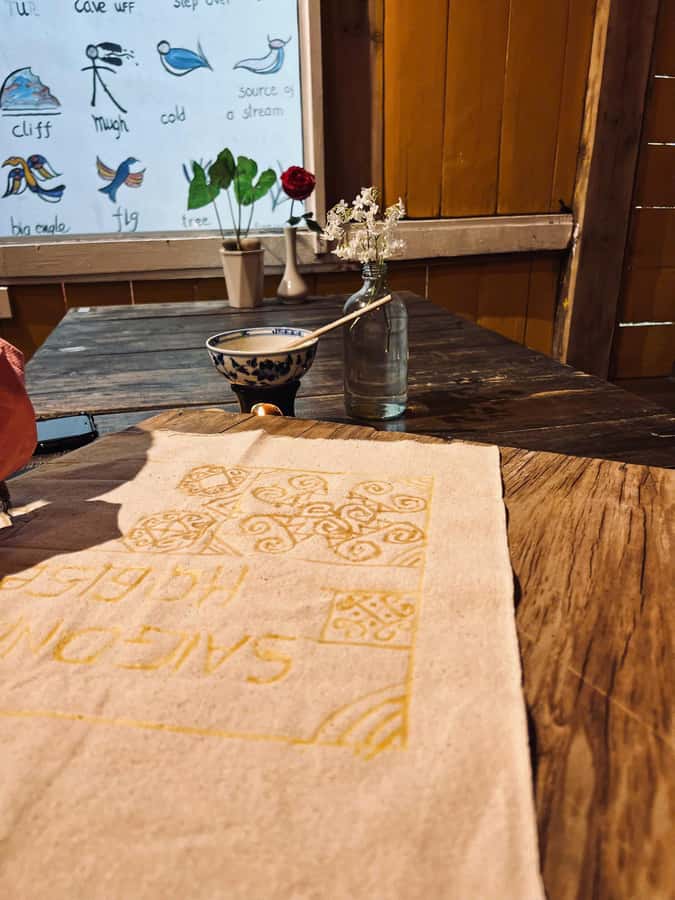
- Starting at Saigonese Trekking House, then settling into the craft
- Learning the Hmong batik technique with the tjanting wax-pen
- Beeswax, patterns, and the part you may not expect: the dye step
- Hmong motifs, symbolism, and the stories behind the patterns
- Tea, pace, and why people call this a rainy-day friendly activity
- What you take home, plus the secret gift and tool options
- Price and timing: how to judge the $25 value without surprises
- Who should book this batik workshop in Sa Pa
- Should you book Hmong Traditional Beeswax Batik in Sa Pa?
- FAQ
- Where does the workshop start in Sa Pa?
- How long is the Hmong beeswax batik workshop?
- What will I learn and make during the session?
- Is transportation included?
- What is included in the price?
- Do I need any prior experience?
- How big is the group?
- What is the cancellation policy?
Key highlights you will care about
- Tjanting wax-pen practice so you can control thin lines and filled shapes
- Beeswax resist + natural indigo dye for an authentic look and texture
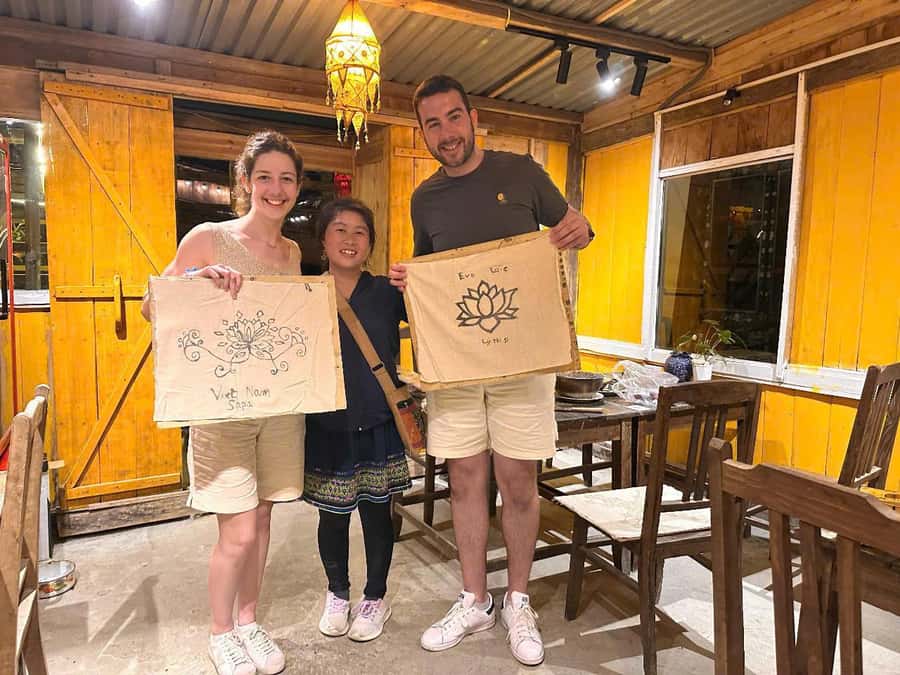
- Small group limited to 10 with hands-on guidance from an English-speaking instructor
- Take-home artwork that turns the technique into a personal memory of Sa Pa
- Hmong motifs and storytelling tied to ethnic minority culture, not just decoration
- Tea or herbal drink included to make the 150 minutes feel relaxed and human
Beeswax batik in Sa Pa, $25, and why it feels worth it
Sa Pa is full of ways to shop for souvenirs. This workshop is different. You are not buying a finished item. You are making one, with the same resist method that shapes the design and the final color separation.
At $25 per person for about 150 minutes, the value comes from the whole bundle: skilled local guidance, all materials (fabric, beeswax, tjanting tool, natural indigo dye), and a piece you can take home. That is the big difference between this and a quick demo where you only watch.
And the group size matters. With a small group capped at 10, you get enough time to ask questions and adjust your technique. If you have ever tried to learn a craft while a crowd rushes around you, you know how rare calm, patient instruction is in a popular tourist town.
More Sapa treks and homestays:
- Sa Pa: Muong Hoa Valley Trek and Local Ethnic Villages
★ 4.6 · 864 reviews - Sapa: Eco Adventure Terrace Fields and Local Villages Trek
★ 4.9 · 636 reviews - From Sapa: 1-Day Guided Trek to Lao Chai & Ta Van with Lunch
★ 4.9 · 416 reviews
Starting at Saigonese Trekking House, then settling into the craft
The session begins at Saigonese Trekking House. You will get a warm welcome and then meet your H’mong instructor, who guides the class in English (and there is an English-speaking guide or translator if needed).
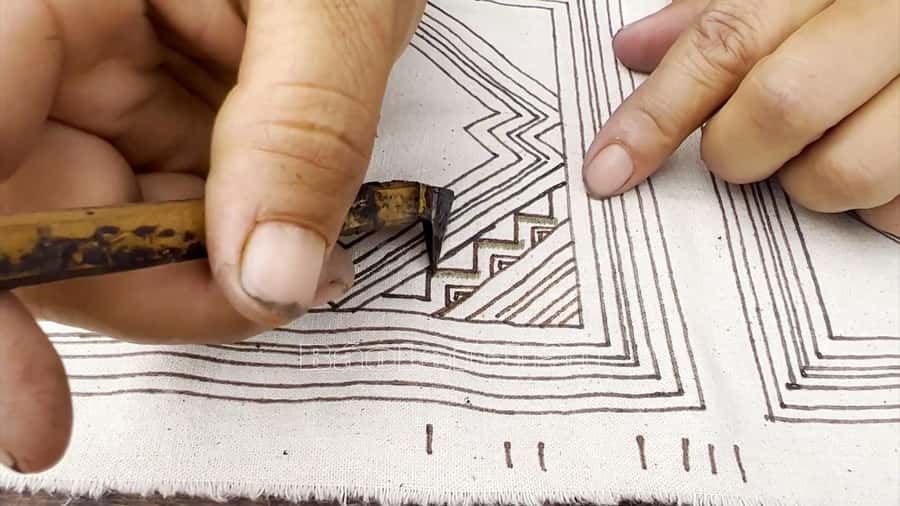
This is not a stand-and-stare museum format. You start with context first. You learn about the history and cultural significance of batik in Hmong tradition, and then you move into the practical part: how wax functions like a barrier so the dye only colors what the wax leaves open.
You will likely also notice a casual rhythm once you sit down with the fabric and tools. One review mentioned a template being provided before freehand design. That kind of start can be helpful if you want results but still want your own motifs.
They also pause for a tea or herbal drink during the session. It sounds small, but it helps this feel like a real workshop, not a rushed craft stop.
Learning the Hmong batik technique with the tjanting wax-pen
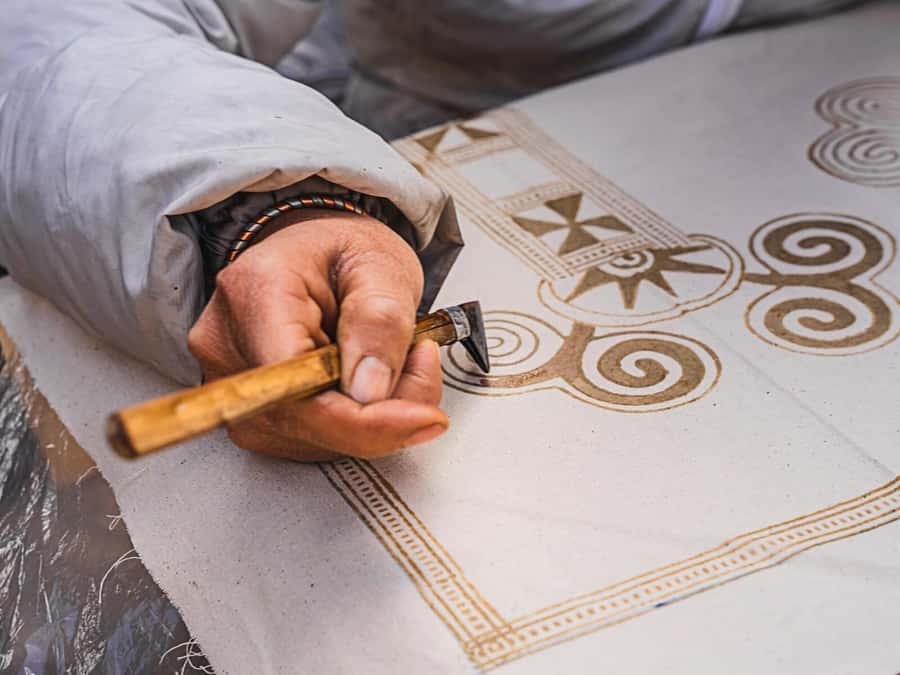
The heart of this class is hands-on batik work. You use a traditional wax-application pen, the tjanting, to draw patterns on fabric with beeswax.
Here is what makes that skill satisfying. The tool does not behave like a marker. You learn how much pressure to use, how to keep the line steady, and how to fill shapes without flooding the fabric. It is slow work by design. The wax needs to be applied with intent because it is doing the resist job later.
You will create your own design inspired by Hmong motifs and storytelling. In other words, you are not just copying a decorative pattern. You are choosing a layout, drawing a structure, and thinking about how the lines and blocks become the final picture once dye touches only the exposed fabric.
If you like art with rules, this is a good fit. The wax resist method gives you a clear structure: draw with wax, dye, reveal. You do not have to invent everything from scratch, but you do make creative choices.
Beeswax, patterns, and the part you may not expect: the dye step
Natural dye is included. You will work with natural indigo dye as part of your batik process.
Now the practical part: how much you personally do during the dye step can vary. Some people felt they mainly did the beeswax work and did not stain the cotton they painted, so it felt unfinished for them. Another person said they were given dye, but it was not something they would get to complete themselves while backpacking.
So what should you do with this information? Ask a quick, direct question before you settle in: will you have time to do the indigo staining yourself, or will the hosts handle that part after your wax drawing is complete?
If you are the type who wants to experience every step, you will be happier when you confirm the workflow. If you are mainly there for the wax drawing and design, you will probably feel more satisfied even if the indigo handling is limited.
Either way, do not confuse any of this with a low-effort class. The wax technique still takes concentration, and your lines will guide the final pattern.
Same region, different pace:
- Sapa 1 Day Long Trek: Trek to Hau Thao and Sa Seng Villages
★ 4.6 · 344 reviews - Sapa: Fansipan Cable, Cat Cat Village, Moana Instagram Tour
★ 4.8 · 294 reviews - Explore Sapa by TrekkingAdventures, Mountain,Rice fields
★ 4.9 · 229 reviews - From Sapa: 3 Day Ha Giang Loop Motorbike Tour With Rider
★ 4.9 · 209 reviews
Hmong motifs, symbolism, and the stories behind the patterns
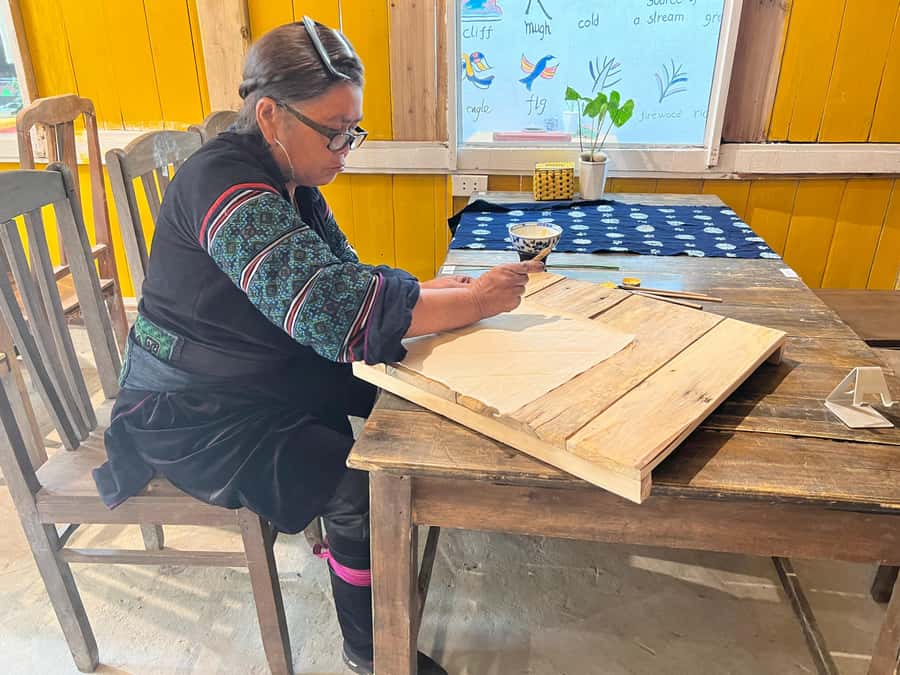
Batik is more than a craft technique. In Hmong tradition, patterns and the act of making can carry meaning tied to identity and community storytelling.
In this workshop, you learn about that cultural significance as you go. Your instructor guides you through why certain motifs matter, and what the design process represents in ethnic minority communities. That is what makes the finished piece feel personal. It is not just a pretty cloth souvenir. It is your drawn story placed inside a tradition.
You may also hear village life stories and personal background from the instructor. One review highlighted that the teacher shared about her life in the village and stayed with the group through the whole process. Another mentioned a teacher who was interesting and kind, and who helped with drawing.
Those details matter because batik is easier when someone connects technique to meaning. Once you understand why the process works, your hands relax and your design choices get clearer.
Tea, pace, and why people call this a rainy-day friendly activity
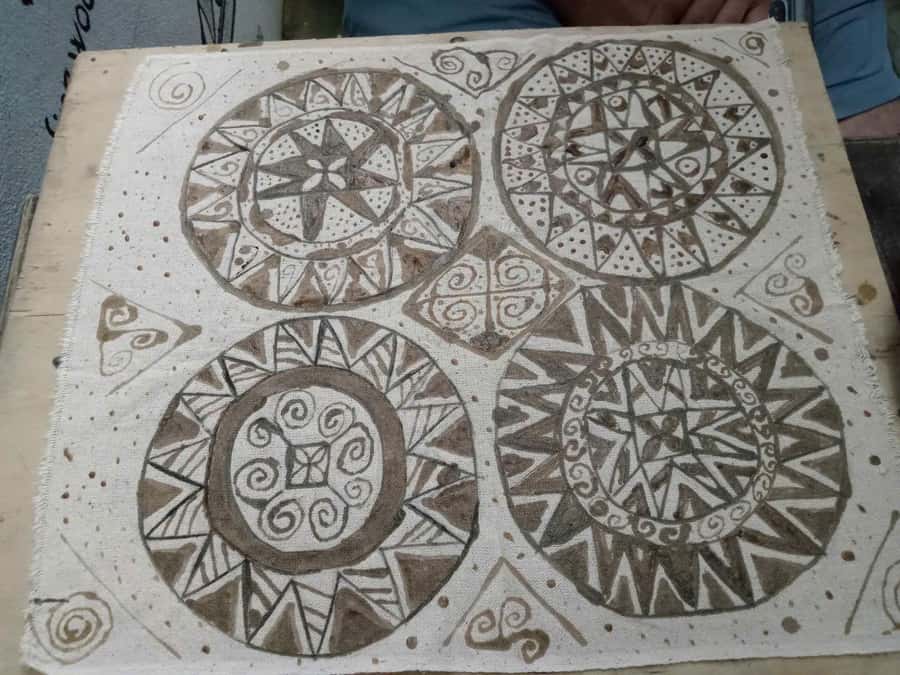
This workshop runs for 150 minutes, and it usually feels like a calm block of time rather than an on-the-go checklist. Reviews described it as relaxing, and one person specifically called it a good option when it is raining.
That makes sense in Sa Pa. Weather can change quickly and walking around wet hills can drain your energy. A seated workshop gives you control. You warm up, slow down, and focus on one project.
There is also a human pace to the small-group setup. With a maximum of 10 participants, the instructor can correct your grip, show how to load wax, and help you tidy line edges before dye. If you are doing any kind of craft on vacation, that attention is the difference between a frustrating attempt and a fun one.
What you take home, plus the secret gift and tool options
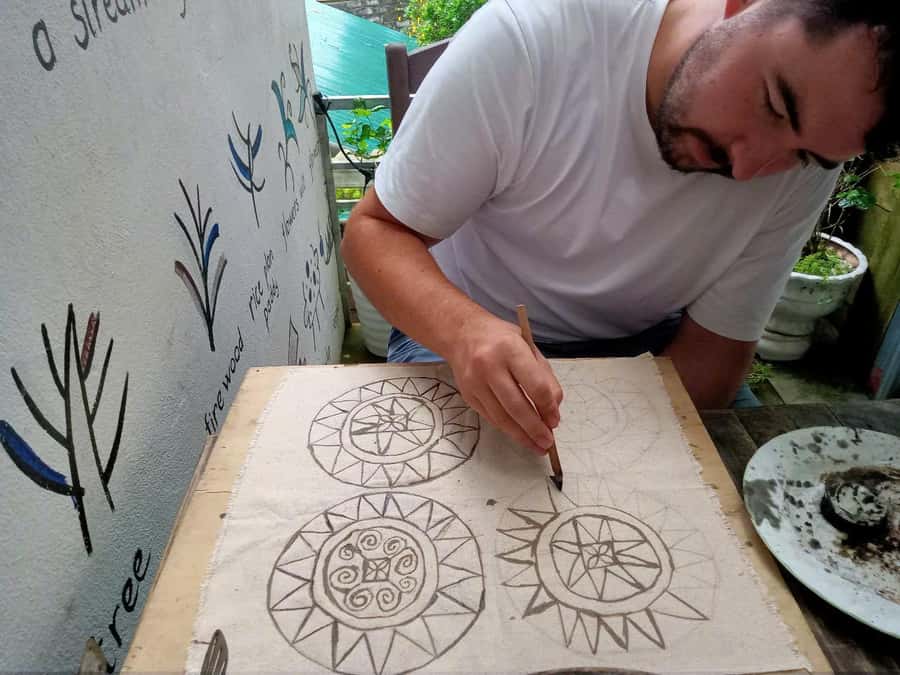
You leave with your own handcrafted batik artwork. That is the big promise here, and it is the part that helps the price make sense.
You may also receive a special secret gift from your instructor. Even if it is small, it signals that the class is personal, not transactional.
Some people also mentioned being able to buy tools so they can keep practicing at home. That is not guaranteed in the information you have here, but it is a reasonable ask if you loved the tjanting technique. If the class sparks your interest, having the right tool makes a huge difference for future practice.
If you are traveling light, plan how you will carry your finished piece. Ask about folding or packaging so you do not end up with creases that ruin the look.
Price and timing: how to judge the $25 value without surprises
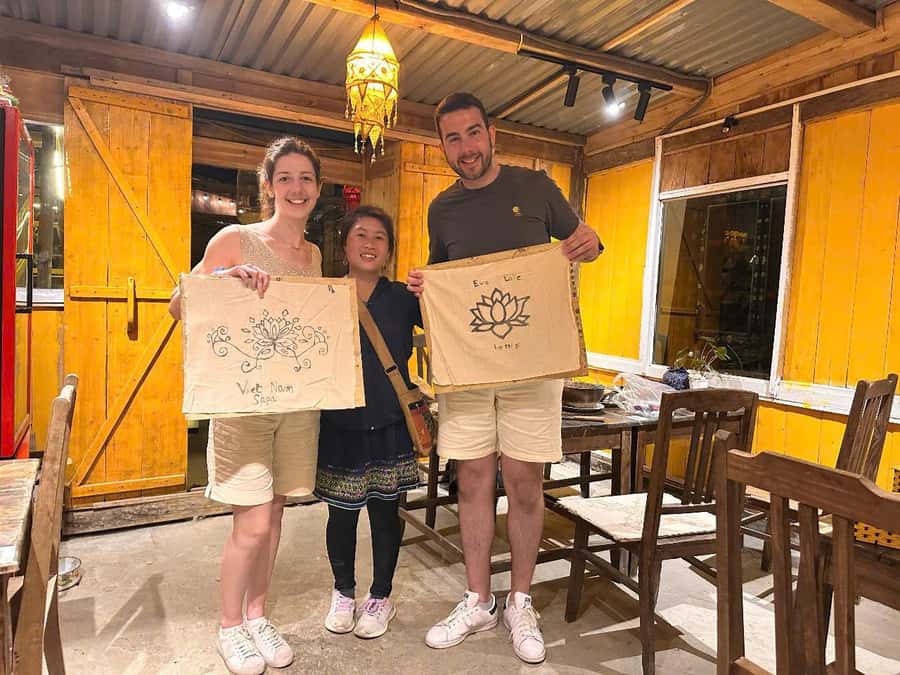
Let’s talk value, not just cost.
For $25 per person you get:
- Guided instruction from a local H’mong artisan
- All materials and tools, including fabric, beeswax, tjanting, and natural indigo dye
- Your own batik artwork to take home
- English support through an English-speaking guide or translator
- Tea or herbal drink
What you do not get is transportation. That means your real “total cost” includes how you get to the workshop meeting point and back.
So here is the balanced way to think about it. This price is fair if you value:
1) instruction by hand, not just watching, and
2) leaving with something you made yourself, not a mass-made product.
If you want a class where you personally complete both wax drawing and the full dye step step-by-step, double-check your workshop flow before you go. The sessions can differ in who does the staining and when.
Also, check what to wear. You will be working with wax and dye. The safe move is to wear something you can get stained or just accept that your clothes might get a little affected.
Finally, keep your expectations aligned with the time. 150 minutes is enough to learn a technique, create a design, and finish a take-home item. It is not enough for every possible extra activity.
Who should book this batik workshop in Sa Pa
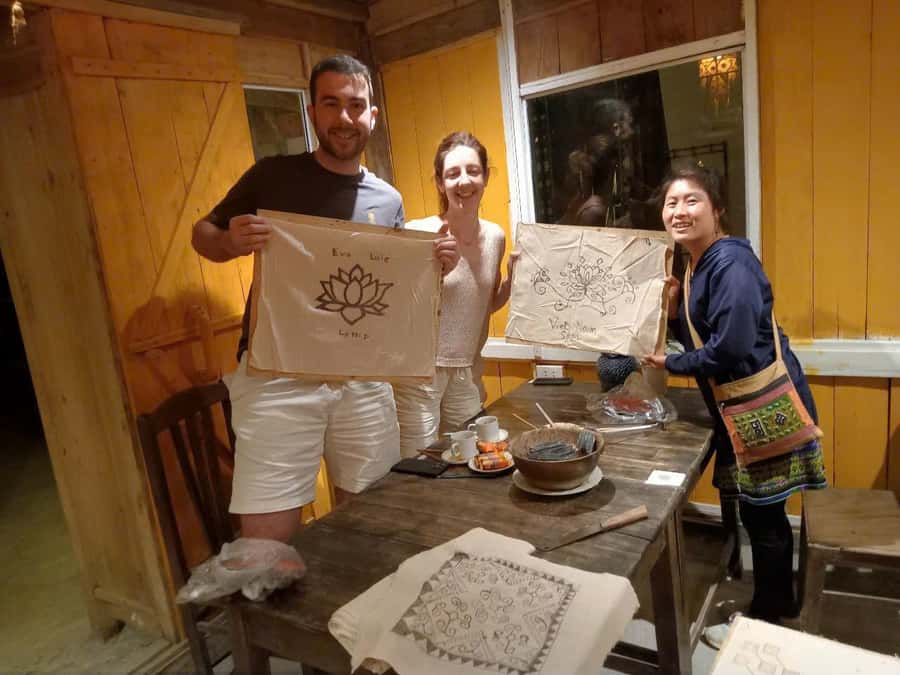
This workshop is a strong match if you are:
- An art lover who likes learning tools and techniques
- A culture seeker who wants meaning behind craft patterns
- A family group that benefits from a structured, hands-on session
- Someone who wants a rainy-day plan that does not require long walks
It can also work well for beginners. The class is designed so you do not need prior experience. The instructor provides guidance and you follow the wax resist logic to create your own design.
If you are very dye-focused, you should ask about the staging of the indigo step. If your goal is to personally do every part yourself, confirm how much staining happens during your time in the workshop versus after.
And if you get cold easily, bring layers. One review mentioned the class was very cold. That may be seasonal or room-based, but Sa Pa weather can be chilly, so err on the side of warmth.
Should you book Hmong Traditional Beeswax Batik in Sa Pa?
Book it if you want a small-group, hands-on craft that ends with an actual piece of art made by your own hands. The combination of local H’mong instruction, traditional tjanting wax drawing, and natural indigo dye is the kind of experience that creates a souvenir with real meaning.
Skip or adjust your expectations if you are expecting a long, step-by-step dye marathon where you personally complete every stage. Ask how the indigo process works in your session, so you do not feel left out of the color reveal.
If you like crafts, Sa Pa is one of the best places to learn this kind of technique. This one is short enough to fit your schedule and personal enough that you will remember it even after you put the wax tool away.
FAQ
Where does the workshop start in Sa Pa?
The workshop begins at Saigonese Trekking House.
How long is the Hmong beeswax batik workshop?
The duration is 150 minutes.
What will I learn and make during the session?
You will learn the cultural significance of batik in Hmong tradition and create your own hand-drawn batik design using beeswax and a tjanting tool, with natural indigo dye as part of the process.
Is transportation included?
No. Transportation to and from the workshop location is not included.
What is included in the price?
You get a guided batik workshop with a local H’mong artisan, all materials and tools, your personalized artwork to take home, and English support if needed. Tea or herbal drink is also included.
Do I need any prior experience?
No experience is needed.
How big is the group?
It is a small group limited to 10 participants.
What is the cancellation policy?
You can cancel up to 24 hours in advance for a full refund.
New listings around Sa Pa
- Sapa: Private The Most Beautiful Terraced Fields Trekking★ 4.8 · 42 reviews
- Sapa: Trekking Sapa One Day With Group Tour★ 4.7 · 55 reviews
- Sapa3D2N TrekkingAdventures,Valleys,Bambooforest,Waterfall★ 4.8 · 24 reviews
- Sapa: Y Linh Ho – Lao Chai, and Ta Van Trekking Day Tour★ 5.0 · 25 reviews
- From Sapa: Guided Full-Day Trekking with Lunch and Drop-Off★ 4.2 · 86 reviews
- Sapa: Ta Phin Village Trek & Red Dao Herbal Bath★ 5.0 · 22 reviews
- Sapa: Ta Phin Village Trek with Lunch and Bathing Experience★ 4.7 · 13 reviews
- Sapa Trekking Private Tour With Ethnic Female Tour Guide★ 4.9 · 24 reviews
Sapa Trekking & Homestays, compared.
Sapa 2 Days 1 Night From Hanoi – Overnight in Ta Van Village
Read our review →

Muong Hoa Valley Trek and Local Ethnic Villages
Read our review →

Sapa 3 Days 2 Nights Trekking Tour (1 Night In Ta Van Village, 1 Night In Hotel)
Read our review →
Eco Adventure Terrace Fields and Local Villages Trek
Read our review →
3-Day Trekking Adventure of Sapa from Hanoi – Stay Ta Van Village
Read our review →
Number one top rated ethical cultural trekking and homestay by ETHOS
Read our review →Browse the lists this tour appears in