
Reviewed · IMPERIAL CITY & ROYAL TOMBS TOURS
Hue: Hue Walking Tour to Imperial Citadel with Tour Guide
Hue’s imperial maze makes more sense with a guide.
I like how this English-speaking walking tour turns the Hue Imperial Citadel into a clear storyline, from the Nguyen Dynasty’s major power sites to the places tied to court ceremonies. You’ll start at Cuu Than Cong in Cua Ngan and have your guide assist with ticket purchasing, then move through the main highlights on foot in about 150 minutes.
Two things I especially like: you get guided context at the most important stops, including the 13 Nguyen kings and the darker, more intriguing court side tied to the harem. And since it’s walk-and-talk, you can ask questions along the way, which is exactly what made private tours with guides like Austin, Tâm, and Nhi Tran feel fast, friendly, and personal.
One consideration: entrances for the royal complex are not included, so you’ll need to factor in ticket time and buy them during the meet-up flow. Also, because it’s a walking tour, plan on comfortable shoes, even if the route feels manageable.
In This Review
- Key points before you go
- Cuu Than Cong meet-up, then straight into the royal story
- The Flag Tower and Ngo Mon Gate: power you can read in stone
- Thai Hòa Palace: where coronations turned into legitimacy
- The court complex: Nine urns, The Mieu Temple, and worship by design
- Dien Diên Thọ and the Queen Mother residence: carved elegance with purpose
- Forbidden Purple City boundaries: understanding what you cannot enter
- Kien Trung Palace: European style inside a Nguyen world
- Duyet Thi Duong Royal Theater and Thiệu Phương Garden: the pause that makes it work
- Duyet Thi Duong, then Thiên and flags to finish: a guided route that actually flows
- What the English guide adds, and why private groups can be worth it
- Price and value: $15 makes sense when tickets and meaning are handled well
- Who should book this Hue Imperial Citadel walking tour
- Should you book it
- FAQ
- Where is the meeting point for the Hue Imperial Citadel walking tour?
- How long is the tour?
- Is the tour available in the morning and afternoon?
- What language is the tour guide?
- What is included in the price?
- Are entrance tickets included?
- Do I need to tip?
- Is pickup available from my hotel?
- Is this tour only for small groups?
- Can I cancel for a refund?
Key points before you go

- 150 minutes focused on top citadel sites, without feeling like a speed run
- English guide with stories about the Nguyen Dynasty, including the 13 kings and the court’s private side
- Photo stops are built in, so you’re not constantly rushing for a single shot
- Ticket help at the start, since entrance fees aren’t included
- Guides like Austin, Hà, Nhi Tran, Ryan, Anna, Tâm, and Duyen are repeatedly praised for being friendly and responsive
- Private group option available if you want your own pace
Cuu Than Cong meet-up, then straight into the royal story
You start at Cuu Than Cong in Cua Ngan, where your history-minded guide meets you with a welcome sign with your name. It’s a smart way to reduce friction on arrival, especially if you’re juggling tickets and trying to orient yourself in Hue.
Your tour runs in morning or afternoon slots, and the full time on the ground is about 150 minutes. That timing matters because the Hue Imperial City area is large, and the best experience comes from having someone connect what you see, gate by gate, palace by palace.
What you get here is not just a checklist of buildings. The guide helps translate each stop into what it meant to the Nguyen court: authority shown at the gates, legitimacy reinforced in coronation spaces, and the controlled world of the royal family behind layered boundaries.
More Walking Tours in Hue
- Hue Imperial Ancient City Walking Tour
★ 4.8 · 308 reviews - Eat like a local with a local – Walking Tour
★ 4.9 · 57 reviews - Hue Imperial City and Forbidden City Walking Private Tour
★ 4.9 · 42 reviews
The Flag Tower and Ngo Mon Gate: power you can read in stone
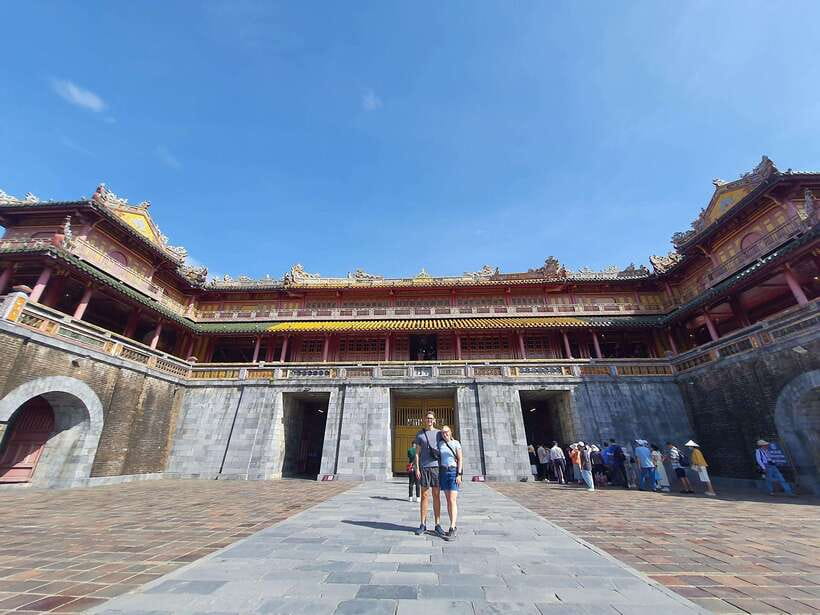
Early on, you’ll hit the Flag Tower (Ky Dai Hue) and the Ngo Mon Gate (Cửa Ngọ Môn Hue). These aren’t just photogenic landmarks. They’re the kind of structures where you can actually see the logic of the system.
The Ngo Mon Gate was built in 1833 under King Minh Mang. In practical terms, that gives you a fixed anchor date early in the tour, and it helps the later palace sites click into place. Your guide also explains how it functioned as a main ceremonial gateway for important events of the Nguyen Dynasty, which makes it feel less like ruins and more like infrastructure for ruling.
Then comes the Flag Tower, tied to the Nam Chanh fortress area and used as the spot where court flags were displayed. You’ll understand quickly that the court didn’t just rule people, it managed information and visibility. When you see it with that context, you stop treating these places as background scenery.
If you’re wondering what to do with your time here, focus on details like the shape and placement. With a guide, you’ll realize that where a building sits inside the complex often mattered as much as the building itself.
Thai Hòa Palace: where coronations turned into legitimacy

Next is Thái Hòa Palace, and this is one of the most important jumps in the story. It’s described as the coronation place of the 13 Nguyen Dynasty kings, which is a big deal. Even if you are not a Vietnam history fanatic, it helps to know you’re standing in the room type tied to state legitimacy.
Your guide walks you through what coronation space represents, not just historically but symbolically. It’s the difference between seeing a palace and understanding that the architecture was meant to stage authority, hierarchy, and continuity.
This stop is also where you’ll likely spend a bit more time listening. The tour timing includes time for photo stops and a guided explanation, so you’re not left with vague commentary while you try to guess what matters most.
One practical tip: if you like photos, this is a good place to pause and frame shots carefully. The guide’s context gives you a reason to photograph specific angles, not just whatever looks best.
The court complex: Nine urns, The Mieu Temple, and worship by design
As you continue, you’ll move into the zone of ritual, memory, and dynastic continuity. Several stops reinforce that idea.
You’ll see the Nine Dynastic Urns (Cửu Đỉnh Huế), commissioned by Emperor Minh Mang in 1835. The fact that they were commissioned gives them weight, because it signals intentional state craftsmanship, not random decoration. Your guide also positions them in relation to The Mieu, which is dedicated to worshiping 10 Nguyen kings.
The pairing matters. Urns and temple worship spaces worked together to keep the dynasty present, even after the reigns ended. Standing there, you start to notice how the complex was designed so that reverence and power occupied the same physical world.
This part of the tour is also where the guide’s English clarity really helps. If you’ve ever visited a large imperial site and felt lost in names, this is the moment where the guide’s sequencing can prevent that.
More Imperial City visits in Hue:
- Hue Customizable Tour with Imperial Citadel & Forbidden City
★ 4.9 · 937 reviews - Hue: Royal Tombs & Pagoda Private Tour By Dragon Boat & Car
★ 4.9 · 257 reviews - Hue: Royal Tombs Private Tour with 3 Best Tombs & Pagoda
★ 4.9 · 213 reviews - Hue: Dragon Boat, Perfume River, Pagoda & Royal Tomb Tour
★ 4.9 · 194 reviews
Dien Diên Thọ and the Queen Mother residence: carved elegance with purpose
One of the stops you’ll spend time with is Dien Tho Palace, also referred to as Cung Diên Thọ. The description highlights its large scale, intricately carved details, and elegant style, and it was the residence of the Queen Mother.
That detail changes how you look at the palace. Instead of viewing it as just royal architecture, you understand it as lived space for someone positioned close to the throne. The tour framing makes it easier to imagine how authority, privacy, and daily court life intersected.
Your guide also connects this stop to the bigger theme hinted in the tour highlights: secrets behind the harem. You don’t need a scandal mindset, but you do get a more complete sense that the royal family life was structured, restricted, and tightly controlled, not open and romantic.
At this point, you’ll probably appreciate the pace. The tour is long enough to keep the story flowing, but short enough that you’re not stuck for hours in one area.
Forbidden Purple City boundaries: understanding what you cannot enter

Then you come to the Forbidden Purple City (Tử Cấm Thành Huế), the area reserved exclusively for the king and the royal family. This is where the site’s rules become visible, because access was limited to people with duties, while non-duty officials and civilians were restricted.
What’s valuable here is that the tour doesn’t treat restriction as a footnote. It explains why boundaries existed and how they shaped daily life in the court.
Even if you can’t experience it like an insider, you can experience the logic of it. When you see the layout and the separation, the site stops feeling like a single attraction and starts feeling like a system for managing who belonged where.
This stop also tends to be a strong turning point in the tour for many people. You go from architecture appreciation to real understanding of governance and social structure.
Kien Trung Palace: European style inside a Nguyen world
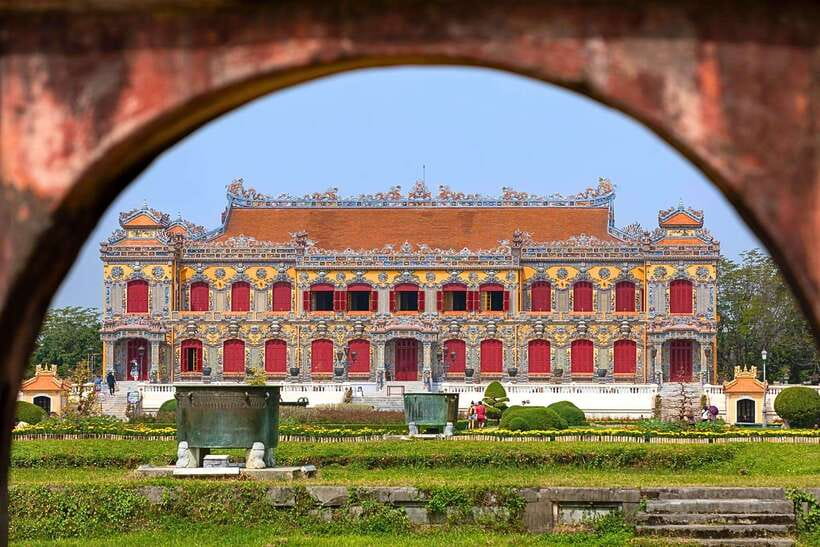
Kiến Trung Palace (Điện Kiến Trung) brings a different aesthetic, and your guide makes it meaningful. Built in 1923 by Emperor Khai Dinh, it mixes European design elements, including Italian Renaissance and French classicism, rather than sticking to traditional Vietnamese forms in the same way as surrounding buildings.
This contrast is exactly why guided interpretation helps. Without context, you might just think it’s a random architectural shift. With the story, it reads like a sign of changing tastes and political reality.
You’ll likely notice details that feel distinct from the older structures. That’s the point. The palace becomes evidence that Hue’s royal world was not frozen in time.
Duyet Thi Duong Royal Theater and Thiệu Phương Garden: the pause that makes it work
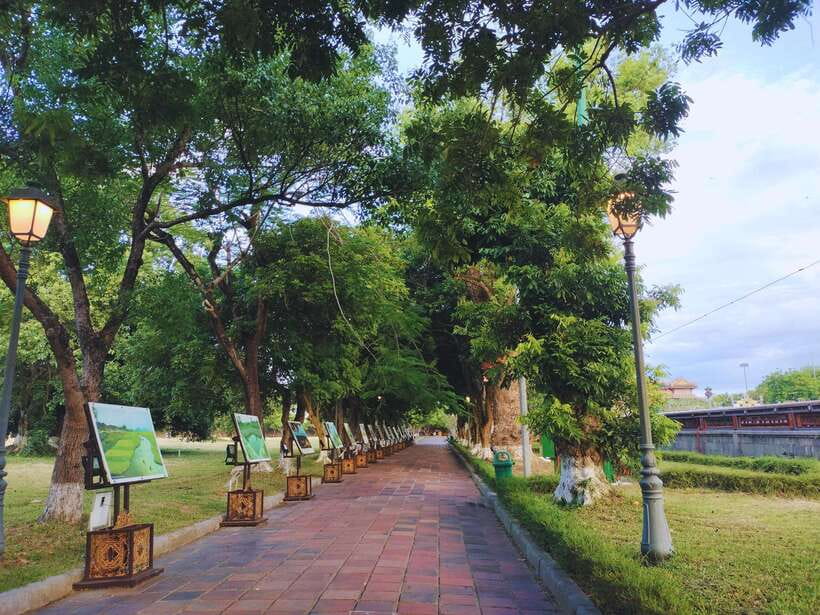
Two stops help break the intensity of palaces and ritual zones.
First is Duyet Thị Đường Royal Theater, one of four Nguyen Dynasty theaters and noted as the oldest preserved theater from that era. A theater inside an imperial complex is practical, because it reminds you the court had performances, gatherings, and cultural life, not only ceremony and rules.
Second is Thiệu Phương Garden, included as a guided stop with time for sightseeing. Gardens matter because they show another side of power: control over space, calm within structure, and the way the court used scenery as part of daily experience.
Add these to the schedule and the walk feels more human. You get moments to breathe, look, and reset your brain, while the guide keeps linking each place back to how the court lived.
Duyet Thi Duong, then Thiên and flags to finish: a guided route that actually flows
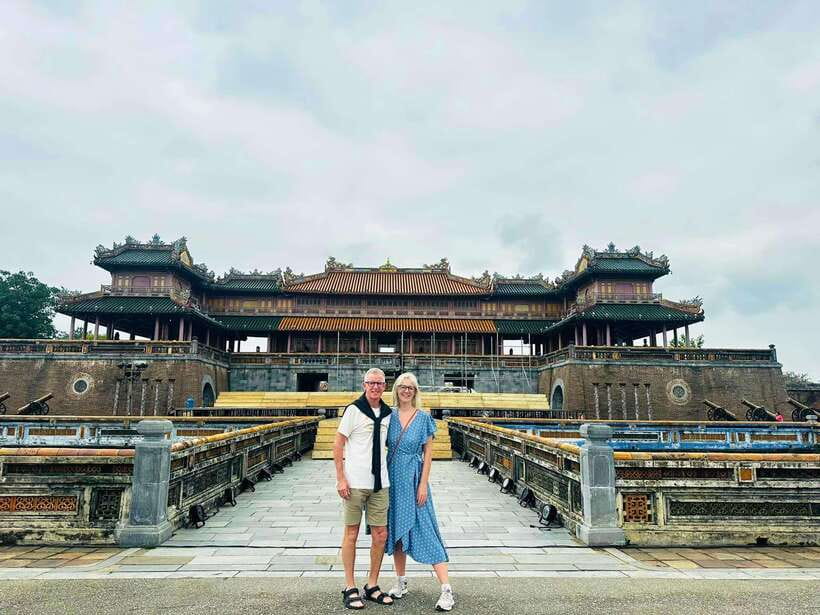
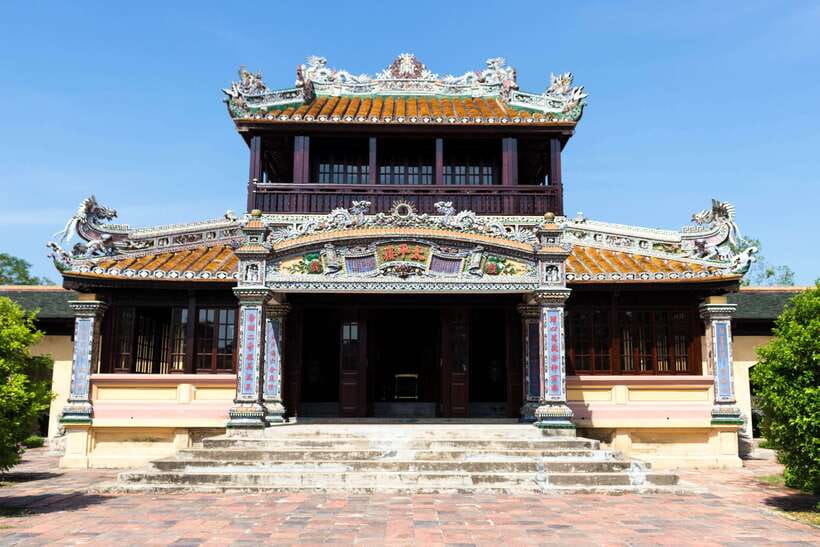
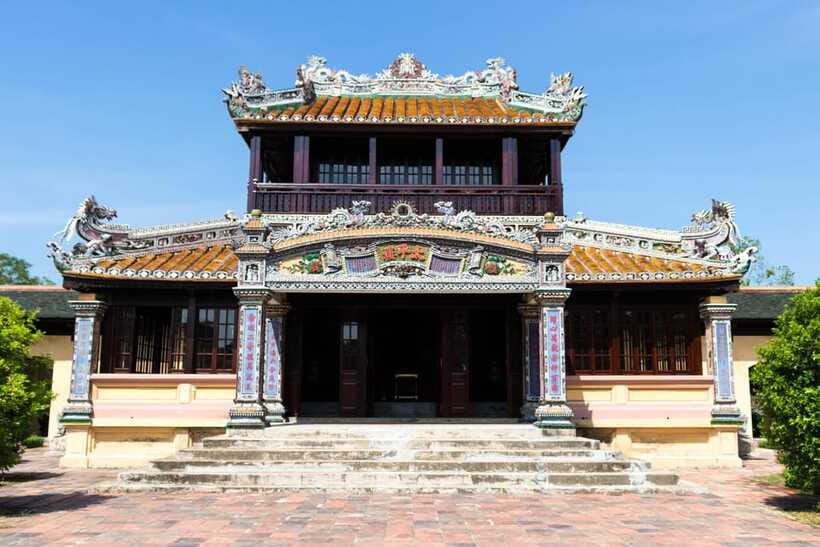
By the time you reach places like Thai Binh Pavilion (with a photo stop and guided tour time), and later Hien Lam Pavilion, the tour feels less like you’re hopping randomly and more like you’re moving along a curated route through court functions. Each stop is placed to keep your attention on how the complex worked.
The pacing also matters. Some stops are shorter, some are longer, and the time is allocated in a way that keeps your listening manageable. The full tour runs about 2 to 2.5 hours, so you get enough detail for names and significance without turning it into a lecture you’ll forget by dinner.
One more detail I like: bottled water is included. It sounds minor until you’re walking a lot with questions, and then you realize you’re glad you do not have to hunt for a bottle mid-route.
What the English guide adds, and why private groups can be worth it
This tour’s core value is not just that you see famous locations. It’s that you get them explained with a real person in front of you.
Guides are repeatedly described as friendly, humorous, and quick to answer questions. In private tours, that responsiveness showed up as pacing at your comfort level, with guides like Austin answering questions promptly and Tâm bringing the Nguyen Dynasty and royal family world to life clearly.
If you go with just a couple of people, you’ll probably like the flexibility. The tour is structured, but a private group usually means you can linger for a photo or ask a “why does it matter” question without feeling rushed.
Even if you are not booking private, the guide still helps you connect the dots between stops like the coronation palace, worship spaces, and restricted royal areas. That connection is the difference between collecting photos and actually understanding what you walked through.
Price and value: $15 makes sense when tickets and meaning are handled well
At $15 per person for about 150 minutes, this is priced like a budget-friendly walking tour. What makes it feel like good value is what you get for that money: an English-speaking guide, bottled water, and local insurance, plus help at the start for ticket purchasing.
The one catch is that entrance tickets are not included. That means your final cost will depend on the ticket price at the time of visit. Still, having a guide assist reduces hassle and helps you avoid arriving without what you need.
In plain terms: if you care about understanding what you see, this price is a fair trade. If you only want photos and you are comfortable reading about palaces on your own, you might decide you can skip the guide. But once you start learning why each site existed, $15 usually looks like a bargain.
Who should book this Hue Imperial Citadel walking tour
This is a great fit if you want a guided, structured walk through the Hue Imperial City highlights without spending half your day in one spot. It also suits people who like history that is specific, not generic, including the Nguyen Dynasty’s 13 kings and the court’s more private side linked to the harem.
You should especially consider it if:
- You want English context rather than relying on an audio guide
- You enjoy asking questions and getting direct answers
- You are visiting for a limited time in Hue and want the most important places covered in about 2 to 2.5 hours
If you have mobility limitations, the information you provided does not specify accessibility details, so you might want to check directly with the operator before booking. And because it is a walking tour, you’ll be happiest with comfortable shoes.
Should you book it
Book this tour if you want to understand Hue’s imperial sites as a working system, not just a collection of buildings. The guided explanations, the clear focus on the major royal landmarks, and the repeated praise for guides being attentive and good at answering questions make it a smart way to spend your time.
Skip it only if you plan to mostly photograph and you do not care about the meaning behind places like Ngo Mon Gate, Thai Hòa Palace, or the Forbidden Purple City. Otherwise, the blend of major stops plus enough time to hear the stories is exactly what makes Hue Imperial Citadel feel real.
FAQ
Where is the meeting point for the Hue Imperial Citadel walking tour?
You meet at Cuu Than Cong in Cua Ngan, often described as the Nine Holy Cannons. The guide will wait for you with a welcome sign.
How long is the tour?
The tour lasts about 150 minutes, typically around 2 to 2.5 hours depending on the slot and pace.
Is the tour available in the morning and afternoon?
Yes, you can choose between a morning or afternoon slot.
What language is the tour guide?
The tour guide is English-speaking.
What is included in the price?
The included items are an English-speaking guide, bottled water, and local insurance.
Are entrance tickets included?
No. Entrance tickets are not included, and your guide assists with ticket purchasing when you meet.
Do I need to tip?
Tips are not included.
Is pickup available from my hotel?
Pickup is optional. A driver can pick you up and drop you at your hotel reception lobby.
Is this tour only for small groups?
A private group option is available, and the tour can run as a private experience.
Can I cancel for a refund?
Yes, you can cancel up to 24 hours in advance for a full refund.
More Walking Tours in Hue Vietnam
- Hue Imperial city walking tour and optional royal tombs
★ 4.7 · 19 reviews - Hue Street Food Walking Tour with Local Dishes
★ 4.9 · 14 reviews - Private Street Food Evening Walking Tour in Ho Chi Minh City
★ 5.0 · 3,175 reviews - [HOT] Hanoi Old Quarter Walking Street Food – Small Group Tour
★ 5.0 · 2,163 reviews
New listings around Hue Vietnam
- Hue: Sunset Cruise along Perfume River★ 4.3 · 72 reviews
- Sightseeing Transfer Between Hue and Hoi An★ 4.3 · 13 reviews
- Phong Nha/Dong Hoi: DMZ Tour – Vinh Moc & Khe Sanh Base★ 5.0 · 10 reviews
- Official Hue: Dragon Boat, Imperial Citadel, & Market tour★ 4.7 · 32 reviews
- Hue: Vietnamese Cooking Class in Local Home & Market trip★ 5.0 · 9 reviews
- Hue to Hoi An/Da Nang: Private Scenic Motorbike Tour★ 4.9 · 63 reviews
- Hue to Hoi An via Hai Van Pass by motorbike with Easy Riders★ 5.0 · 16 reviews
- Hue to Hoi An by bus: Hai Van Pass, Lang Co, Marble mountain★ 4.6 · 27 reviews
Imperial City & Royal Tombs Tours, compared.
Hue Customizable Tour with Imperial Citadel & Forbidden City
Read our review →
Imperial City, Hue: Day Tour from Hoi An and Da Nang
Read our review →
Hoi An: Hue Imperial City via Hai Van Pass & Lunch
Read our review →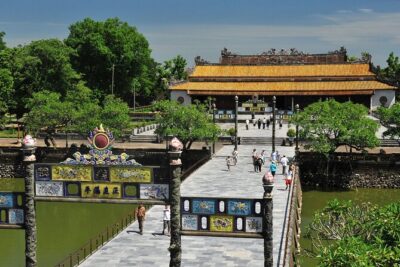
Imperial City Walk, Motorbike Tour & Private Car Options
Read our review →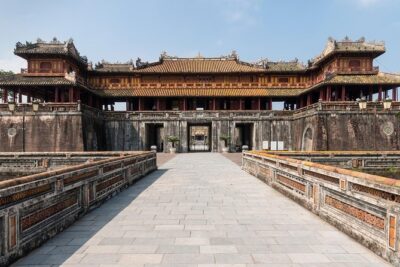
Hue City and The Citadel via Hai Van Pass Daily Small Group Tour
Read our review →
Hue Citadel tour by authentic Train via Hai Van Pass from Da Nang
Read our review →
Royal Tombs & Pagoda Private Tour By Dragon Boat & Car
Read our review →
Royal Tombs Private Tour with 3 Best Tombs & Pagoda
Read our review →Browse the lists this tour appears in