
Reviewed · HANDICRAFT VILLAGE TOURS
DISCOVER the Skills of sericulture & weaving, HOI AN SILK VILLAGE
Silk starts as a living craft. Here you follow it from silkworm care to real weaving lessons at Hoi An Silk Village, with hands-on silk making and step-by-step guidance that explains each stage clearly, including the big role Hoi An played as a silk hub.
I also love that the experience is built around the full process, not just pretty products, and you end up understanding how artisans turn cocoons into usable thread and fabric. One thing to know first, though: this is a purpose-built craft complex more than a wandering village, so you should expect workshops and indoor demonstrations more than a scenic stroll.
In This Review
- Key Highlights You Should Not Skip
- Hoi An’s Silk Past, Explained in Plain Steps
- The Traditional House and the Cham Culture Thread
- Mulberry Garden Work and the Silkworm Lifecycle
- Unraveling Cocoons into Thread, Then Weaving on Looms
- Cuu Dien House and How to Spot Pure Silk
- The Restaurant Break and Shopping Without Pressure
- Price, Time, and Logistics That Matter in Real Life
- Who Should Book Hoi An Silk Village?
- Should You Book This Tour?
- FAQ
- How long is the Hoi An Silk Village tour?
- What is the price per person?
- What languages are the guides?
- Is the tour private?
- What is included in the tour price?
- Where does the tour start?
- What happens if the weather is bad?
Key Highlights You Should Not Skip
- From mulberry to silkworms, then cocoons: you see the chain of work, leaf by leaf and stage by stage.
- Cham culture textiles: you learn about Cham weaving methods tied to old traditions.
- Unraveling silk thread on-site: the cocoon-to-thread step is shown in an easy-to-follow way.
- Different looms, different results: you can witness short and long wooden looms used for distinct handicraft pieces.
- Real silk vs fake silk: you get a practical way to spot what you are buying.
- Meal included in a pleasant setting: you get a local specialty after the tour.
Hoi An’s Silk Past, Explained in Plain Steps
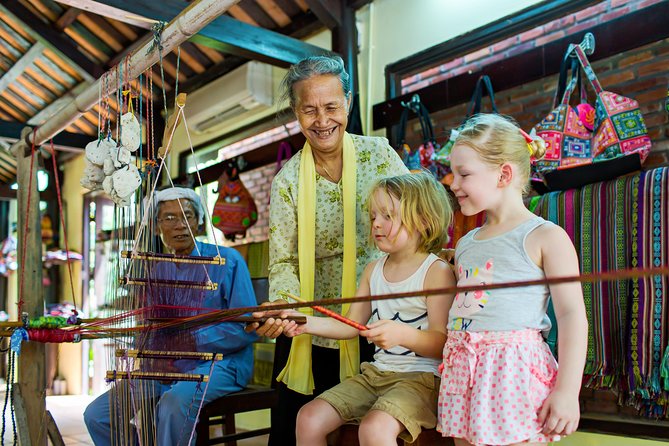
Hoi An used to be a major silk hub in Quang Nam province, with thousands of residents working the industry. The finished silk products were shipped out by the Silk sea road, sending thread and fabric toward Europe and Asia.
What I like about starting with this story is that it makes the whole visit make sense. When you understand that silk was once a whole community economy, the buildings you walk through stop feeling like a random craft stop and start feeling like a system.
The tour also keeps the learning practical. You are not just watching behind glass. You are moving through the same stages people once did to produce silk, from feeding mulberry leaves to turning cocoons into thread, then into woven cloth.
More Craft Tours in Hoi An
- Thanh Ha Village: Pottery Workshop with Locals
★ 4.4 · 223 reviews - Hoi An: Thanh Ha Village Tour with Pottery Making and Gift
★ 4.8 · 78 reviews - Discover Traditional Silk Process in Hoi An Silk Village
★ 4.4 · 60 reviews
The Traditional House and the Cham Culture Thread
The first stop pulls you into the history of sericulture and weaving. You learn how sericulture worked in Hoi An, then you see how silk unraveling and weaving fit together as one connected workflow.
From there, you shift into Cham culture, which matters because Cham weaving and textile traditions influenced the wider regional craft story. You will see Cham mulberry trees as part of this section, then you learn about weaving processes linked to the 5th century through the mid-15th century.
In a place like Hoi An, you can easily get stuck in the “shopping and lantern photos” rhythm. This part helps you slow down and understand what people made, why they made it, and what techniques were worth passing down.
Mulberry Garden Work and the Silkworm Lifecycle
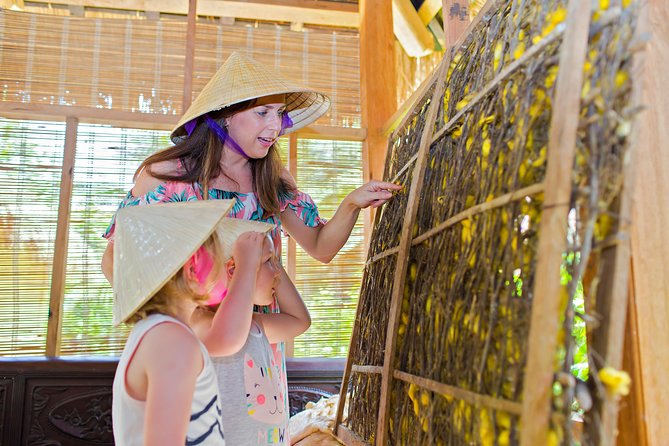
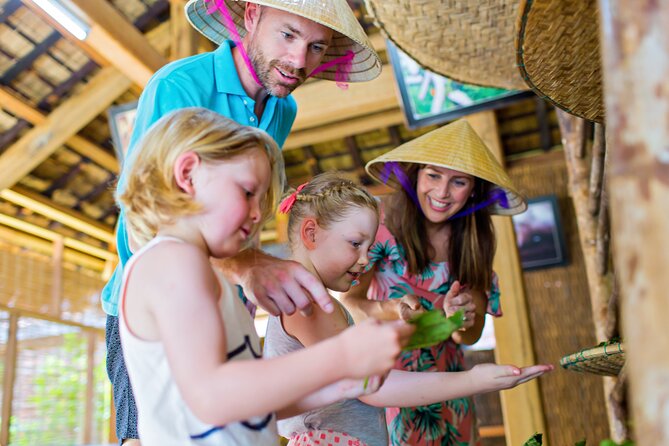
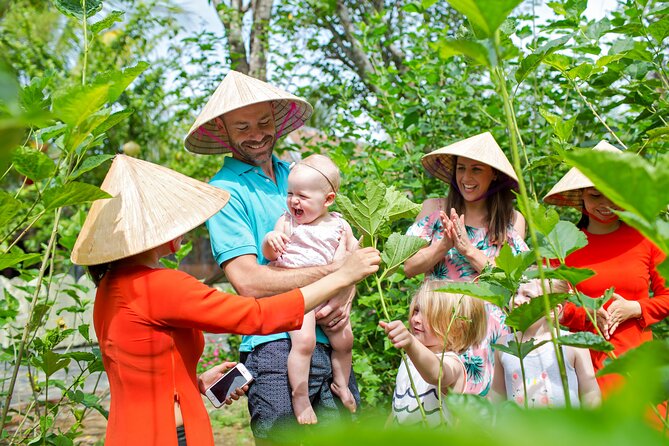
Next comes the Vietnamese mulberry garden, where the visit becomes hands-on in a very tangible way. You learn how people choose good mulberry leaves, cut them into smaller pieces, and hand-feed silkworms.
That sounds simple until you realize how much silk quality depends on feeding and timing. The tour’s structure makes that clear by teaching the process as a lifecycle, not a one-time trick.
Then you go to the silkworm breeding house. This is where you learn about the silkworm lifecycle in a straightforward way, with real stages you can see. It is one of the best segments for anyone who wants the science-meets-craft side of the story.
One practical tip: wear comfortable shoes. The most educational parts are also the ones where you will spend time moving between rooms and stations.
Unraveling Cocoons into Thread, Then Weaving on Looms
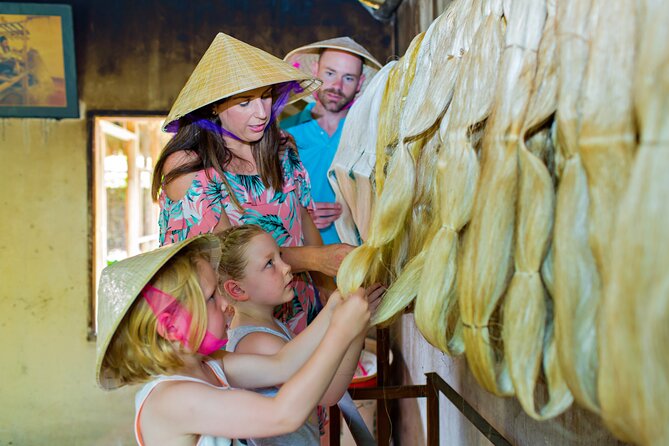
Once you have the silkworm background, the tour moves into the “how the thread becomes cloth” steps. The Unraveling House is where you understand how to get silk thread from cocoons, which is the step that turns living fiber into something you can weave.
This is not just described. You get to understand how the cocoon is handled and how that thread process supports weaving. It is a big mental shift, and it helps you appreciate why silk products can look so delicate and still be made with serious craft skill.
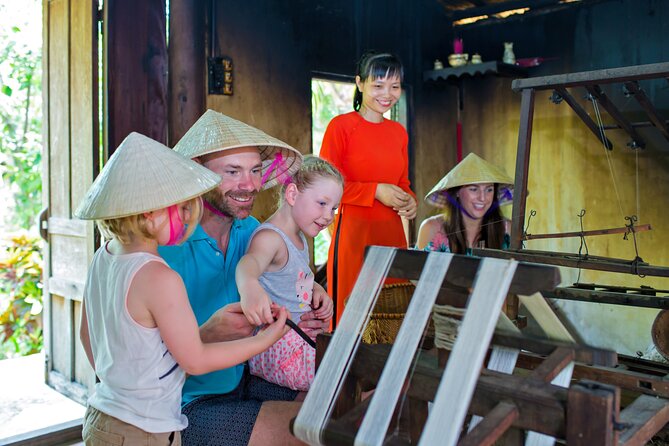
Then you reach the Cham Textile House, where you see weaving methods using short and long wooden looms. This matters because loom type affects the structure of the fabric and the way patterns appear.
If you like “watching the mechanics” of a craft, this is where the visit clicks. You stop thinking of silk as something that comes from a store shelf and start thinking of it as a sequence of physical work, each step affecting the next.
More Hoi An plans to weigh
- Hoi An: Experience Pottery Making With Local Craftsmen
★ 4.8 · 54 reviews - Hoi An: Half-day Silk Weaving Discovery Tour
★ 4.7 · 30 reviews - Half-day Silk Weaving Discovery In Hoi An
★ 5.0 · 25 reviews - Hoi An Ceramic/Pottery/Lantern Making Class Cafe & Basket Boat
★ 5.0 · 15 reviews
Cuu Dien House and How to Spot Pure Silk
The Cuu Dien House focuses on pure handicraft silk from the beginning of the 20th century. You get a look at how silk production and finished pieces were preserved, which gives the visit an added layer beyond the modern-day shop floor.
But the smartest practical stop comes later: the exhibition on the difference between pure silk and fake silk fabric. This is the part that can save you money, because you learn what to watch for when buying.
Silk shopping in Vietnam can be confusing if you only look at how it shines in the light. The exhibition gives you a more grounded way to evaluate what you are buying, so you feel confident picking a piece that matches what you think you are getting.
The Restaurant Break and Shopping Without Pressure
After the craft stations, you can enjoy lunch or dinner at the Hoi An Silk Village Restaurant. The meal is included, and it is designed as a local-food break after a very hands-on morning or afternoon.
This pause also helps the day feel balanced. You can be fully focused on the process earlier, then shift into a calmer pace, eat well, and actually absorb what you just learned.
On the shopping side, the visit ends with an on-site store that sells silk items and textiles. What I appreciate here is the overall feel reported by people who go: there is not much pushiness, and the shop is presented as a place to browse the craft you just understood.
If you want the best value, use what you learned in the pure-vs-fake silk segment before you buy. Also, check that the item fits the use you actually want, clothing versus decorative pieces, because not every silk product is meant to be treated the same way.
Price, Time, and Logistics That Matter in Real Life

This experience costs $31.05 per person and runs about 3 hours. For many people, that timing is perfect in Hoi An, because you still get a meaningful activity without stealing half a day from Old Town.
You also get solid inclusions for the price: an English or French-speaking guide, the entrance fee, bottled water, and a meal with a local specialty. Add in that it is a private tour where only your group participates, and the value becomes easier to justify, especially if you prefer a calmer pace than a large shared group.
Timing-wise, this tour is commonly booked about 14 days in advance, so if you have a tight schedule, booking early is a good idea.
Logistically, it is near public transportation, and service animals are allowed. Most people can participate, but the key is comfort, since you will be in and out of stations and observing demonstrations throughout the visit.
One more “real life” note: the experience requires good weather. Outdoor parts like the mulberry garden are part of the flow, so if weather turns rough, you may be offered a different date or a full refund.
Who Should Book Hoi An Silk Village?
Book this if you want a craft tour that is more than just watching. The strongest appeal is the full chain of work, with practical understanding of how silkworms and cocoons become thread and fabric.
It is especially great for:
- anyone interested in textiles, Vietnam crafts, or the history of Hoi An as a silk center
- people who like hands-on learning, from feeding silkworms to understanding unraveling and weaving
- shoppers who want a real method for evaluating pure silk versus imitation
It might not be the best fit if your main goal is a long outdoor walking experience. Since it is a purpose-built facility with multiple rooms and demonstrations, you will get most of your time indoors or in workshop areas.
Should You Book This Tour?
Yes, if you want something in Hoi An that connects history to a skill you can actually understand. For the price, you get far more than a quick look at silk goods, because the visit teaches the process step by step, includes a meal, and gives you the tools to shop smarter with the pure-vs-fake silk education.
I would not skip it if you care about textiles or you are curious how a delicate fabric can come from careful, repeated work. This is the kind of tour that changes how you see silk the next time you shop.
If you only have time for one “craft” stop in Hoi An, make this one count.
FAQ
How long is the Hoi An Silk Village tour?
The tour lasts about 3 hours (approx.).
What is the price per person?
The price is $31.05 per person.
What languages are the guides?
The tour includes an English or French-speaking guide.
Is the tour private?
Yes. It is a private tour/activity, and only your group will participate.
What is included in the tour price?
It includes an English or French-speaking guide, a meal with a local specialty, entrance fee, and bottled water.
Where does the tour start?
The meeting point is Silk Village Hoi An – The Tourist28, Nguyễn Tất Thành, Phường Cẩm Phổ, Hội An, Quảng Nam, Vietnam. The activity ends back at the meeting point.
What happens if the weather is bad?
The experience requires good weather. If it is canceled due to poor weather, you will be offered a different date or a full refund.
New listings around Hoi An
- Hoi An Memories Show with Hoi An Impression Theme Park Ticket★ 5.0 · 13 reviews
- Coconut Basket Boat Trip – A Must – Do Experience in Hoi An!★ 4.5 · 57 reviews
- Cook Like a Local: Your Personalized Vietnamese Culinary Journey★ 5.0 · 185 reviews
- Hoi An Memories Show – QRCODE Ticket★ 4.5 · 27 reviews
- Full Experience Tour: Cooking Class & Basket Boat at Eco-Village★ 5.0 · 187 reviews
- Hoi An food tour★ 5.0 · 11 reviews
- Vegetarian Cooking Class and Basket Boat Activity★ 5.0 · 19 reviews
- Cooking Class Lunch/ Dinner with Local Chef in Coconut Village★ 5.0 · 15 reviews
Handicraft Village Tours, compared.
Incense Village, Hat Making & Lacquer Artisan Small Group Hanoi
Read our review →
Incense Village, Hat, and Lacquer Artisanal Tour
Read our review →
Incense Village Small Group of 9 Tour From Hanoi to Ninh Binh
Read our review →
Incense Village, Hat, Lacquer Tour & City Highlights
Read our review →
Incense Village, Hat, Lacquer, & City Highlights Tour
Read our review →
Instagram Incense Quang Phu Cau Village Tour with Train Street
Read our review →
INCENSE Villages & Ha Noi City Full Day guided Tour with Lunch
Read our review →
Countryside Tour with Silk Village & Elephant Falls
Read our review →Browse the lists this tour appears in