
Reviewed · HANDICRAFT VILLAGE TOURS
Discover Traditional Silk Process in Hoi An Silk Village
Silk is not just fabric here. This short tour in Hoi An explains the full silk process, from mulberry to cloth.
I especially like the way you see the work in real steps, including the silkworm-breeding house and how feeding leads to cocoons. The English-speaking guides keep it clear, and the demonstrations are paced for questions.
One thing to keep in mind is the shopping side, where the print selection can feel a bit chaotic if you’re picky about designs.
In This Review
- Key highlights you will actually use
- How this Hoi An silk village tour earns its $11 price
- Welcome drink and Quang Nam’s sericulture story
- Mulberry gardens: the plant that drives everything
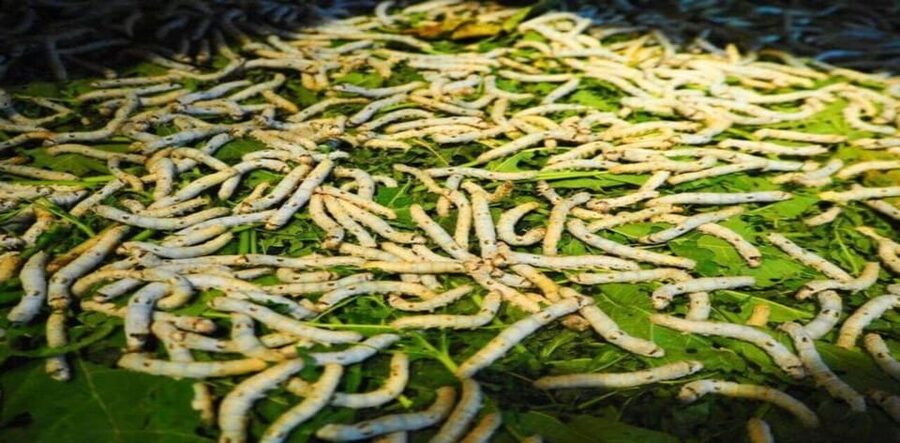
- Silkworm-breeding house: what happens before cocoons
- Unraveling House: getting thread from cocoons
- Weaving and Champa-Dai Viet textile craft inside the weaving house
- How the exhibition helps you shop for pure silk
- Shopping reality check: prints, shirts, and what to prioritize
- Timing, group size, and comfort in a short visit
- Who this silk process tour is perfect for
- Should you book? My straight answer
- FAQ
- How long is the Traditional Silk Process in Hoi An Silk Village tour?
- What is the price per person?
- Where do I meet for the tour?
- What is included in the tour price?
- What is not included?
- What do I visit during the tour?
- What should I bring?
- Is the tour suitable for wheelchair users or people with mobility impairments?
- What items are not allowed during the tour?
- What is the cancellation policy?
Key highlights you will actually use
- Mulberry garden walk for the basics of where the silk diet starts
- Silkworm-breeding house to see breeding and cocoon preparation
- Unraveling House demo showing how thread comes from cocoons
- Quang Nam craft story tied to mulberry growing and traditional sericulture
- Pure silk vs fake silk exhibition to help you shop smarter
How this Hoi An silk village tour earns its $11 price
For $11 and about 50 minutes, this is the kind of stop that feels efficient without being skimpy. You are not just looking at finished scarves. You are guided through the chain that turns plants into thread, and thread into fabric. That matters in Hoi An, where silk is everywhere and quality can be confusing.
The value is in the structure. You start with the life of the crop and the animals, then you move to the craft rooms where people work with their hands. By the time you reach the end, you know what to look for when you shop. The tour also includes an entrance fee, bottled water, and an English-speaking guide, which helps keep the experience smooth.
You should know this is a light walking tour. Comfortable shoes help, and the visit is not ideal if you use a wheelchair or have mobility challenges, since parts of the route are not set up for that.
More Craft Tours in Hoi An
- Thanh Ha Village: Pottery Workshop with Locals
★ 4.4 · 223 reviews - Hoi An: Thanh Ha Village Tour with Pottery Making and Gift
★ 4.8 · 78 reviews - Hoi An: Experience Pottery Making With Local Craftsmen
★ 4.8 · 54 reviews
Welcome drink and Quang Nam’s sericulture story
The tour begins with a welcome drink, a small touch that sets a relaxed tone before you step into craft spaces. After that, you visit a traditional house in Quang Nam. This stop is about context, not sales.
You get the story of craft sericulture, with an emphasis on the connection between mulberry growing and silk production. It’s the kind of background that makes the later rooms click. Instead of seeing silkworms as a random attraction, you understand why mulberry is central and how the process links back to older local traditions.
This is also where your guide style matters. In the past, guides like Thu and Tsu have been mentioned for clear English and patient explanations. If you ask questions, you usually get real answers rather than quick hand-waving.
Mulberry gardens: the plant that drives everything
Next comes the mulberry garden. This stop is simple but important. Silk starts with leaves, and the tour treats that fact respectfully.
You will see how mulberry growing fits into the bigger silk workflow, including why the village places value on its mulberry sources. The site also frames itself as one of the only locations with valuable genetic sources of mulberry, which is a strong claim, but it explains the pride behind their process.
Why you should care: if you have never seen silkworm feeding explained before, this is the moment it becomes logical. The tour makes the supply chain feel real. You stop thinking about silk as a product and start thinking about it as an agricultural craft.
If you want photos, this is one of the more pleasant areas. It’s less of a closed-door demo and more of a walk-through with visible daily-life details.
Silkworm-breeding house: what happens before cocoons
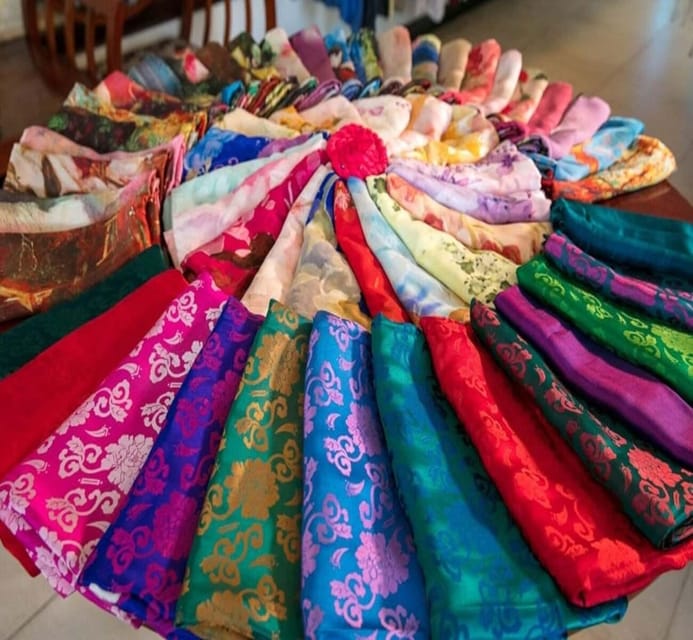
Then you move into the silkworm-breeding house and the feeding stage. This is where the tour becomes more hands-on, and where the pace slows a bit so you can take in what you are seeing.
You learn about traditional methods for cultivating and removing silkworm cocoons. You also hear how the work is organized, including the steps people take to keep the process going.
One of the most talked-about moments is the cocoon extraction part, because it is part of the reality of silk production. The process involves the silkworm dying after the cocoon stage, and the tour does not pretend that silk is consequence-free.
This does not ruin the experience for most people, but it does set expectations. If you are very sensitive about insects or ethics, think about your comfort level before you go.
More Hoi An plans to weigh
- Hoi An: Half-day Silk Weaving Discovery Tour
★ 4.7 · 30 reviews - Experience Making Pottery with Local Craftsman in local home
★ 4.7 · 10 reviews - Incense Village, Hat Making & Lacquer Artisan Small Group Hanoi
★ 5.0 · 1,266 reviews - Hanoi: Incense Village, Hat, and Lacquer Artisanal Tour
★ 4.6 · 1,005 reviews
Unraveling House: getting thread from cocoons
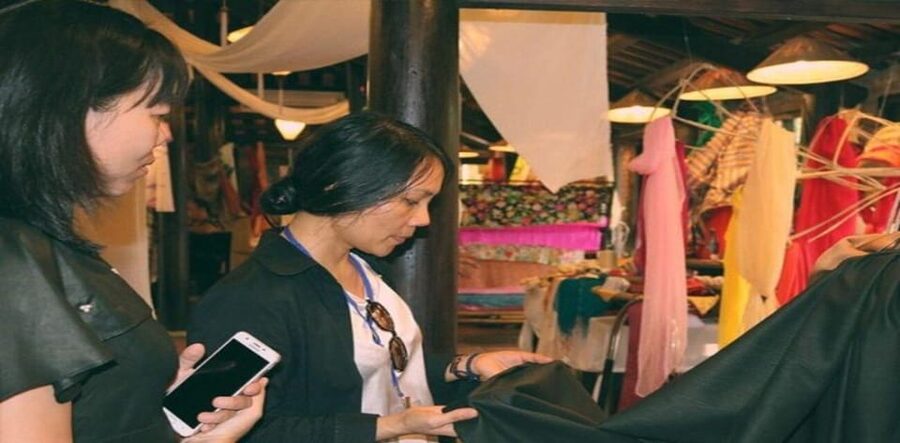
After the silkworm stage, the tour heads to the Unraveling House. This is the step many people want to understand, because it’s not obvious from looking at silk fabric.
You learn how silk thread comes from the cocoon. The demo explains the basic idea: you do not pull thread like you would from a ball of yarn. Instead, the cocoon is treated so thread can be unwound for spinning and weaving.
This part is useful even if you have never tailored anything. It gives you a mental model for how silk becomes thread. Then later, when someone shows you fabric and says it is pure silk, you can connect the claim to what the process involves.
The best guides make this clear without getting too technical. If you ask for clarification, guides have been described as patient, which matters because silk production can sound confusing at first.
Weaving and Champa-Dai Viet textile craft inside the weaving house
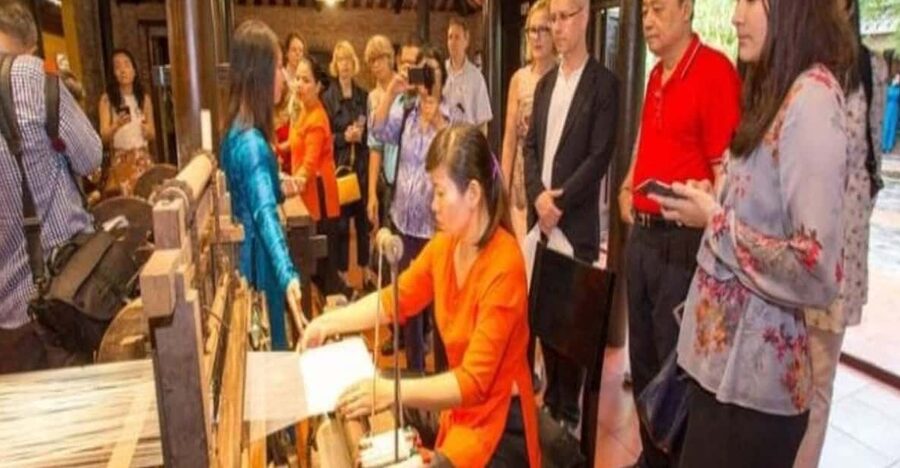
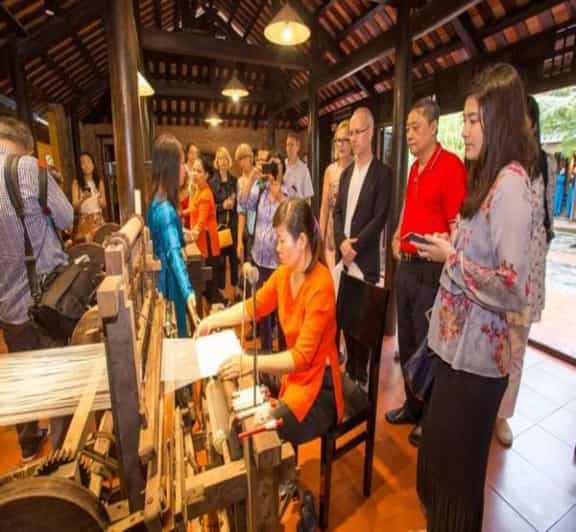
Next you visit the Vietnamese traditional silk weaving house and learn about the handicrafts of the Champ people and how traditional textiles are made. The tour frames this as a handmade silk-weaving method preserved from the Champa and Dai Viet era.
Even if you are not a history buff, this stop helps you understand why styles look the way they do. Weaving is not just turning thread into cloth. It is a system: materials, patterns, tension, and tradition. When the guide connects the technique to the culture, the fabrics start to feel less like souvenirs and more like craft.
This is also where you may see demonstrations. Some people specifically mention clear weaving and spinning explanations, which are practical because they show how raw material becomes something you can hold.
If you enjoy watching hands at work, this will be the part you wish was longer. The good news is you can still buy silk later with more confidence than if you skipped straight to the shop.
How the exhibition helps you shop for pure silk
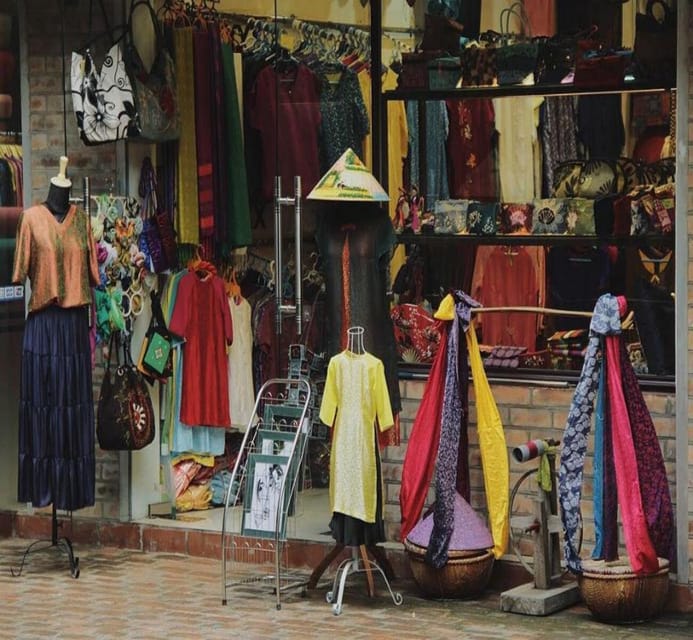
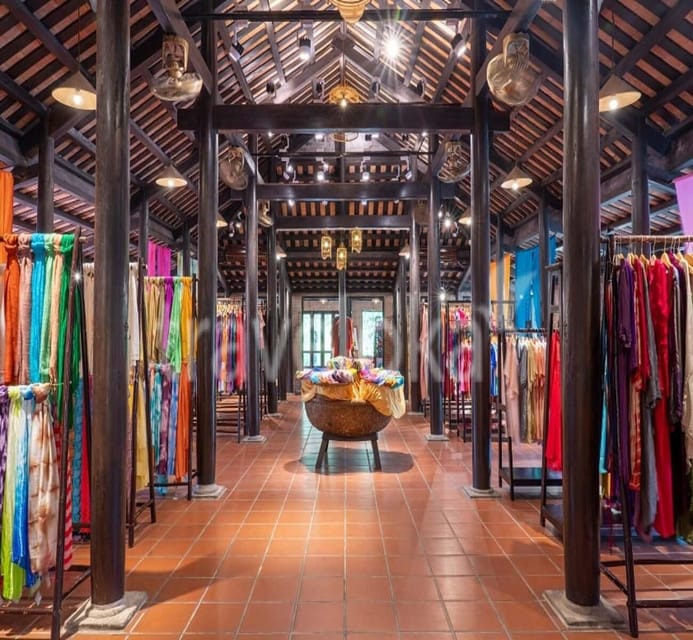
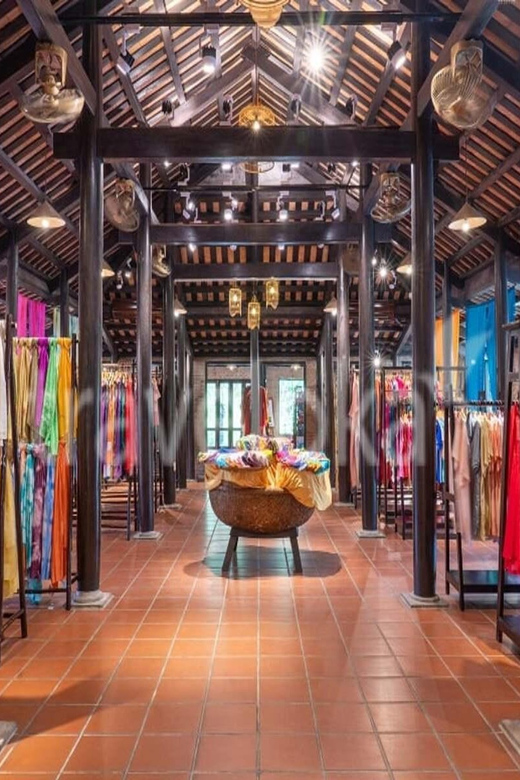
The tour finishes at the Hoi An Silk Village exhibition, where you learn about the difference between pure silk and fake silk fabric.
This is a big deal in Hoi An. Silk products are common, so “silk” on a sign is not enough by itself. The exhibition aims to give you a way to evaluate claims. That changes how you shop, because you start asking better questions.
At the end, you can use what you learned for shopping and tailoring. People often end up buying something small even if they came in with no plan, because the process you saw earlier makes the merchandise feel more trustworthy.
One buying tip: if you are deciding between a casual gift and a garment you’ll wear often, use the tour’s silk quality knowledge as your filter first. Then pick designs. That way a print that looks great on day one does not distract you from quality choices.
Shopping reality check: prints, shirts, and what to prioritize
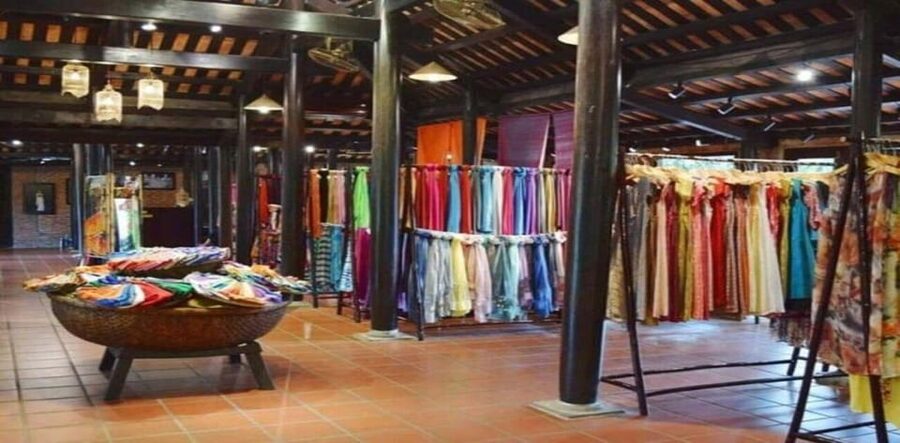
This is a craft tour, but it ends in a sales environment. Some visitors love the silk products, including mention of silk shirts with incredible quality and value for the money.
Still, if you are picky about pattern style, you might find the variety prints offered a bit messy in color combinations, with fewer choices than you hoped. That doesn’t mean the silk is bad. It just means the shop may not match every design taste.
So here’s the practical approach I recommend: decide what you want to buy based on fabric quality first. Then tolerate print options later. If you find a design you truly love, you can feel confident it is tied to the process you just learned.
If you want to be extra smart, go in knowing you might need to tailor. The tour frames the products as suited for shopping and tailoring demand, so you may spend the final moments thinking about what fits your wardrobe.
Timing, group size, and comfort in a short visit
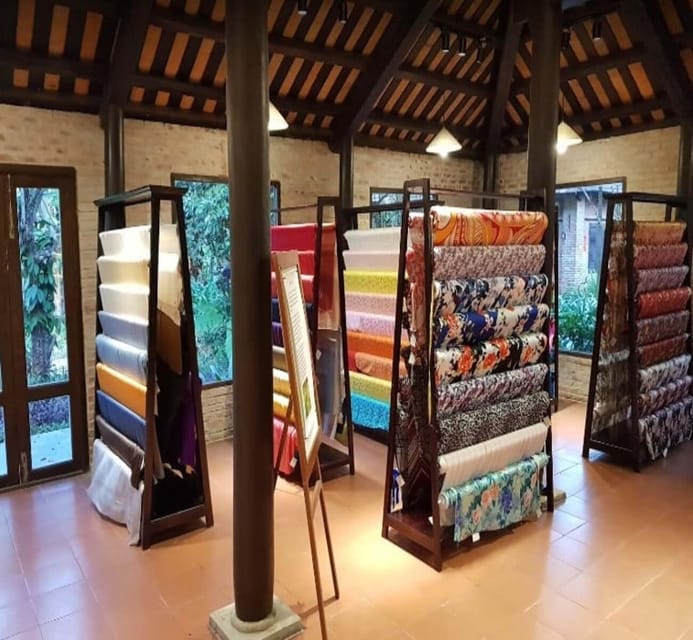
The duration is about 50 minutes. That’s long enough for multiple stops and one clear craft demo, but it is not long enough for a slow browse through every display.
In practice, the experience can feel more comfortable when group size is small. Limited room in some buildings is mentioned, and that means crowding can make it harder to see or ask questions. The good side is that smaller groups can help you focus on details like thread steps and weaving explanations.
Plan for a short walking route with some indoor time. Comfortable clothes matter more than fancy outfits, since you may move between garden and craft rooms.
Also note the rules: luggage or large bags are not allowed. If you are carrying more than a day bag, plan to store it somewhere before you arrive. And the tour is not suitable for people with mobility impairments or wheelchair users.
Who this silk process tour is perfect for
You should book this if you want a practical, hands-on understanding of how silk is made in Hoi An, not just a pretty factory photo. It’s especially good if you:
- Like craft and want to see the production steps, not only the end result
- Plan to buy silk items and want help separating pure silk from lower-quality blends
- Enjoy short structured tours that still include real demonstrations
It is also a strong “first silk stop” because it builds your baseline knowledge fast. After this, you will be less confused by sales talk.
If you are only shopping for textiles and already know the basics of silk quality, you might skip this or pair it with another activity. But most people find the process explanation changes the way they shop.
Should you book? My straight answer
Yes, if your goal is understanding and shopping with better instincts. At $11 for about 50 minutes with an English-speaking guide, it is a smart value for Hoi An. The tour’s strongest parts are the process rooms, especially the steps connected to cocoons and how thread turns into weaving.
Skip it or think twice if you are not interested in insects at all, or if you know you will only enjoy the tour if the shop designs match your exact taste. The shopping experience can be a mixed bag in terms of print variety, and the tour’s time limit means you might not get long to browse.
If you want, tell me your travel dates and whether you’re buying a shirt or tailoring a garment. I can suggest the best way to use the time in the exhibition so you leave with the right thing, not just any silk.
FAQ
How long is the Traditional Silk Process in Hoi An Silk Village tour?
The duration is about 50 minutes.
What is the price per person?
It costs $11 per person.
Where do I meet for the tour?
The meeting point is 28 Nguyen Tat Thanh, Hoi An, Quang Nam, Viet Nam.
What is included in the tour price?
It includes an English speaking guide, entrance fee, and a bottle of water.
What is not included?
Hotel pick up and drop off, meals, and personal expenses are not included.
What do I visit during the tour?
You visit the traditional house in Quang Nam, mulberry gardens, a silkworm-breeding house, the Unraveling House, and the Hoi An Silk Village exhibition.
What should I bring?
Bring comfortable shoes and comfortable clothes.
Is the tour suitable for wheelchair users or people with mobility impairments?
No. It is not suitable for people with mobility impairments or wheelchair users.
What items are not allowed during the tour?
Luggage or large bags are not allowed.
What is the cancellation policy?
Free cancellation is available up to 24 hours in advance for a full refund.
New listings around Hoi An
- Romantic Sunset Dinner Cruise in Hoi An★ 4.7 · 108 reviews
- Snorkeling Cham Island: Snorkeling Tour by Speed Boat★ 3.6 · 26 reviews
- Hoi An: Secret Cocktail Experience★ 4.9 · 16 reviews
- Hoi An: Rural Cycling Tour to Village with Basket Boat Ride★ 5.0 · 174 reviews
- Rural Cycle, Market Tour, Basket Boat & Organic Farm Cooking★ 5.0 · 64 reviews
- From Hoi An or Danang: Private Day Trip to Hue★ 4.9 · 14 reviews
- Private Car Hoi An to Hue Via Hai Van Pass, Lagoon & More★ 5.0 · 22 reviews
- My Son Sanctuary Morning/Afternoon with Boat Trip and Banhmi★ 4.5 · 11 reviews
Handicraft Village Tours, compared.
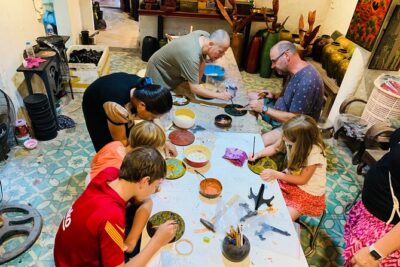
Incense Village, Hat Making & Lacquer Artisan Small Group Hanoi
Read our review →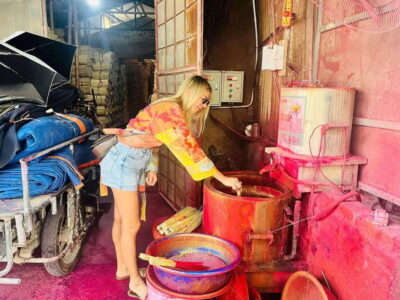
Incense Village, Hat, and Lacquer Artisanal Tour
Read our review →
Incense Village Small Group of 9 Tour From Hanoi to Ninh Binh
Read our review →
Incense Village, Hat, Lacquer Tour & City Highlights
Read our review →
Incense Village, Hat, Lacquer, & City Highlights Tour
Read our review →
Instagram Incense Quang Phu Cau Village Tour with Train Street
Read our review →
INCENSE Villages & Ha Noi City Full Day guided Tour with Lunch
Read our review →
Countryside Tour with Silk Village & Elephant Falls
Read our review →Browse the lists this tour appears in