Reviewed · HANOI TOURS & ACTIVITIES
Vietnam Cambodia and Thailand Group
Three capitals and two oceans, one smooth plan. I like how Portuguese-speaking guides keep explanations clear while you bounce between Hanoi, Angkor, and Bangkok, and I like that entrance fees and transfers are handled so you spend your energy on experiences instead of logistics. The main drawback is pace, a lot of moving parts and long days, so plan for early starts and solid recovery time.
You also get two of Southeast Asia’s biggest “wow” moments without turning the trip into a marathon of checklists: Halong Bay at sunrise and the lantern-and-river feeling in Hoi An. If you prefer everything slow and spontaneous, you may feel a little scheduled.
On the practical side, this is set up for small groups, up to 20 people, with air-conditioned transport and hotel stays slotted in across Vietnam, Cambodia, and Thailand. For the price, it can be strong value if you want a guided route with fewer uncertainties.
In This Review
- Key things I’d put on your radar
- The value question: is $4,810 fair for 18 days?
- Hanoi start: Temple learning plus the Old Quarter rhythm
- Halong Bay: sunrise photos and that Jurassic-looking feeling
- Hoi An after Halong: lanterns, river calm, and free time that counts
- Into Cambodia: Angkor with tuk-tuks, smile towers, and temple contrasts
- More Angkor days: Banteay Samre, Banteay Srei, and Buddhist ceremony
- Bangkok: gold Buddha, the Grand Palace core, and two classic markets
- Chiang Mai and Doi Suthep: temple variety with real city views
- Chiang Rai day trip: White Temple and Blue Temple art
- Phuket and Koh Phi Phi: beach time is the point
- Guides and service in Portuguese: what you should expect
- Who this tour is best for
- Should you book this Southeast Asia combo?
- FAQ
- What does the price include?
- What meals are included besides breakfast?
- Are international flights included?
- How does the tour handle single rooms?
- Is there a policy for children?
- What group size should I expect?
- Do I need travel insurance?
- What currency and payment options are supported?
- Can I cancel for a refund?
Key things I’d put on your radar
- Portuguese guides across major cultural stops, including temple complexes and markets
- Halong Bay cruise time split into a daylight sail and a sunrise-focused morning for better photos
- Angkor-style touring with tuk-tuks and sunset timing, not just a drive-by stamp
- Bangkok included temples that cover the big names, plus Chinatown area timing at Wat Traimit
- Chiang Rai White and Blue Temples as a full-day side trip from Chiang Mai
- Koh Phi Phi beach days built in, not only sightseeing pressure
The value question: is $4,810 fair for 18 days?
At $4,810 per person for about 18 days, this isn’t a budget trip. But it is a structured one, and that matters. You’re paying for a lot that would normally cost extra or cause headaches: Portuguese-guided visits, most entrance fees, air-conditioned transfers, hotel accommodations in the chosen category, plus breakfasts and several lunches, and even one dinner included.
What is not included is equally important. International flights are not covered, and so are personal expenses and meals outside the listed ones. You’ll also want travel insurance on your own, since it is not part of the package.
So here’s my practical take: this tends to make sense if you want “big highlights done right” with a plan that already handles the moving between countries. If you love DIY freedom, you might find you can build something cheaper. If you want less decision fatigue, the bundled approach can feel like buying time and confidence.
More Hanoi plans to weigh
- Hanoi Jeep Tour: Food, Culture and Fun by Vietnam Army Jeep
★ 5.0 · 15,222 reviews - Full-Day Ninh Binh Highlights Tour from Hanoi
★ 5.0 · 7,761 reviews - Hanoi: Ha Long Bay Day Cruise – Swimming, Meal, Kayaking
★ 4.7 · 7,415 reviews
Hanoi start: Temple learning plus the Old Quarter rhythm
Hanoi opens with classic landmarks that give you a quick grip on Vietnamese history and culture. You start with the Temple of Literature and National University, known as Vietnam’s first university, founded in 1070 in honor of Confucius. It’s one of those places where you can slow down, look at the grounds, and get why scholars mattered here for centuries.
Then you move to the outside viewing of Ba Dinh Square for the Ho Chi Minh Mausoleum, followed by the One Pillar Pagoda, built on a single stone pillar and designed to resemble a lotus. These are compact stops, but they work because they set different tones quickly, education, modern national identity, and religious symbolism.
The day continues with a handmade florist experience. You’ll see how bouquets are made and learn how people use flowers for spiritual crowns. It’s the kind of activity that feels small until you realize it’s a living tradition.
Later, you get the Lake Hoan Kiem walking area, with views of Ngoc Son Temple and the red Huc bridge, then a panoramic ride through the Old Quarter on a rickshaw-style vehicle. That combination is useful: you get both the calm lake edge and the street-level craft vibe of the 36 streets.
Watch-outs to plan for: the pace is active from day one, and the Old Quarter route is best when you’re comfortable walking. Wear shoes you can handle after a day of temples.
Halong Bay: sunrise photos and that Jurassic-looking feeling
Halong Bay is one of the world’s “how is this real?” destinations. You sail among limestone islands emerging from emerald water, tied to the dragon-coming-down-from-the-sea legend. You also get a mix of named island shapes, like Turtle, Dog, and Head of Man, which helps turn the view into something you can remember.
You get two different Halong Bay moments. One day focuses on a cruise with lunch aboard, then sightseeing around the formations. The next morning can include a Tai Chi class if you’re interested, and you’ll be out early enough for better photos.
Then you take brunch and head back toward land.
How this usually plays for your body: these are not “sit on a lounge chair all day” cruise hours. Plan for a mix of deck time, photo time, and a bit of movement. Bring sunscreen and something light for early morning air.
Hoi An after Halong: lanterns, river calm, and free time that counts

After Halong, you fly from Hanoi to Da Nang and transfer to Hoi An. In the evening, you head to the Hoai River area for a lantern-lit experience. When night falls, the streets light up, lanterns are thrown into the water, and the city shifts into a different mood.
Daytime Hoi An leans into heritage without feeling like a theme park. You explore the Ancient Town, once a major commercial port in the 17th and 18th centuries, with architecture and a slower lifestyle that still show in the streets.
You also visit several specific heritage sites: Phung Hung (Ancient House of Merchants), the older Japanese bridge, the Phuc Kien assembly hall, and the Casa Tan Ky property and museum. The point of this selection is variety. You see Japanese influence, Chinese community structures, and local merchant wealth, all in one compact area.
Then there’s a valuable free afternoon. This is your chance to breathe, hit the beach, stroll the market, or shop. That freedom matters on a trip that otherwise runs on schedules.
Same region, different pace:
- Hanoi: Water Puppet Show Tickets
★ 4.6 · 7,029 reviews - Hanoi Motorbike Tour: Food, Culture and Fun by Vintage Motorbike
★ 5.0 · 6,699 reviews - Hanoi: Guided Food Tour with Train Street Visit
★ 4.9 · 6,239 reviews - Hanoi Cooking Class: Culture, Local Market & Meaning CSR Impact
★ 5.0 · 5,147 reviews
Into Cambodia: Angkor with tuk-tuks, smile towers, and temple contrasts
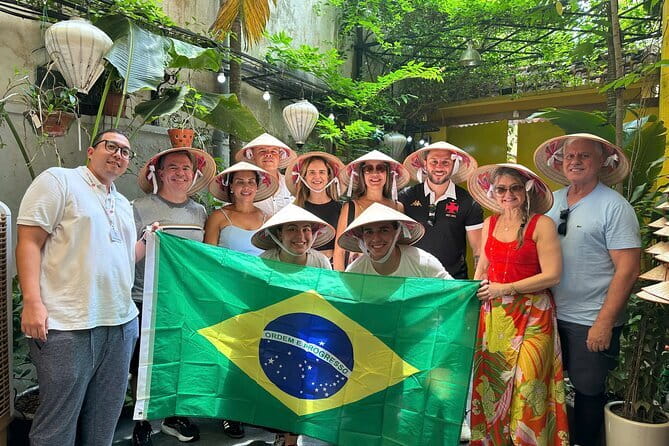
Siem Reap day starts with Angkor Thom, reached by tuk-tuk. The South Gate gives you the sense of scale, then you head to Bayon Temple, famous for its 54 towers with 200 smiling faces of Avalokiteshvara. You also see Phimeanakas, the terrace of the leprosy king and the elephants, plus the royal chambers.
After lunch, Ta Prohm comes next. This is the temple with ruins “embraced” by big trees, and it tends to feel more cinematic because it mixes architecture with nature.
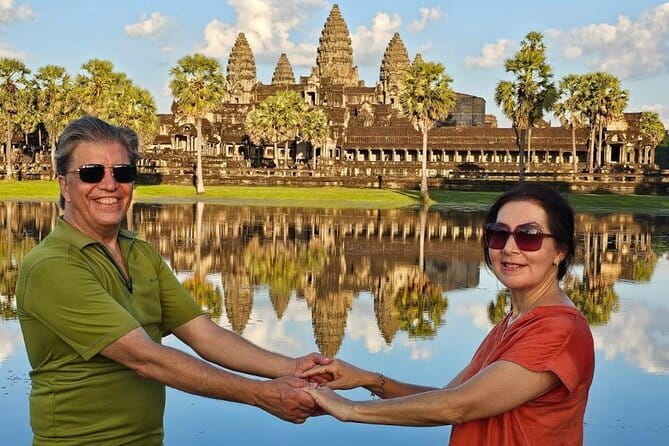
Later comes Angkor Wat, the big one, framed with myth through Mount Meru symbolism. You also get sunset time at Pre Rup Temple. The timing helps. Watching temples in late light changes the whole texture of stone, and it gives your eyes a break from the morning crowd energy.
The main consideration: you’ll walk. Angkor is not a slow stroll, it’s a full-day leg workout wrapped in world heritage drama. If you’re not a fan of steps, bring a steady pace and budget energy.
More Angkor days: Banteay Samre, Banteay Srei, and Buddhist ceremony

Another strong day gives you a different Angkor angle. You start with a Buddhist ceremony with monks in a pagoda, including a closing prayer meant to distribute luck and blessings. Even if you’re not religious, it’s one of the more human parts of the temple circuit, because you see religion as something lived, not only carved.
Then you move to Banteay Samre, a Hindu temple dedicated to Shiva, with reliefs connected to scenes like the Ramayana. Later you tackle Banteay Srei, often called the City of Women because it’s associated with the only Angkorian temple not built for a king by and for women. It’s smaller, but the rose sandstone and intricate sculptures feel more like detailed art than massive monument engineering.
Lunch is included, and the day finishes with D’Angkor Artisans, a center meant to help Cambodian youth keep traditional crafts alive.
This pairing works well for most people because it avoids the “all Angkor all day” monotony. You get scale at Angkor Thom, wild tree-growth drama at Ta Prohm, then stone craftsmanship and smaller precision moments at Banteay Srei.
Bangkok: gold Buddha, the Grand Palace core, and two classic markets

After Cambodia, you fly to Bangkok and jump straight into temples. Wat Traimit is a great first stop in the Chinatown area near Hualampong station because it’s visually punchy. It holds the large gold Buddha statue, nearly 5 meters tall and around 5.5 tons, and you also get a panorama feel from the temple’s position.
Wat Pho follows with the giant reclining Buddha, gold-covered and about 46 meters long, plus its role as a traditional Thai medicine and massage college. That mix of worship and learning gives you a fuller sense of why these places are more than photo stops.
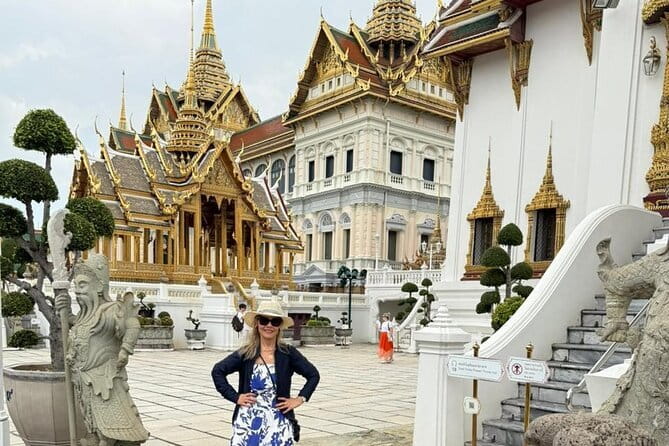
Then the Grand Palace and Wat Phra Kaew close out the royal complex focus. Wat Phra Kaew houses the Emerald Buddha, made from a single block of jade, and the overall complex has gardens and temple sections.
You still have a free afternoon after the main palace circuit, which is smart. Bangkok can be intense. Giving you breathing room helps you enjoy the next day’s markets instead of dragging.
Day 11 hits two favorites. Maeklong Railway Market: you watch the train approach and the vendors retract tents to let it pass through the market center. Then Damnoen Saduak Floating Market, where you take a boat through canals to see how produce and other goods are sold.
Practical note: markets can be hot and crowded. If you’re sensitive to heat, plan your water intake early and keep expectations flexible.
Chiang Mai and Doi Suthep: temple variety with real city views

You fly to Chiang Mai and spend a full day in the mountains for the Doi Suthep area. Wat Phra That Doi Suthep sits high on a forested mountain around 1,000 meters, with city views and many images and frescoes. That viewpoint element is key, it’s one of the few temple experiences here that gives you a broad look over Chiang Mai.
You also visit Wat Chedi Luang, built in the Lanna style around a partially ruined chedi, and Wat Phra Singh, one of Chiang Mai’s most visited temples and known for being central to Songkran festivities among Buddhist faithful. Wat Suan Dok rounds out the day, tied to Chiang Mai royal family remains.
This isn’t just one temple, it’s a cluster. You finish back at your hotel, which is important because Chiang Mai days like this can be tiring.
Chiang Rai day trip: White Temple and Blue Temple art
From Chiang Mai, you can do a day trip to Chiang Rai that runs about 9 to 12 hours. You start by visiting the Karen Long Neck Village, meeting the giraffe women of the tribe and learning about daily life and history.
Then you go to Wat Rong Khun, the famous White Temple. It’s known for being built by an artist whose success influenced and changed the lives of many Thai and Chiang Rai artists, which helps explain why it feels like modern art mixed with religious symbolism.
Finally comes Wat Rong Seur Ten, the Blue Temple, painted completely in blue and recognized for its striking look.
This is a great day if you like art you can’t quite categorize. It also adds variety after the older temple architecture you saw in Vietnam and Cambodia.
Phuket and Koh Phi Phi: beach time is the point
After Chiang Mai, you fly to Phuket. Then you take a bus and ferry transfer from Phuket to Koh Phi Phi. The rest of the day is beach time, and after 15 days of temples and long drives, that matters more than it sounds.
Phi Phi day trips are structured around boat stops with time at each. Monkey Beach, Viking Cave, Pileh Lagoon, Maya Bay, Bamboo Island, Nui Bay, Wang Long, plus snorkeling and sunset time. You also get mentions of plankton diving after sunset, which is a special kind of nightlife wildlife experience if you’re into that.
Day 17 is the payoff for pace control: a free day to relax or explore on your own. Day 18 brings you back via ferry to Phuket Pier and then to Phuket airport for departure.
My advice: pack for both sun and salt. You’ll likely be in and out of water, and the boat days can be deceptively tiring.
Guides and service in Portuguese: what you should expect
One of the strongest signals from customer feedback is that the company emphasizes Portuguese guidance and organization. People specifically mentioned guides like Alberto in Hanoi and Rosa for Vietnam. There were also thanks for fast pre-trip help, including Camila, and careful attention from team members like Crystela and Karolina.
Even if you don’t care about the language part, it can change your whole experience. When you can understand the why behind a temple inscription, a ceremony, or a market custom, the trip feels less like sightseeing and more like learning how people live.
The group size limit of up to 20 travelers also suggests you should not feel swallowed by chaos during transfers and guided stops.
Who this tour is best for
I’d point you to this route if you want:
- Big-ticket destinations without planning every transport hop yourself
- Portuguese guidance for cultural context
- A mix of monuments and markets, plus real beach recovery time
It may be less ideal if you want:
- Slow travel and lots of spontaneous detours
- A trip where you rarely need to wake up early
Should you book this Southeast Asia combo?
If you’re choosing between DIY and guided, I’d say this is worth booking if you want Thailand, Cambodia, and Vietnam highlights in one package with guided tours and transfers handled for you. The biggest reason is the structure, it protects you from time-wasting guesswork between countries.
If you’re the type who loves spending weeks flexing your schedule, you might build a cheaper DIY version. But if you’d rather get the major experiences done with clear guidance, comfortable transfers, and built-in downtime in Phi Phi, this looks like a solid fit for your money and your energy.
FAQ
What does the price include?
The package includes dinner, guided tours and visits in Portuguese, transfers in air-conditioned vehicles, entrance fees, accommodations in the chosen hotel category, and breakfast (17) plus lunch (6).
What meals are included besides breakfast?
Lunch is included on 6 days, and one dinner is included. Other meals are not included.
Are international flights included?
No. International flights and airport charges are not included.
How does the tour handle single rooms?
Prices are per person assuming at least two travelers share a room. If you travel alone, a single room supplement applies. You’re asked to contact the provider for a quote.
Is there a policy for children?
Yes. From 0 to 2 years is 50% of the value (includes air ticket). From 3 to 11 years is 80% if sharing a bed with parents (maximum two children), and 100% if a separate bed is requested.
What group size should I expect?
This tour/activity has a maximum of 20 travelers.
Do I need travel insurance?
Travel insurance is not included, and it’s recommended to purchase it in your home country.
What currency and payment options are supported?
The US dollar (USD) is widely accepted and easy to convert. Credit cards are possible in most cities visited.
Can I cancel for a refund?
You can cancel up to 6 days in advance for a full refund, up to 2 to 6 days in advance for a 50% refund, and less than 2 days before start time is not refundable.
New listings around Hanoi
- Ninh Binh Full Day Tour from Hanoi to Hoa Lu, Trang An & Mua Cave★ 5.0 · 31 reviews
- Beautiful Female Riders Vespa Red River Countryside Tour 5 Hours★ 5.0 · 23 reviews
- Female Riders Vespa Night Street Food + Train Street food 4 Hours★ 5.0 · 35 reviews
- Street Foods Hanoi Kim Tours Vietnam★ 5.0 · 140 reviews
- Red River Delta Countryside+ Rural Villages, rice Paddies fields★ 5.0 · 134 reviews
- The insider’s Hanoi 4.5 hours All highlight Places & Train Street★ 5.0 · 41 reviews
- 5 Days 4 Nights Highlight Vietnam Tours★ 5.0 · 9 reviews
- Hanoi Vespa After Dark Street food + Train Street+ Live Music★ 5.0 · 18 reviews
Hanoi Tours & Activities, compared.
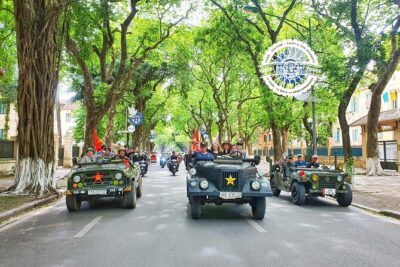
Hanoi Jeep Tour: Food, Culture and Fun by Vietnam Army Jeep
Read our review →
Full-Day Ninh Binh Highlights Tour from Hanoi
Read our review →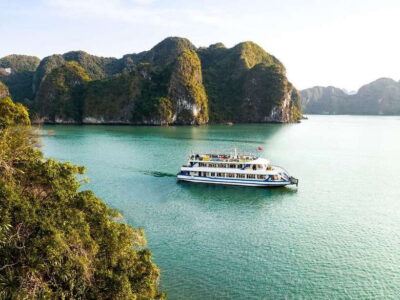
Ha Long Bay Day Cruise – Swimming, Meal, Kayaking
Read our review →
Hanoi Motorbike Tour: Food, Culture and Fun by Vintage Motorbike
Read our review →
Hanoi Cooking Class: Culture, Local Market & Meaning CSR Impact
Read our review →