
Reviewed · HANDICRAFT VILLAGE TOURS
Private Tour Hanoi Highlights – Bat Trang Village – Pottery Class
Hanoi can feel like a greatest-hits album in real life. This private day pairs big landmarks like Ho Chi Minh’s Mausoleum and the Temple of Literature with a practical, hands-on stop at Bat Trang ceramics. I like that it’s built for flow, not stress, and that you get a serious cultural mix plus a creative break. One thing to note is that the mausoleum has strict dress and timing rules, so plan your outfit early.
I especially like how the tour balances solemn sites with lighter, tactile moments. The best example is the Bat Trang pottery class, where you actually form clay and learn the basics in a guided session. Another strong point is the efficient pacing, with entrance fees and pickup handled for you. The only drawback for some people is the day can be long, about 8 to 9 hours, so comfy shoes matter.
In This Review
- Key highlights worth planning around
- Your private Hanoi day: big monuments, real craft, no wasted time
- Tran Quoc Pagoda on West Lake: a 6th-century landmark with a river legend
- Ho Chi Minh Mausoleum: the most important rules are the simple ones
- Presidential Palace and the stilt house grounds: history you can walk through
- One-Pillar Pagoda and the Temple of Literature: from lotus legend to exam dreams
- Vietnam Museum of Ethnology: culture context without feeling like homework
- Bat Trang ceramics village: where the pottery class becomes the real highlight
- Long Bien Bridge walk: French iron engineering still in everyday use
- Hanoi Opera House: the French colonial landmark you can see from the outside
- Price and what you get for $89 in practical terms
- Who this tour suits best, and who should tweak the plan
- Final call: should you book this Hanoi highlights plus Bat Trang pottery tour?
- FAQ
- What time does this tour start?
- Where is the meeting point?
- Is pickup offered?
- Is lunch included?
- What is included in the Bat Trang portion?
- Is Ho Chi Minh Mausoleum open every day?
Key highlights worth planning around
- Tran Quoc Pagoda: a 6th-century pagoda on West Lake with a story shaped by the Red River’s changes
- Ho Chi Minh’s Mausoleum: limited viewing rules, tight security, and a strict modest-dress requirement
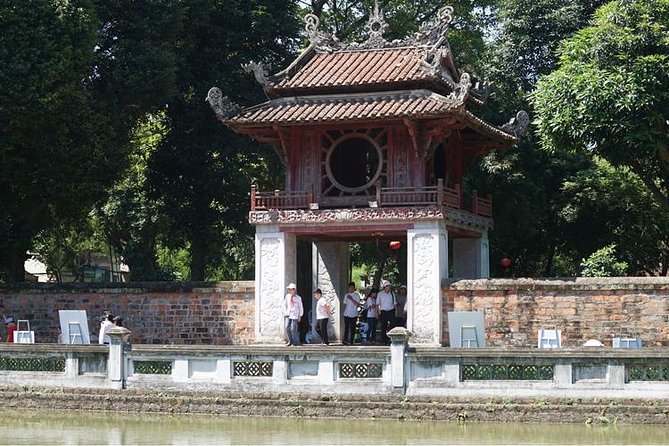
- Temple of Literature: 1070-era university grounds with the Well of Heavenly Clarity and turtle steles
- Bat Trang pottery class: a hands-on workshop, not just shop time
- Long Bien Bridge: a French-era iron bridge designed by Gustave Eiffel, still used by trains and road traffic
- English-speaking guide: private pacing with clear explanations, including guides like Hung called out for strong English
Your private Hanoi day: big monuments, real craft, no wasted time
For $89, this tour is priced in a way that makes sense if you want a full day without turning into a logistics manager. You get round-trip private transfers with an English-speaking guide, plus entrance fees at major sights and lunch. That matters in Hanoi, where some places are easy to find but not easy to navigate quickly, especially when you’re trying to cover several top sites in one go.
The private setup also changes the feel. Instead of weaving around strangers, you can move at your pace and ask questions as you go. It’s a classic Hanoi highlights pairing: temples and memorial sites in the morning, then Bat Trang and the Long Bien area later.
You should still go in with a realistic mindset. This is a lot of stops, and you will walk. If you love history, architecture, and hands-on activities, you’ll enjoy the mix. If you prefer a slower day with fewer transitions, you may feel the schedule.
More Craft Tours in Hanoi
- Incense Village, Hat Making & Lacquer Artisan Small Group Hanoi
★ 5.0 · 1,266 reviews - Hanoi: Incense Village, Hat, and Lacquer Artisanal Tour
★ 4.6 · 1,005 reviews - Incense Village Small Group of 9 Tour From Hanoi to Ninh Binh
★ 5.0 · 626 reviews
Tran Quoc Pagoda on West Lake: a 6th-century landmark with a river legend
You start the day at Tran Quoc Pagoda, known as the oldest pagoda of its kind, dating back to the 6th century. What makes this stop more than a pretty temple is the way its location story mirrors Hanoi’s geography. The pagoda is on an islet within West Lake today, but it originally sat along the Red River banks. It was moved in 1615 because the river shifted and encroached on the original site.
As you arrive, look around the green surroundings and imagine how the pagoda functioned for royal families. The tradition here includes visits for festivals, full moons, and Tet celebrations. The guide can help connect those seasonal rhythms to what you see in front of you now.
Practical note: this is an included admission stop and runs about 40 minutes, so you get time to look without rushing through. It’s a strong opening because it sets a calm tone before the more formal memorial sites later in the morning.
Ho Chi Minh Mausoleum: the most important rules are the simple ones
Next is Ho Chi Minh Mausoleum, and this is the point in the day where preparation pays off. The complex centers on his final resting place, with his body preserved in a glass case. The information you’ll hear is also a reminder that this is more than tourism. The mausoleum was built starting in 1973 and opened to the public in 1975, modeled on Lenin’s mausoleum in Russia. For visitors, it’s an extraordinary place because it blends architecture, national memory, and strict visitor process in one setting.
Here’s the key consideration: security is tight. You must deposit bags and cameras before entering. Plan for delays if your group arrives with lots of items. Then dress for the rules, not for style. The tour data is clear: no shorts, sleeveless shirts, or miniskirts. Shorts must be knee length, and your shoulders must be covered with a scarf when visiting.
Also know the access pattern. The mausoleum opens only in the morning, and it closes weekly on Monday and Friday. That means you need to be on the right weekday and catch the early time slot.
If you follow the rules, this stop feels focused and meaningful. If you don’t, you may end up stressed at the worst possible moment.
Presidential Palace and the stilt house grounds: history you can walk through
After the mausoleum complex, the schedule shifts into formal architecture. The Presidential Palace, a mustard yellow three-storey building, was constructed in 1900 by French architect Auguste Henri Vildieu. It was intended for Ho Chi Minh’s official residence, though he preferred a traditional stilt house instead.
The palace layout includes colonial French styling and features such as an orchard and a carp pond. Even if your time inside is limited, the grounds give you a sense of how designed space works as power symbolism. The boulevard leading through the gardens stretches about 91 meters, and the gardens are kept well.
The tour lets you explore the gardens and Ho Chi Minh’s stilt home, but not the full range of palace interiors. That limitation is normal here because political gatherings still occur on site. So if you’re expecting free-roaming museum access, adjust your expectations.
Ho Chi Minh’s stilt house is preserved as he left it, set in a tended garden with a carp-filled pond. It’s described as a traditional stilt house where he lived intermittently from 1958 to 1969. Your best view comes through the open doorways and windows, where you can see more than you might from a typical exhibit behind glass. The stilt house itself is not open to the public, but you can wander the grounds if you stick to paths.
This pairing works well because it gives you two sides of the same story: the grand political building and the simpler residence next to it.
More Hanoi plans to weigh
- Hanoi: Incense Village, Hat, Lacquer Tour & City Highlights
★ 4.6 · 604 reviews - Hanoi: Incense Village, Hat, Lacquer, & City Highlights Tour
★ 4.6 · 470 reviews - Instagram Incense Quang Phu Cau Village Tour with Train Street
★ 5.0 · 323 reviews - INCENSE Villages & Ha Noi City Full Day guided Tour with Lunch
★ 5.0 · 304 reviews
One-Pillar Pagoda and the Temple of Literature: from lotus legend to exam dreams
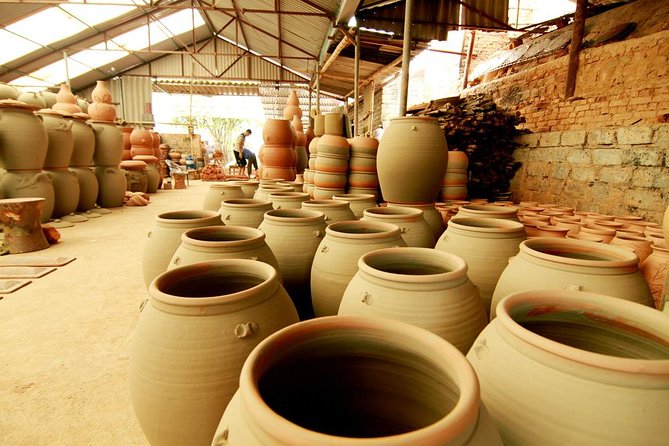
After the political complex, you move into the layered spiritual and educational heritage of Hanoi.
One-Pillar Pagoda is famous for a legend tied to a fatherless emperor and an enlightened being, Avalokiteshvara, who appears in a dream with a baby on a lotus flower. The emperor, Ly Thai Tong, commissioned the pagoda to resemble that lotus. The lotus is also a Buddhist symbol connected to enlightenment. Inside, the main altar centers on a richly gilded statue of Quan Am, the Goddess of Mercy.
What I like about this stop is how it’s visual storytelling. Even if you don’t read the full historical background, the architecture and the statue make the symbolism easy to grasp. The tour time here is about 30 minutes, which is about right for a site of this size.
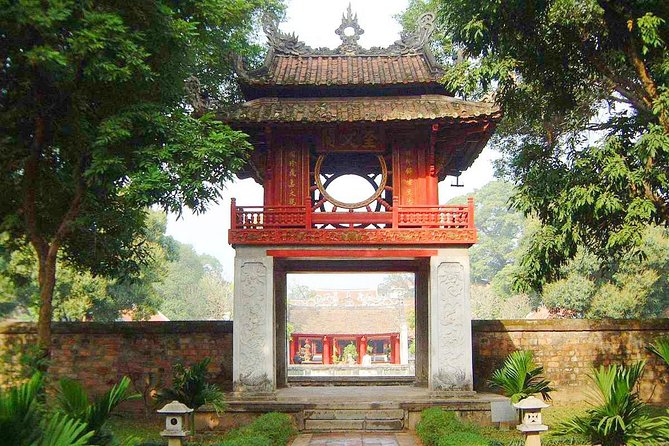
From there you head to the Temple of Literature and National University, built in 1070 as a place dedicated to Confucius. This stop feels like Hanoi’s version of a campus that became a museum, with courtyards, passageways, and preserved buildings. You’ll hear about the Well of Heavenly Clarity and see turtle steles, plus pavilions and courtyards once used by royalty.
The educational aspect is the point. The site records a tradition where scholars and doctors graduated over centuries, and today it functions as a memorial to education and literature. Another interesting detail is that early admissions favored aristocrats and royal family members, not just anyone passing through.
If you enjoy architecture, this is one of the best places on the day because the layout naturally slows you down. If you don’t, you can still catch the highlights quickly.
Vietnam Museum of Ethnology: culture context without feeling like homework
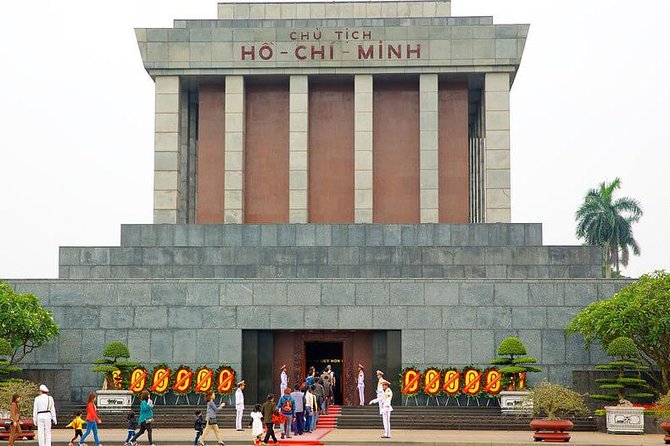
The Vietnam Museum of Ethnology adds a different kind of value to the day. Instead of focusing on one capital-era narrative, it shows how ethnic communities live and celebrate. The emphasis here is on artifacts and everyday ceremonial life, including clothes, tools, and models representing rituals, funerals, and weddings.
This is a useful counterweight to the heavy memorial sites earlier. It also helps you understand what you’re seeing around Hanoi outside the biggest landmarks. When you go from museums to markets and neighborhoods, you carry a broader sense of how Vietnam’s culture is structured.
Your time here is about 1 hour, which feels right. You’ll leave with ideas you can use later in the trip, without needing to memorize exhibit labels.
Bat Trang ceramics village: where the pottery class becomes the real highlight
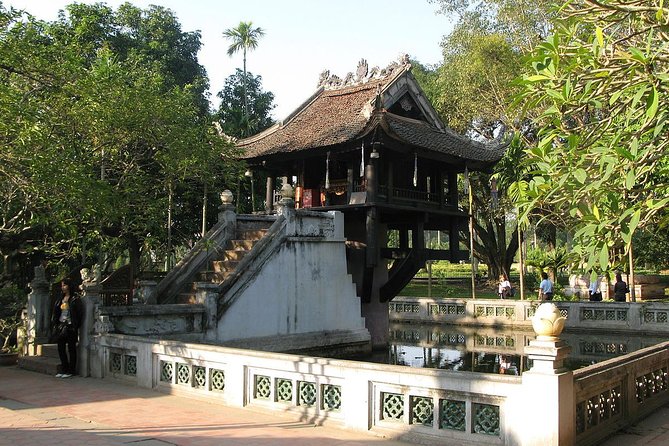
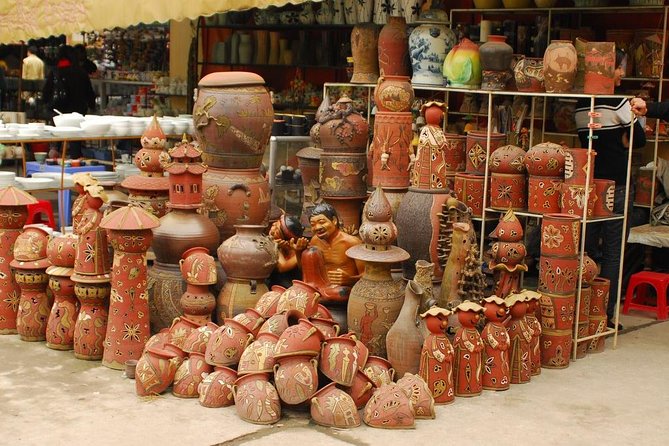
Then comes Bat Trang, a ceramics village near Hanoi with roots in the 14th century. It’s located near the Red River in Gia Lam District. The big idea is simple: you’re not only shopping, you’re learning how pottery is made.
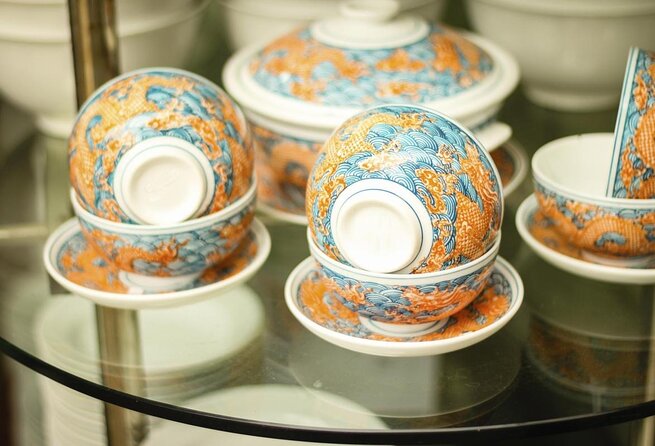
You’ll see how artisans work and how traditional methods mix with modern techniques. You can also purchase ceramics directly from the village, where Bat Trang is known for porcelain and pottery that range from functional pieces to decorative art. The scale of production is part of what makes the place feel like a workshop hub, not a tiny craft street.
The real reason to book this tour though is the pottery making class. You’ll take part in a guided session where you learn how to form hand-made products. The structure is hands-on, and it gives you something memorable to take home that doesn’t feel like a random souvenir. It’s also a good mental reset after temple and memorial sites.
Time here is about 2 hours, including the class. For families, couples, and solo travelers who like activities, this is the stop that turns the day from sightseeing into doing.
Long Bien Bridge walk: French iron engineering still in everyday use
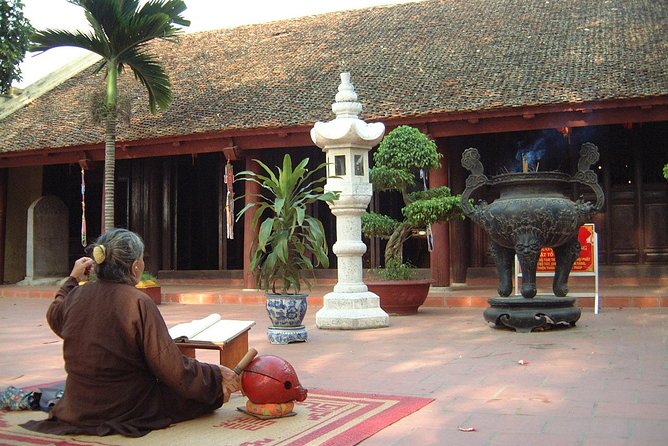
After Bat Trang, you get a short walk at Long Bien Bridge, also called Paul Doumer Bridge. It was constructed between 1899 and 1902 and designed by Gustave Eiffel, the same engineering name associated with the Eiffel Tower.
This is one of those places where the history is right next to modern life. The bridge’s strategic position connecting Hanoi to Hai Phong made it a target during the American war, when it had to be severely bombed. Today it’s still active, used by trains, mopeds, and pedestrians crossing the Red River.
You’ll get a view of the surrounding eco-farm areas like guava, banana, and corn. Even with a short time here (about 30 minutes), the bridge leaves an impression because it’s not staged. It’s infrastructure in motion.
Hanoi Opera House: the French colonial landmark you can see from the outside
You wrap up at the Hanoi Opera House area, where you can visit the exterior. The opera house was erected by the French colonial administration between 1901 and 1911. It was modeled on the Palais Garnier in Paris and uses Neoclassicism, which is why the façade feels familiar if you’ve seen Parisian-style architecture before.
After the French departure, the building became a setting for political events and street fighting during the conflict for Hanoi. Your stop is brief, about 10 minutes, but it gives you a final shot of architectural contrast.
Then the driver drops you back at the meeting point.
Price and what you get for $89 in practical terms
At $89 per person, you’re paying for more than a “tour guide walking with you.” You’re getting a tightly packed schedule with a car, entrance fees, and a real activity.
Included items that add value:
- Private air-conditioned transfers round trip
- English-speaking guide
- Entrance fees for the included sights
- Lunch, a bowl of noodle soup with beef or chicken
- Pottery class at Bat Trang
- Bottled water
Excluded items:
- Drinks during lunch
- Personal expenses
- Tips
For value, the big levers are entrance fees and the pottery class. If you tried to piece these together yourself, the time cost and ticket hunting would add up fast. The private car also makes the schedule feasible, especially when the mausoleum requires morning timing and strict entry rules.
Who this tour suits best, and who should tweak the plan
This tour is a strong match if you want:
- a full-day Hanoi overview without complicated planning
- a mix of temples and memorial sites plus a craft workshop
- an English guide who helps you understand what you’re looking at
- a hands-on experience at Bat Trang, not just a photo stop
You might rethink it if:
- you dislike long days with multiple locations
- you are sensitive to standing in security lines and dress rules at the mausoleum
- you prefer slower travel with more free time in cafés or neighborhoods
If you’re going to visit the mausoleum, pack your scarf early and wear knee-length shorts if you plan to wear shorts at all. That one choice can prevent a lot of morning stress.
Final call: should you book this Hanoi highlights plus Bat Trang pottery tour?
I think this is a book-worthy day trip if you want maximum payoff for your time. The structure makes sense: calm temple start, solemn memorial anchors, then education and culture context at the museum, followed by a craft stop that gives you something you create, not just something you watch.
The decision comes down to the mausoleum and your comfort with a packed schedule. If you can handle strict entry rules and you’re happy to be on the move for most of the day, you’ll likely love the mix of iconic Hanoi and practical creativity.
If you want a memorable souvenir that’s tied to an actual activity, Bat Trang pottery is the reason to go. For me, that’s the moment that turns a highlights tour into a real experience.
FAQ
What time does this tour start?
The tour start time is 8:30 am.
Where is the meeting point?
The meeting point is Hanoi Opera House, 1 Tràng Tiền, Phan Chu Trinh, Hoàn Kiếm, Hà Nội, Vietnam.
Is pickup offered?
Yes, pickup is offered from your hotel.
Is lunch included?
Yes. Lunch is included as a bowl of noodle soup with beef or chicken.
What is included in the Bat Trang portion?
You’ll visit Bat Trang ceramics village and take part in a pottery class where you learn how to form and make hand products.
Is Ho Chi Minh Mausoleum open every day?
No. It opens only in the morning and is closed weekly on Monday and Friday.
New listings around Hanoi
- Ninh Binh Full Day Tour from Hanoi to Hoa Lu, Trang An & Mua Cave★ 5.0 · 31 reviews
- Beautiful Female Riders Vespa Red River Countryside Tour 5 Hours★ 5.0 · 23 reviews
- Female Riders Vespa Night Street Food + Train Street food 4 Hours★ 5.0 · 35 reviews
- Street Foods Hanoi Kim Tours Vietnam★ 5.0 · 140 reviews
- Red River Delta Countryside+ Rural Villages, rice Paddies fields★ 5.0 · 134 reviews
- The insider’s Hanoi 4.5 hours All highlight Places & Train Street★ 5.0 · 41 reviews
- 5 Days 4 Nights Highlight Vietnam Tours★ 5.0 · 9 reviews
- Hanoi Vespa After Dark Street food + Train Street+ Live Music★ 5.0 · 18 reviews
Handicraft Village Tours, compared.
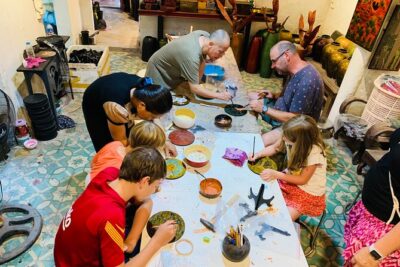
Incense Village, Hat Making & Lacquer Artisan Small Group Hanoi
Read our review →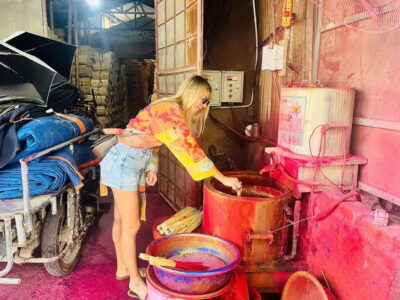
Incense Village, Hat, and Lacquer Artisanal Tour
Read our review →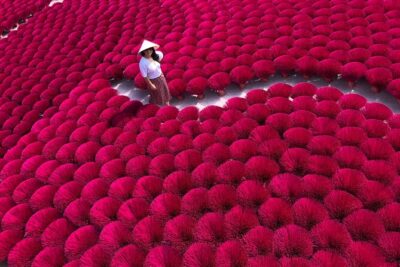
Incense Village Small Group of 9 Tour From Hanoi to Ninh Binh
Read our review →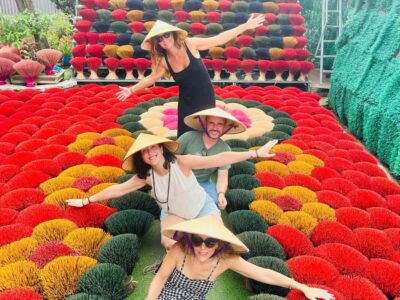
Incense Village, Hat, Lacquer Tour & City Highlights
Read our review →
Incense Village, Hat, Lacquer, & City Highlights Tour
Read our review →
Instagram Incense Quang Phu Cau Village Tour with Train Street
Read our review →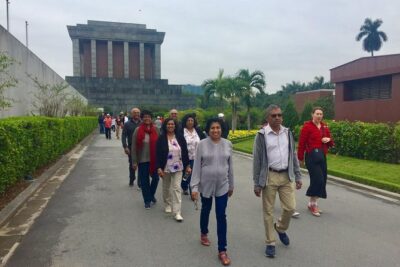
INCENSE Villages & Ha Noi City Full Day guided Tour with Lunch
Read our review →
Countryside Tour with Silk Village & Elephant Falls
Read our review →Browse the lists this tour appears in