
Reviewed · COFFEE EXPERIENCES
Mastering Egg Coffee-Course on 4 traditional types of Viet coffee
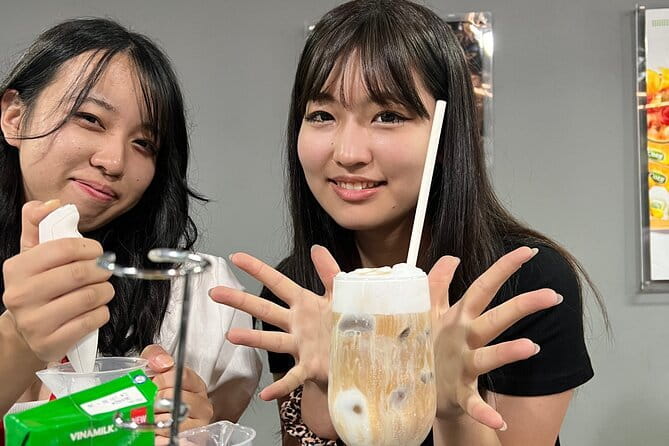
Your next cup comes with a lesson, not just a sip. This small workshop in Ho Chi Minh City teaches you Vietnamese drip coffee step-by-step, with layered, good-looking cups and four classic styles, including egg coffee.
I like that it is truly hands-on, not a lecture. With guidance from the head barista and the funny, engaging host Long/Sarah, you’ll practice technique and presentation as you taste and adjust.
One thing to consider: you’ll leave feeling caffeinated. If you’re sensitive, pick your session wisely since you’re making and tasting four coffees in about 2 hours.
In This Review
- Key Highlights You Should Know
- Vietnamese Coffee Workshop in Ho Chi Minh City, What Makes It Worth Your Time
- How the Class Works, From History to Brewing Steps
- Four Coffees, One Technique, and Why the Order Matters
- Cà Phê Trứng Lòng Đỏ, Egg Coffee and the Visual Payoff
- Cà Phê Sữa Đá, Dark Roast Condensed Milk Coffee
- Cà Phê Muối Biển, Sea Salt Coffee Without the Guesswork
- Cà Phê Cốt Dừa, Coconut Milk Coffee and Creamy Texture Control
- Meeting Point, Group Size, and How the Pace Feels
- The Real Value in the $25 Price, What You Get Beyond Taste
- Who This Coffee Class Is Best For
- Should You Book This Egg Coffee Course?
- FAQ
- What is the duration of the coffee course?
- How much does the experience cost?
- Where does the experience start?
- Will I end back at the meeting point?
- How many people are in the group?
- What coffees are included in the workshop?
- Is there a Q&A during the class?
- Do participants receive any supplies or gifts?
- Is a mobile ticket used?
- Can I bring a service animal?
Key Highlights You Should Know
- Traditional drip technique taught clearly, so you understand what to do, not just what to drink
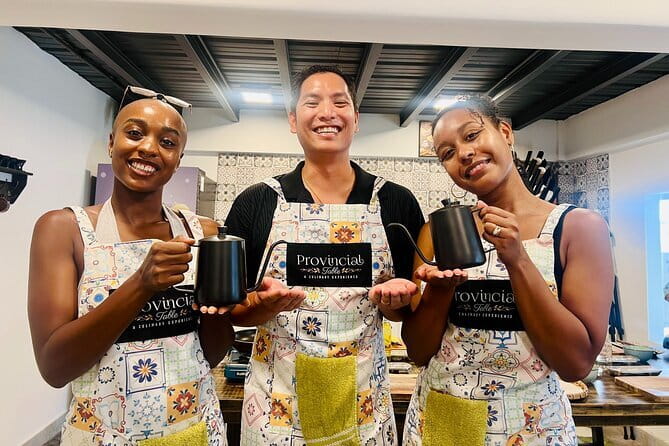
- Four distinct Vietnamese coffee styles made in one session, from egg coffee to coconut milk
- Layering and presentation practice, aiming for cups that look as good as they taste
- Small group size with a max of 15 people, which helps the pace and Q&A
- Fun, fast-moving hosting from Long/Sarah, with humor and good rhythm
- You get all the accoutrements plus a special gift, so you’re not scrambling for supplies
Vietnamese Coffee Workshop in Ho Chi Minh City, What Makes It Worth Your Time
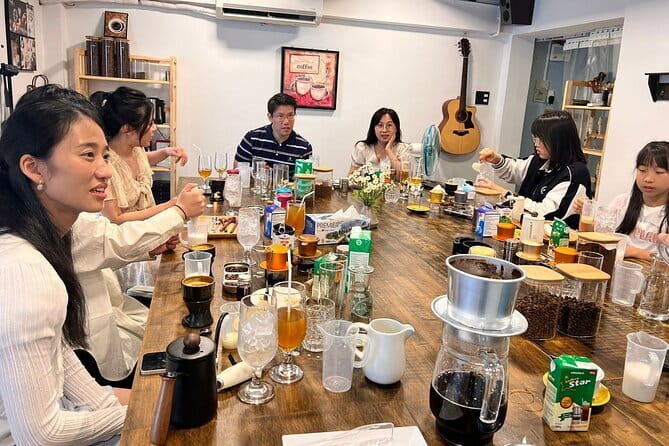
Ho Chi Minh City has coffee shops on every corner, but most of them skip the how. This experience focuses on how Vietnamese coffee gets made, and why it tastes the way it does. You’ll start with the basics of brewing using traditional drip methods, then move into four popular variations that show different flavor directions, from sweet and silky to salty and bold.
The workshop is priced at $25 per person, which makes it feel like a practical coffee class rather than an expensive “tourist tasting.” You’re not just trying samples. You’re learning technique, making multiple drinks, and getting personal instruction from the head barista. With a group capped at 15, you also avoid the feeling of being lost in a crowd.
One more detail I appreciate: the activity uses a mobile ticket, and it runs from a specific meeting point in District 1 area, then ends back there. That kind of simple start and finish is helpful when your day is already full.
More egg coffee stops in Hanoi:
- Decadent Vietnamese “Egg Coffee” Workshop in Hồ Chí Minh City
★ 5.0 · 150 reviews - 1 hour Egg Coffee Cooking Class with Snack and Local Instructor
★ 5.0 · 72 reviews - Hanoi Coffee Workshop: Taste Salt, Coconut and Egg Coffee
★ 5.0 · 1,286 reviews
How the Class Works, From History to Brewing Steps
The format is built around a clear sequence: context first, technique next, then taste and adjust. You’ll begin with an explanation of Vietnamese coffee culture, including its history and origins and influences. You do not need to be a coffee nerd. The goal is to connect flavor with what people do and why, so the drinks make sense in your head, not just on your tongue.
Then the real value kicks in. Under the head barista’s guidance, you learn the meticulous steps of steeping and brewing the “perfect cup” using traditional drip methods. That “meticulous” word matters, because Vietnamese drip coffee is about timing, extraction, and balance. When you understand that, you can recreate the taste later.
A big part of the learning is balance. The class specifically focuses on the interplay of bitter and sweet notes, plus the textures and temperatures you should notice. In practice, that means you’ll be paying attention to how each coffee hits differently, not only whether you like it.
You’ll also get a Q&A at the end. That’s when you can ask the practical stuff, like what to adjust if it tastes too strong, too mild, or not sweet enough.
Four Coffees, One Technique, and Why the Order Matters
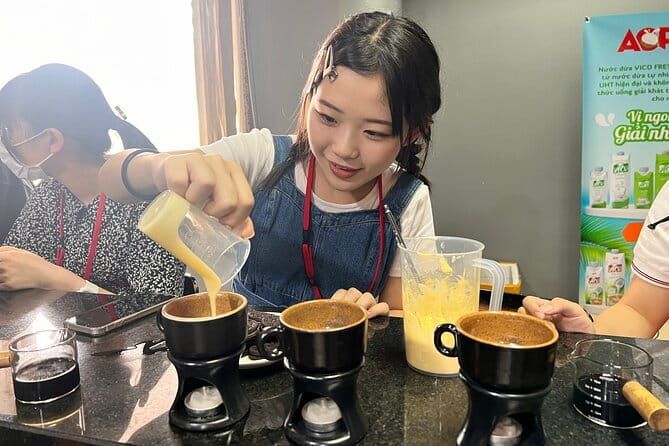
This class is built to teach you patterns. You start with egg coffee, then go to dark roast condensed milk coffee, then sea salt, then coconut milk. Each one uses the same general drip-and-balance approach, but the “add-ins” change what you perceive.
That order helps you compare. Instead of tasting four unrelated drinks, you learn how the same coffee base can shift character when you change sweetness, saltiness, or creaminess. It is also a good way to figure out your preferences quickly. If you love one style, you can probably predict what kind of adjustments you’ll enjoy in real Vietnamese cafés later.
Also, you create all four cups, not just watch. You should expect a steady pace where you keep moving rather than waiting around for long stretches.
Cà Phê Trứng Lòng Đỏ, Egg Coffee and the Visual Payoff
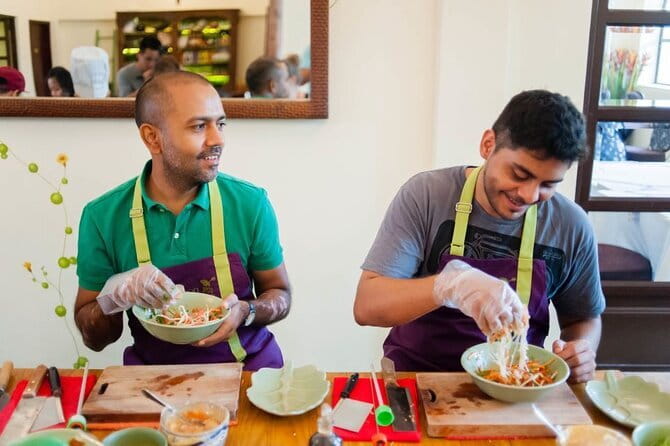
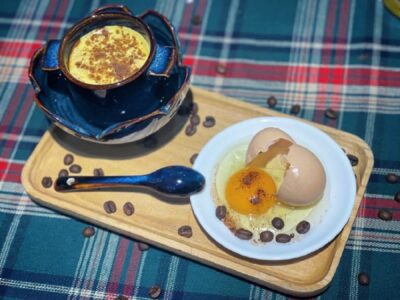
Egg coffee is the star for a reason, and the class treats it like a real technique lesson. Cà Phê Trứng Lòng Đỏ is part of the lineup for a reason: it shows how Vietnamese coffee can behave like dessert, with a smoother, richer feel than plain black drip.
When you make it here, focus on what you’re doing during steeping and brewing. The class emphasizes achieving flavor balance and creating a layered presentation. In other words, you’re not only aiming for taste. You’re learning how to build a cup that looks inviting, which is a huge part of the Vietnamese coffee experience.
If you’re curious about the flavor profile, egg coffee usually reads as sweeter and rounder to many people. The important part is that you’re learning how the bitter coffee base still matters. You’re tasting bitterness and sweetness as separate things, then feeling how they work together.
More Ho Chi Minh City plans to weigh
- Cu Chi Tunnels Tour from HCM City – Morning or Afternoon
★ 5.0 · 15,833 reviews - From HCM City: Mekong Delta Tour with Sampan Journey
★ 4.5 · 13,132 reviews - Ho Chi Minh City Street Food Tour & Sightseeing By Motorbike
★ 5.0 · 9,413 reviews - HCM: Cu Chi Tunnels-Tapioca Small Group Tour Morning or Afternoon
★ 5.0 · 7,485 reviews
Cà Phê Sữa Đá, Dark Roast Condensed Milk Coffee
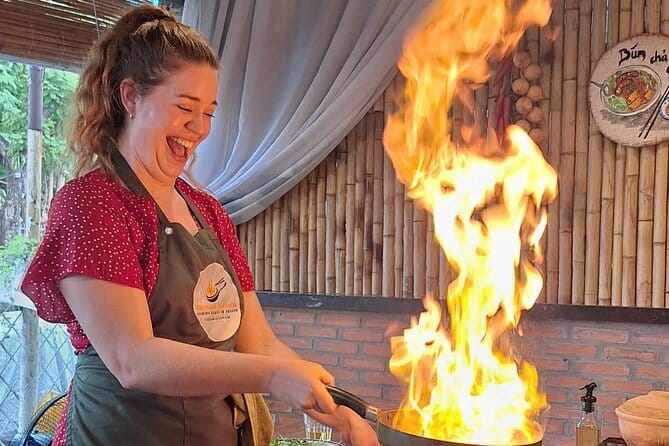
Next comes Cà Phê Sữa Đá, dark roast condensed milk coffee. This is the flavor style most people associate with classic Vietnamese café coffee. Condensed milk shifts the sweetness in a way that changes how the coffee tastes. Dark roast also brings more roasted, deeper notes, which can make the bitterness feel less sharp.
In class, you’ll learn to brew with the right traditional drip steps, then add the condensed milk component in a way that keeps the cup balanced. The practical goal is to understand how sweetness should land. Too much, and everything tastes sugary. Too little, and the coffee dominates.
This is also where you can start noticing temperature and texture, since condensed milk versions often feel heavier and smoother. The workshop specifically nudges you to pay attention to those details, so you come away with real sensory cues, not vague impressions.
Cà Phê Muối Biển, Sea Salt Coffee Without the Guesswork
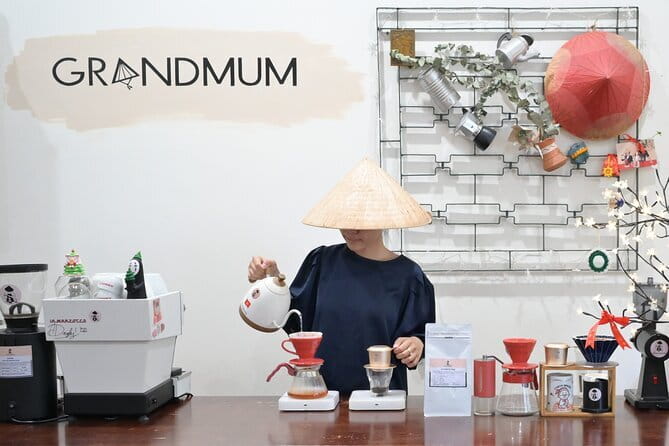
Cà Phê Muối Biển sounds unusual until you taste it. Then it makes more sense. Sea salt coffee is all about contrast. Salt can change how flavors show up, and in a coffee context it can affect what you perceive as sweetness and bitterness.
In this workshop, you’re not just sprinkling salt and hoping. You’re learning the technique and the presentation while making the cup. That’s important because salt coffee can go wrong if the extraction or balance is off. The class’s emphasis on bitter-sweet harmony helps keep the salt from tasting like a separate ingredient rather than a flavor tool.
I’d also treat this coffee as your “wow” test. If you enjoy it, you’ll know you like coffee that plays with contrast, not only coffee that’s sweet. If you are unsure, you’ll still leave with a clear understanding of what to adjust next time.
Cà Phê Cốt Dừa, Coconut Milk Coffee and Creamy Texture Control
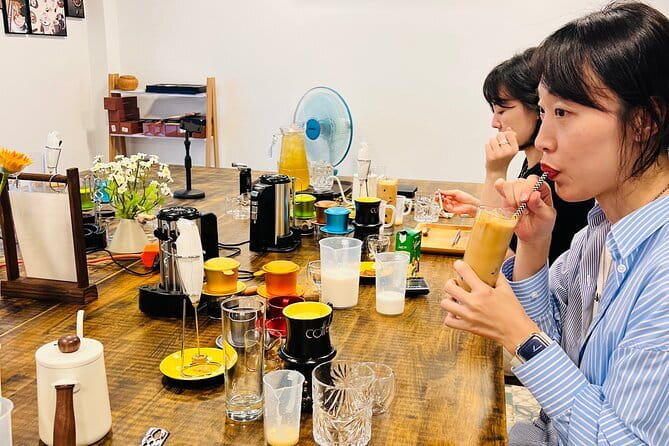
Cà Phê Cốt Dừa rounds out the set with coconut milk coffee. This one tends to feel creamy and smooth, and it often reads as more aromatic and rounded than plain milk coffee. In the class, you’ll again use the traditional drip method steps and then focus on presentation and layering.
What makes this valuable for you is texture awareness. Coconut milk changes how the coffee feels in the cup, and the workshop explicitly highlights the interplay of textures and temperatures. That means you’ll likely taste changes not only in flavor, but also in mouthfeel.
By the time you finish the coconut milk coffee, you should have a clear mental map of your own preferences: which sweetness style you like, whether you prefer creamy or contrast-driven cups, and what “balanced” tastes like when you build it yourself.
Meeting Point, Group Size, and How the Pace Feels
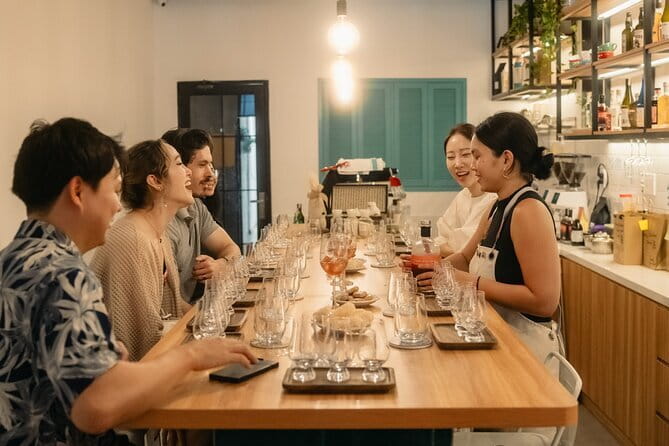
The class meets at 131/3 Nguyễn Thị Minh Khai in Phạm Ngũ Lão Ward, District 1. It ends back at the meeting point, so you do not need to navigate a second location. It’s also near public transportation, which makes it easier to slot into a day without stress.
The group size max is 15 travelers, which is a big deal for a hands-on workshop. It keeps the instructor focused on you and helps you get unstuck if you’re confused about a step. It also supports the “chill” vibe people seem to love, where conversation happens naturally while you work.
A practical tip from what people emphasize about this class: manage your session time if you’re caffeine sensitive. You are making and tasting four coffees, so afternoon sessions can hit harder than you expect. If you can, a morning slot can feel more comfortable and productive.
The Real Value in the $25 Price, What You Get Beyond Taste
At $25 per person, the value is in the instruction. Four coffees is nice, but the key is that you learn the technique behind them: steeping and brewing using traditional drip methods, plus how to aim for balance in bitter and sweet notes.
You also get all the accoutrements for the class. That removes friction. You arrive, you learn, you create, and you taste. And you get a special gift handed to all participants. Even if it is a small extra, it adds to the feeling that this is more than a sample flight.
Don’t ignore the Q&A either. A good tasting leaves you with questions. A good class helps you answer them, and the workshop explicitly includes that wrap-up time.
Finally, there is social value. The experience tends to be a friendly setting where you meet other people who are in Ho Chi Minh City for a short time. If you enjoy exchanging travel stories over coffee, this is the kind of activity that encourages it.
Who This Coffee Class Is Best For
This workshop is a great fit if you:
- want a hands-on introduction to Vietnamese drip coffee technique
- care about making sense of flavor, not only ordering what looks good
- like structured classes that still feel relaxed
- enjoy tasting multiple styles in one go, especially egg coffee and dessert-like coffees
It may be less ideal if you:
- dislike caffeine or want a low-intensity experience
- want only a guided café tour without brewing practice
- prefer self-paced activities where you can linger and wander
Should You Book This Egg Coffee Course?
If you like the idea of learning technique and then getting to taste the results in four classic Vietnamese coffee styles, I think it is a strong choice. The small group size, the focus on steeping and drip brewing steps, and the way the class guides you toward layered presentation make it feel like real skill-building.
Book it if you want a coffee experience you can repeat at home, at least in spirit. You’ll walk away knowing what to pay attention to: timing, balance, and how sweet, salty, and creamy variations change the cup.
Skip it only if you’re caffeine-sensitive or you want a purely sightseeing-focused half-day. Otherwise, at $25 and about 2 hours, it hits a sweet spot between fun and useful.
FAQ
What is the duration of the coffee course?
It lasts about 2 hours.
How much does the experience cost?
The price is $25.00 per person.
Where does the experience start?
The meeting point is 131/3 Nguyễn Thị Minh Khai, Phường Phạm Ngũ Lão, Quận 1, Thành phố Hồ Chí Minh 711106, Vietnam.
Will I end back at the meeting point?
Yes, the activity ends back at the meeting point.
How many people are in the group?
The maximum group size is 15 travelers.
What coffees are included in the workshop?
You’ll make and learn about four types: Egg Coffee (Cà Phê Trứng Lòng Đỏ), Dark Roast Condensed Milk Coffee (Cà Phê Sữa Đá), Sea Salt Coffee (Cà Phê Muối Biển), and Coconut Milk Coffee (Cà Phê Cốt Dừa).
Is there a Q&A during the class?
Yes, the class concludes with a Q&A session.
Do participants receive any supplies or gifts?
Each participant receives all the accoutrements, and special gifts are handed out to all participants.
Is a mobile ticket used?
Yes, the experience includes a mobile ticket.
Can I bring a service animal?
Yes, service animals are allowed.
New listings around Ho Chi Minh City
- Water Puppet Show-Cyclo & Dinner On Cruise in Ho Chi Minh City★ 4.5 · 24 reviews
- Vespa Saigon By Night Street Food Tour★ 5.0 · 22 reviews
- [Free E-sim] Evening Walking Tour in Saigon★ 5.0 · 14 reviews
- Ho Chi Minh City: Golden Dragon Water Puppet Ticket★ 4.5 · 81 reviews
- Vung Tau City Private Tour Full Day★ 4.5 · 21 reviews
- War Remnant Museum – Charity Tours to Orphanage Handicapped Children★ 4.5 · 116 reviews
- Private Street Food Tour by Scooter in Ho Chi Minh City★ 5.0 · 24 reviews
- Vung Tau Essential: Beach, Christ Statue & Colonial Heritage★ 5.0 · 284 reviews
Coffee Experiences, compared.
Vietnamese Coffee Culture and Coffee Making Class
Read our review →
Hanoi Coffee Experience: 6 Brews, 9 Recipes & 3 Liquor Tastings
Read our review →
Hanoi Coffee Workshop: Taste Salt, Coconut and Egg Coffee
Read our review →
Salt Coffee Workshop Awake Your Senses With 6 Brews
Read our review →
Early Morning My Son Sanctuary Trip w. Champa Food & Coffee
Read our review →
Da Nang Cooking Class with Coffee Tasting and Market Visit
Read our review →Browse the lists this tour appears in