
Reviewed · HUE TOURS & ACTIVITIES
Hue: Full-Day Demilitarized Zone Tour
A border you can still feel today.
I love how this trip maps the 17th parallel onto real places you can see, and it pairs that with stops like Vinh Moc tunnels. One watch-out: it is a long day in the car, and some battlefield spots look calm now.
My guide, Ms Thach, is a big part of why the experience works, with clear English and a calm way of explaining what this region endured. Along the way, Quang Tri province delivers the other side of the story too, with forests, mountains, and rivers you will actually pass through on the drive.
In This Review
- Key Highlights You Will Remember
- From Hue City to Quang Tri, in One Long Day
- La Vang Church: More Than a War Stop
- Dong Ha Town and the Marine Combat Base That Watched the Border
- Doc Mieu and the Electronic System Behind the Lines
- Hien Luong Bridge and Cua Tung Beach at the 17th Parallel
- Vinh Moc Tunnels: Survival Underground
- Lunch, Ethnic Life, and the Dakrong Bridge Moment
- Ho Chi Minh Trail: The Borderlands Route Through Laos and Cambodia
- Rock Pile and Khe Sanh: Mountain Front Pressure
- Guide Quality, Car Comfort, and How the Day Feels
- Price and Value at $125 Per Person
- Who Should Book This Hue DMZ Tour
- Should You Book This Hue DMZ Full-Day Tour?
- FAQ
- FAQ
- How much does the Hue DMZ tour cost?
- How long is the tour?
- What’s included in the price?
- Do I need to book a private group?
- Is the guide English-speaking?
- Where do they pick you up in Hue?
- What should I bring, and what’s not allowed?
Key Highlights You Will Remember

- Ben Hai River DMZ line: See how the demarcation worked in practice, roughly 60 miles north of Hue City.
- Dong Ha and Marine surveillance: Understand how observation shaped life along the border.
- Doc Mieu base: Learn about an electronic defense system meant to stop infiltration.
- Peace Bridge to Cua Tung Beach: Walk between symbols of division and the coastline where the Ben Hai River runs out.
- Khe Sanh and Rock Pile bases: Tie the geography to artillery and the mountain front fights.
From Hue City to Quang Tri, in One Long Day
This is a full-day DMZ tour from Hue City, built around getting you out of the city and into the borderlands that shaped Vietnam from the mid-1950s through the war era that followed. You start with hotel pickup and drop-off from anywhere in Hue’s hotel zone, and you spend the day moving between multiple sites tied to the Demilitarized Zone.
That travel time matters. It is not a quick hit of a couple of monuments. You are riding for long stretches to reach Quang Tri province, then stopping often enough that you feel the rhythm of a real field trip. If you love the “show me the place” style of history, this format is ideal. If you get restless in the car, plan the day like a road trip, not a museum crawl.
More Hue Vietnam plans to weigh
- Hue Customizable Tour with Imperial Citadel & Forbidden City
★ 4.9 · 937 reviews - Hue :Exploring Royal City with Multi Options and Dragon Boat
★ 5.0 · 675 reviews - Hue City Tour Full Day – Group Tour
★ 4.7 · 518 reviews
La Vang Church: More Than a War Stop
Your day begins with a stop at the Church of La Vang, a place that helps you understand why this region is not only about military lines. It is also about faith, community, and how people keep identity through conflict. Even if you do not know the background before you go, the stop gives you a human anchor before the tour becomes more technical and military.
From there, you move deeper into the DMZ story. I like this pacing because it keeps the day from turning into pure battlefield description. You start by seeing a spiritual landmark, then shift to the border’s systems and physical defenses.
Dong Ha Town and the Marine Combat Base That Watched the Border
In Dong Ha, you connect with an important US Marine presence tied to surveillance across the DMZ. The point is not just to see a base. It is to understand why observation was everything when the border was tense and infiltration was a constant concern.
This is one of the tour’s strongest teaching moments. The guide frames what you are seeing as a border-control reality, where being able to spot movement shaped decisions and safety for soldiers on both sides. It also helps you make sense of why so many later stops focus on positioning, visibility, and engineering.
If you like clear explanations, this section tends to land well. One reason: the English narration is set up to help you picture the logic, not just recite dates.
Doc Mieu and the Electronic System Behind the Lines
Next you visit Doc Mieu base, described as part of an elaborate electronic system intended to prevent infiltration across the DMZ. This stop gives you something many war tours skip. Instead of only focusing on guns and trenches, you get the “technology of control” side.
You will walk through a site where the story is about early warning and detection. That matters because it changes how you read the landscape. When you look at hills, sight lines, and the spaces between communities, you start thinking like the people trying to stop hidden movement.
It is also a nice counterbalance after Dong Ha. Dong Ha is about watching. Doc Mieu is about using systems to watch even when humans alone could not cover everything.
Same region, different pace:
- From Hue: DMZ Tour with Vinh Moc Tunnels and Khe Sanh Base
★ 4.9 · 503 reviews - Hue: Private Car to Hoi An via Fabulous Stops
★ 5.0 · 371 reviews - From Hue: Hoi An Bus Transfer with 4 Sightseeing Stops
★ 4.6 · 366 reviews - Hue: Private Car to/from Hoi An via Multi Attractions(1-Way)
★ 5.0 · 347 reviews
Hien Luong Bridge and Cua Tung Beach at the 17th Parallel
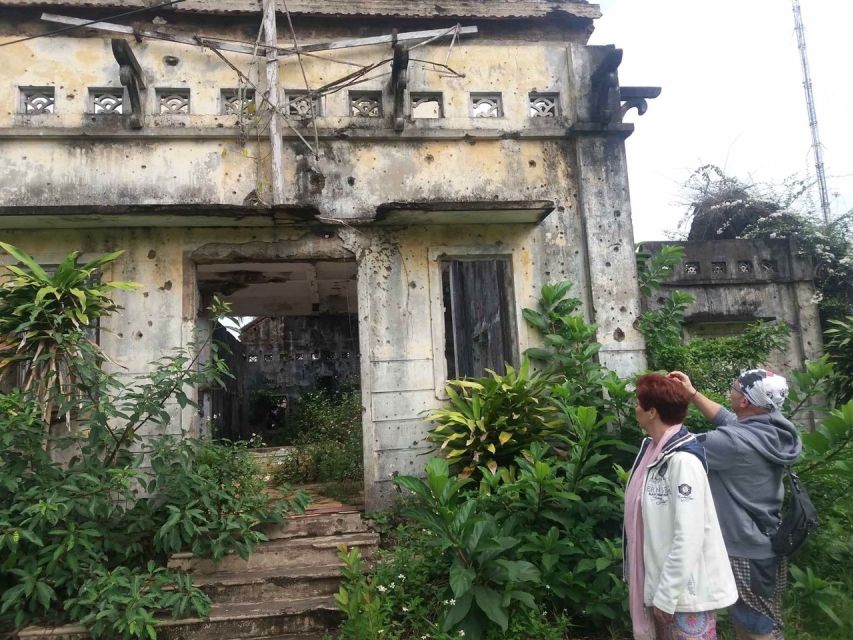
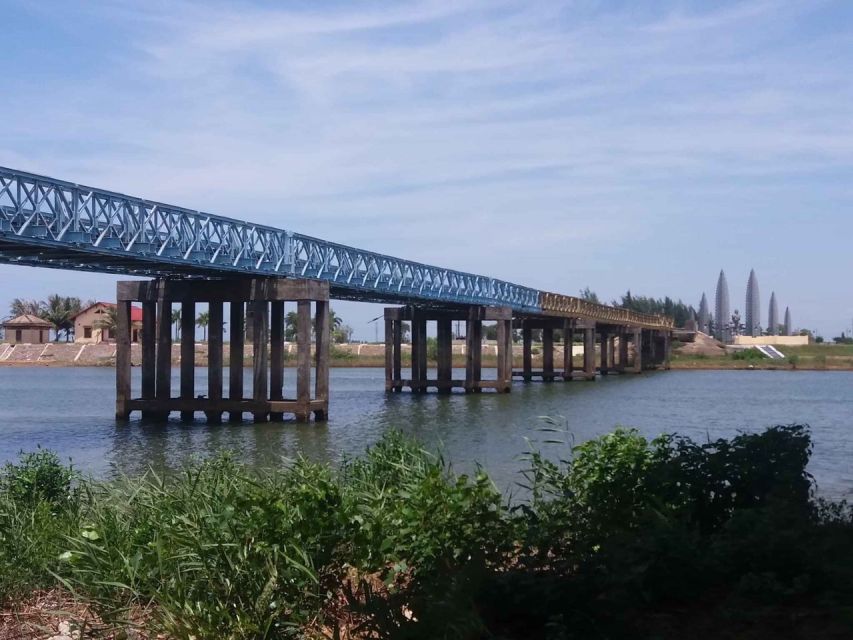
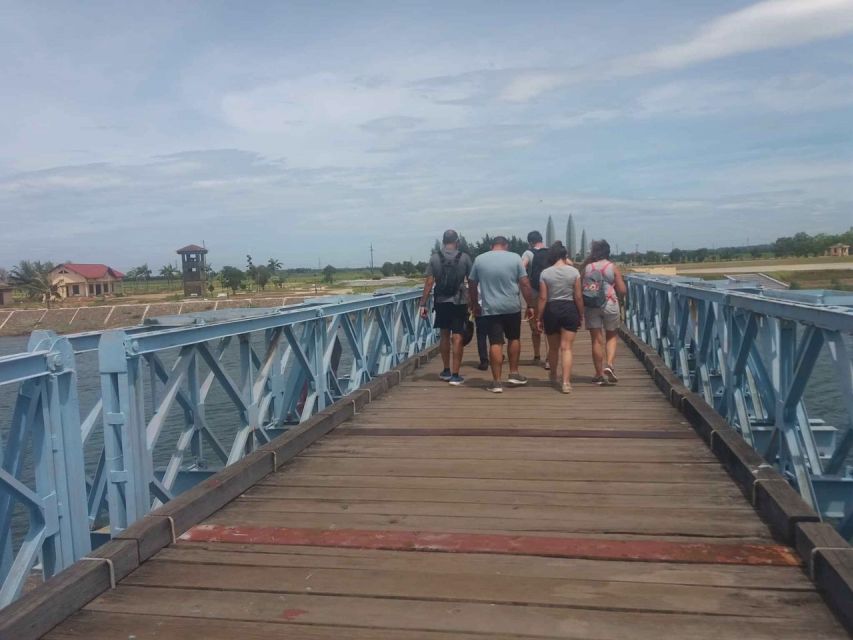
One of the tour’s most memorable transitions comes when you see Hien Luong Bridge, also called the Peace Bridge, built from steel by the French in 1950. It is the kind of object that feels almost ordinary until you learn what it represented in a divided country. You realize it was not only a bridge. It was a crossing point in a landscape designed to restrict movement.
Then you head to Cua Tung Beach, where you can see where the Ben Hai River flows from west to east just south of the 17th parallel. Standing near that river mouth helps the story click. The DMZ was not an abstract concept on a map. It followed geography and waterways, and it shaped how people traveled, traded, and lived.
In this stretch, the visuals can surprise you. Some roads have been rebuilt and trees have grown back. So the place can look peaceful even when the history is intense. I find that is why a strong guide matters. Without explanation, you would miss the meaning.
Vinh Moc Tunnels: Survival Underground
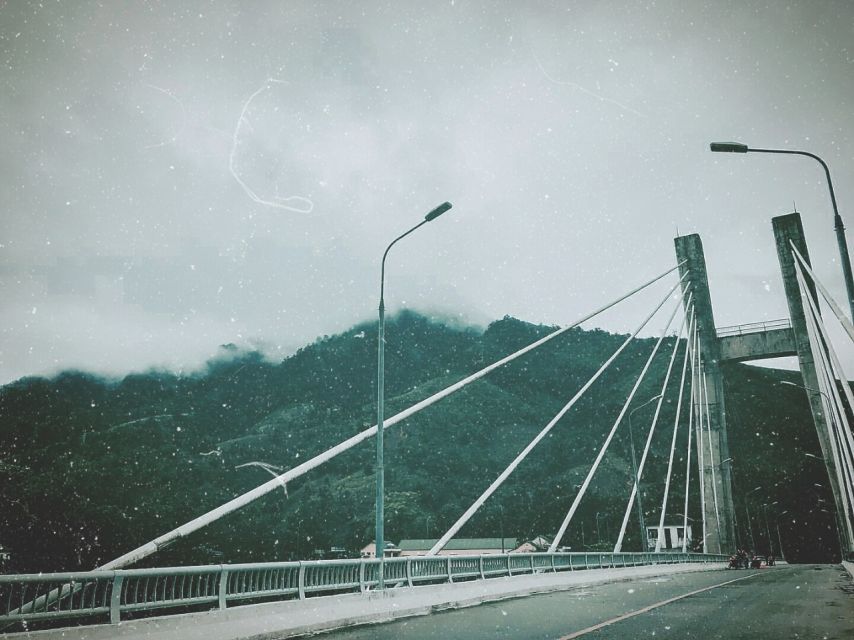
The Vinh Moc tunnels complex is the stop that most history-minded people remember because it is physical. You are not just looking at a marker. You are getting a sense of scale, planning, and what survival demanded when the area stayed under threat.
The tunnels also help connect the DMZ story with the broader war pattern. Underground survival was not random. It was a response to bombardment risk, surveillance pressure, and the need to keep communities functioning even when the surface was dangerous.
If you have mobility limitations, it is worth considering that tunnel complexes usually involve uneven steps and tighter spaces. Wear shoes that grip well and keep your daypack light.
Lunch, Ethnic Life, and the Dakrong Bridge Moment
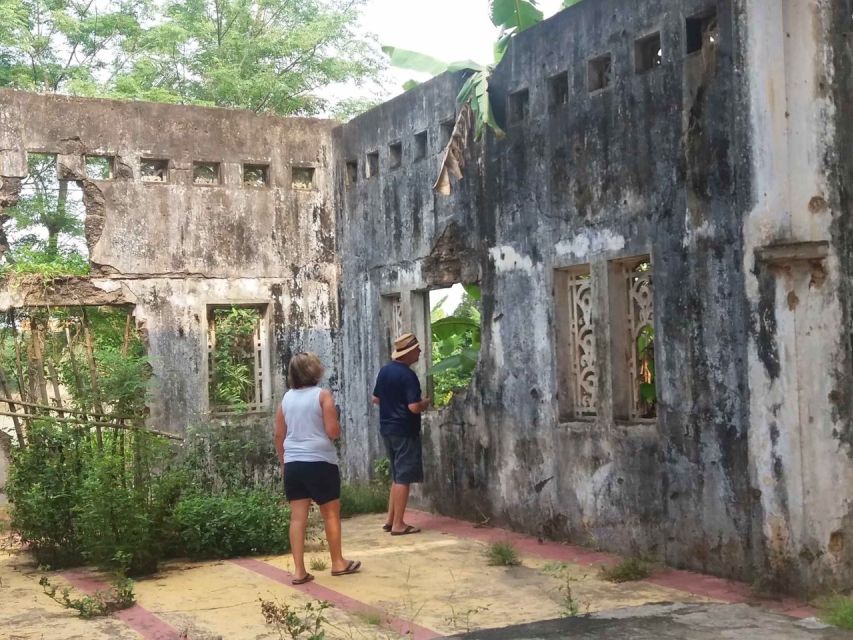
After lunch at a local restaurant, the tour shifts toward people and regional context. You learn about ethnic minority people in the area and you see the Dakrong Bridge across the Dakrong River.
I like this segment because it prevents the day from becoming only about top-down military strategy. Bridges, river crossings, and local communities show how the war spilled into everyday geography. Even if the architecture does not look like a wartime scene, the river crossing still anchors the sense of movement and connection in a landscape that was contested.
Lunch is included, and it is part of why the pacing works. You are not stuck rationing snacks while trying to keep up with sites across Quang Tri.
Ho Chi Minh Trail: The Borderlands Route Through Laos and Cambodia
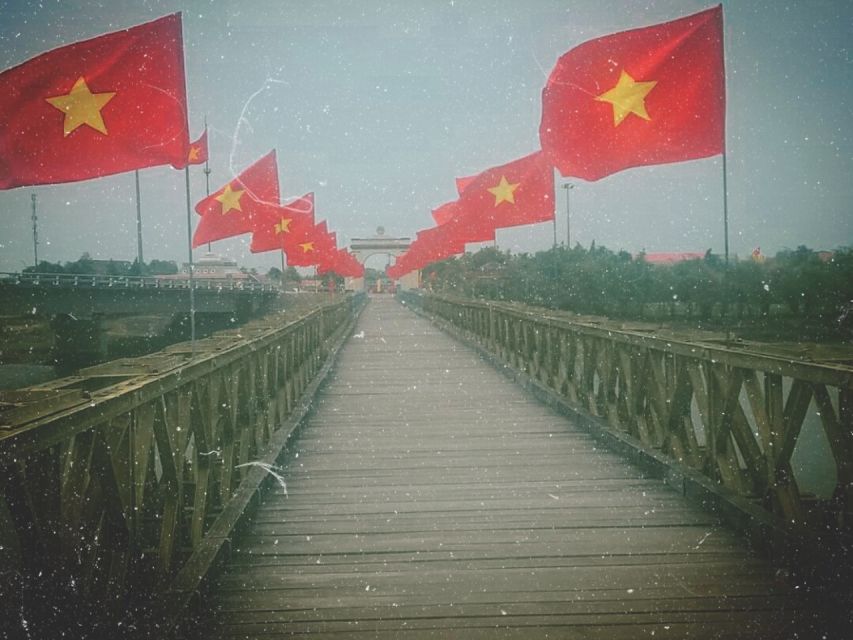
The tour also covers the Ho Chi Minh Trail, a route that ran from North Vietnam to South Vietnam through neighboring Laos and Cambodia. You are not just hearing the name. You are getting the sense of how the trail functioned as a movement corridor, shaped by terrain and the need to travel while avoiding detection.
This is a valuable stop because it widens the DMZ story. The DMZ was the visible line, but the broader war depended on supply movement beyond the immediate border. When you connect the trail to the earlier surveillance and infiltration prevention theme, the whole day makes more sense.
It also helps you understand why later stops in the mountains matter. Terrain is not background. It is strategy.
Rock Pile and Khe Sanh: Mountain Front Pressure
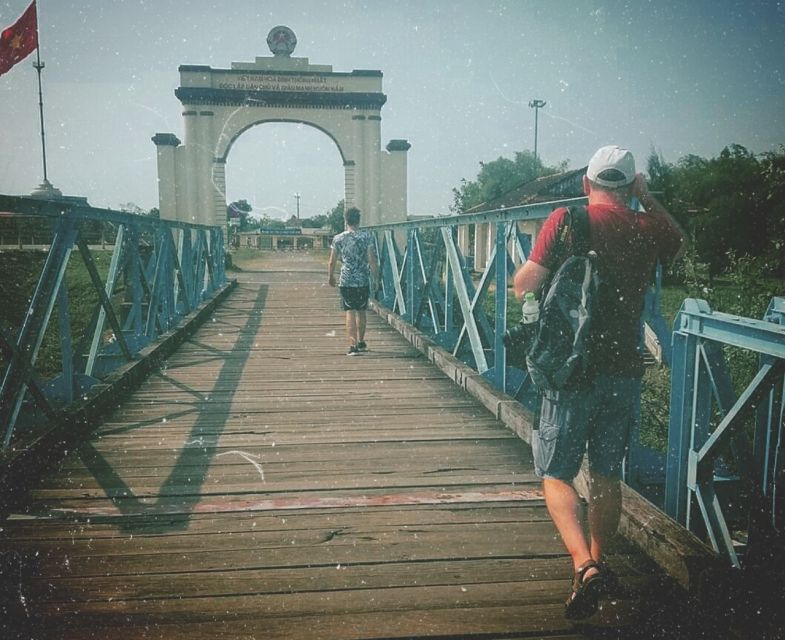
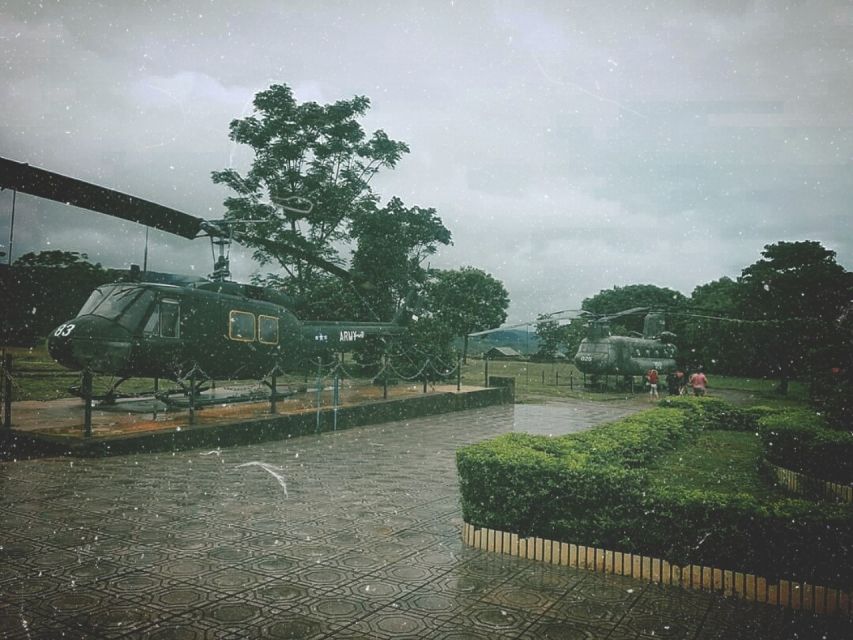
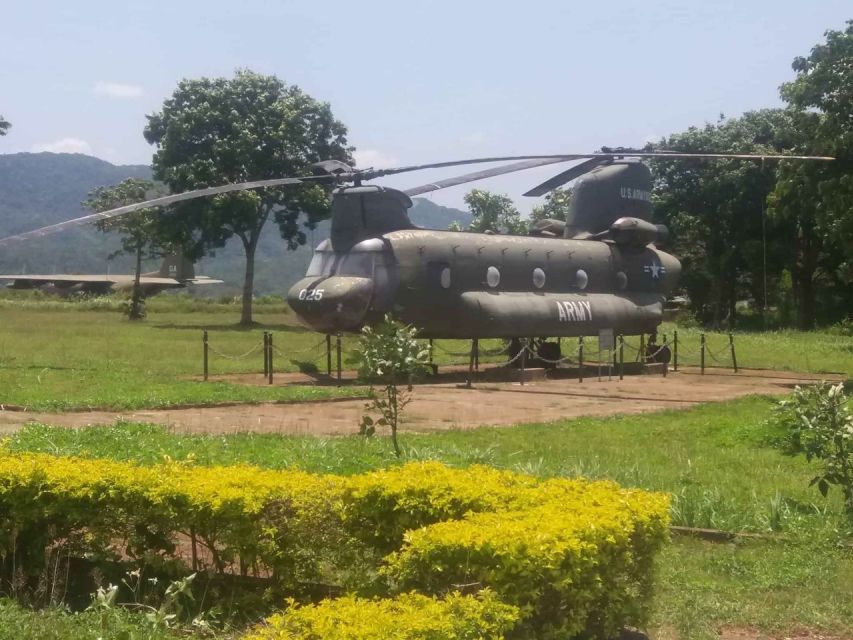
Toward the end of the day, you visit Rock Pile base, described as a US long range artillery position, then Khe Sanh combat base in the rolling mountains and forests of the valley.
This is where the scenery starts doing more than looking pretty. Hills and tree cover shape sound, visibility, and how fighters could operate. When you pair that with what you learned earlier about surveillance and anti-infiltration systems, you begin to see a consistent pattern: controlling movement and reducing uncertainty was the core goal.
Rock Pile is a reminder that artillery did not just happen in open space. It was tied to positioning. Khe Sanh adds the “mountain front” feel, where the geography makes the war harder, slower, and riskier.
One practical note: if you feel “DMZ fatigue” by late afternoon, take short breaks and keep sipping water. This is not a short walk-heavy day, but it is intense in content.
Guide Quality, Car Comfort, and How the Day Feels
A big reason this tour works is the guide experience. Ms Thach’s English is described as fluent, and she explains the war, the DMZ, and Vietnam’s history in a way you can follow without mental rewinding.
The day also tends to feel organized. You get an included drink, and you start with pickup from your Hue hotel, so you are not spending time figuring out where to go next. Reviews also point to a comfortable car and careful driving, which matters because Quang Tri distances can be long.
This is a private group format, so you can ask questions without feeling like you are competing with a large crowd.
Price and Value at $125 Per Person
At $125 per person, this is not a bargain-bucket price. But it is also not just you and a driver. The cost is supported by what is included: hotel pickup and drop-off, a live English guide, a drink, lunch, and entrance tickets.
Where it feels like good value is when you compare the cost to what you would likely pay if you booked separate transportation, paid a guide for multiple sites, and then purchased tickets on top. The tour also saves you time, because you avoid planning the sequence of scattered sites across Quang Tri province.
Where it might feel pricey is exactly what the tour requires: a long day in the car. If your interest level is low or your patience for road time is limited, you may feel like the value depends on your enthusiasm for history.
Who Should Book This Hue DMZ Tour
Book it if you want:
- Real geography connected to the DMZ story, not only indoor exhibits
- A guide who can translate the war into something you can picture
- Stops like Vinh Moc tunnels, Peace Bridge, and Khe Sanh that give the day shape
You might think twice if:
- You dislike spending most of a day in transit
- You are expecting perfectly preserved wartime scenes
Some parts of the area look different now because roads have been rebuilt and trees have grown. Some museum items can be replicas, but the locations themselves are the real sites.
Should You Book This Hue DMZ Full-Day Tour?
If your goal is to understand the DMZ and the bigger war system around it, this is a strong choice. The day connects the 17th parallel, the Ben Hai River, surveillance and defense ideas, and then the war movement themes like the Ho Chi Minh Trail. It also balances military sites with places that help you see the region as lived-in, not frozen in time.
I would book it if you can handle a long drive day and you want guided context. If you only want quick highlights, you may find this too much in one go.
FAQ
FAQ
How much does the Hue DMZ tour cost?
The tour is listed at $125 per person.
How long is the tour?
The information provided lists a duration of 10 days, and it says to check availability to see starting times. Make sure you confirm the schedule for your selected date.
What’s included in the price?
The tour includes hotel pickup and drop-off, a guide, a drink, lunch, and entrance tickets.
Do I need to book a private group?
Yes, this experience is listed as a private group.
Is the guide English-speaking?
The tour provides a live English guide.
Where do they pick you up in Hue?
Pickup is included from any hotel in Hue City.
What should I bring, and what’s not allowed?
Bring your passport or ID card, comfortable shoes, and comfortable clothes. Alcohol and drugs are not allowed.
New listings around Hue Vietnam
- Hue: Sunset Cruise along Perfume River★ 4.3 · 72 reviews
- Sightseeing Transfer Between Hue and Hoi An★ 4.3 · 13 reviews
- Phong Nha/Dong Hoi: DMZ Tour – Vinh Moc & Khe Sanh Base★ 5.0 · 10 reviews
- Official Hue: Dragon Boat, Imperial Citadel, & Market tour★ 4.7 · 32 reviews
- Hue: Vietnamese Cooking Class in Local Home & Market trip★ 5.0 · 9 reviews
- Hue to Hoi An/Da Nang: Private Scenic Motorbike Tour★ 4.9 · 63 reviews
- Hue to Hoi An via Hai Van Pass by motorbike with Easy Riders★ 5.0 · 16 reviews
- Hue to Hoi An by bus: Hai Van Pass, Lang Co, Marble mountain★ 4.6 · 27 reviews
Hue Tours & Activities, compared.
Hue to Hoi An ( Hoi An to Hue) Top Gear with Lefamily Riders Tours ( 1 way)
Read our review →
Easy Rider private tour via Hai Van pass from Hue – Da Nang – Hoi An (1Way|Loop)
Read our review →
Hue Customizable Tour with Imperial Citadel & Forbidden City
Read our review →
Easy Rider From Hue Da Nang Hoi An Via Hai Van Pass With Mister T
Read our review →
Hue to Dn/Hoi An: Hai Van Pass, beaches & Mt Monkey or vice versa
Read our review →
Imperial City Walk, Motorbike Tour & Private Car Options
Read our review →
Exploring Royal City with Multi Options and Dragon Boat
Read our review →
Hue city Deluxe Group Tour (Daily Tour-12 pax max)
Read our review →Browse the lists this tour appears in