
Reviewed · COOKING CLASSES
Hoi An : Vietnamese Cooking Class with Hotel Pickup
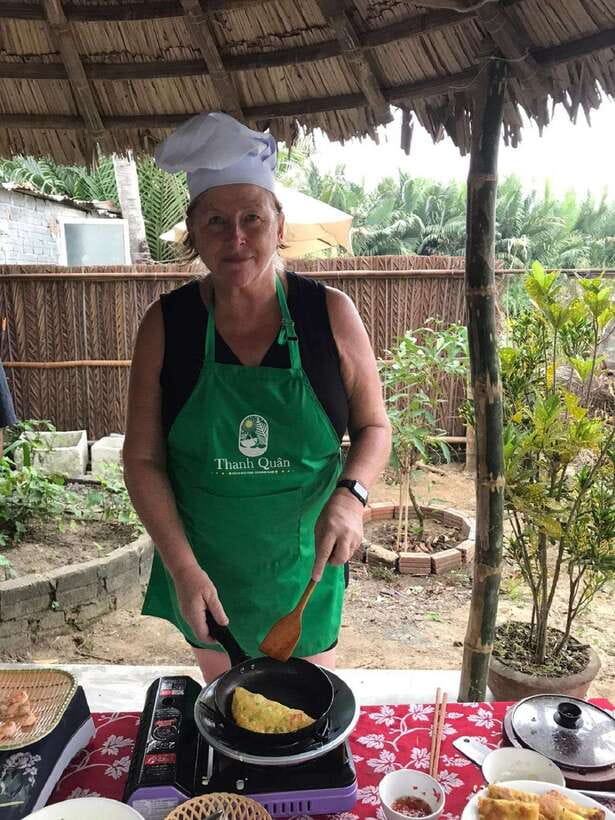
Coconut-village cooking in Hoi An sounds delicious. This class brings together hotel pickup and an English-speaking chef who teaches you Vietnamese techniques step by step, then gets you eating the results. I like that the format is practical, you do not just watch, and I like the concrete payback of tasting four dishes you made yourself. You get a welcome drink and a short breather before cooking, so it starts relaxed instead of chaotic.
One thing to consider is how hands-on the session feels for you, since the overall program moves at a set pace. If you are hoping for lots of solo time at the stove, ask how the class timing works when you book, and consider an evening slot if that’s an option.
In This Review
- Key Things I’d Watch For
- From Your Hotel to Cam Thanh Coconut Village: The Ride That Makes It Easy
- Welcome Drink and a Restaurant Reset Before You Cook
- Chef Hon’s Step-by-Step Style: What the Class Really Feels Like
- The Four Dishes You’ll Make, and Why This Mix Works
- Hoi An rice pancake and spring rolls: technique you can repeat at home
- Papaya salad: the flavor lesson, not just a salad
- Cao Lầu or fish in clay pot: choosing a local specialty
- Eating What You Cook: The Part You’ll Remember
- Basket Boat Trip Option: Worth It, but Decide in Advance
- Price and Value: Is $24 a Good Deal in Hoi An?
- Practical Tips: What to Bring and What to Ask Before You Go
- Who Should Book This Hoi An Cooking Class, and Who Might Prefer Something Else
- Should You Book It?
Key Things I’d Watch For
- Cam Thanh Coconut Village area transfer: You start with pickup and end back at your hotel, so you are not juggling transport.
- Chef Hon keeps the kitchen moving: Clear, organized instructions help first-timers keep up.
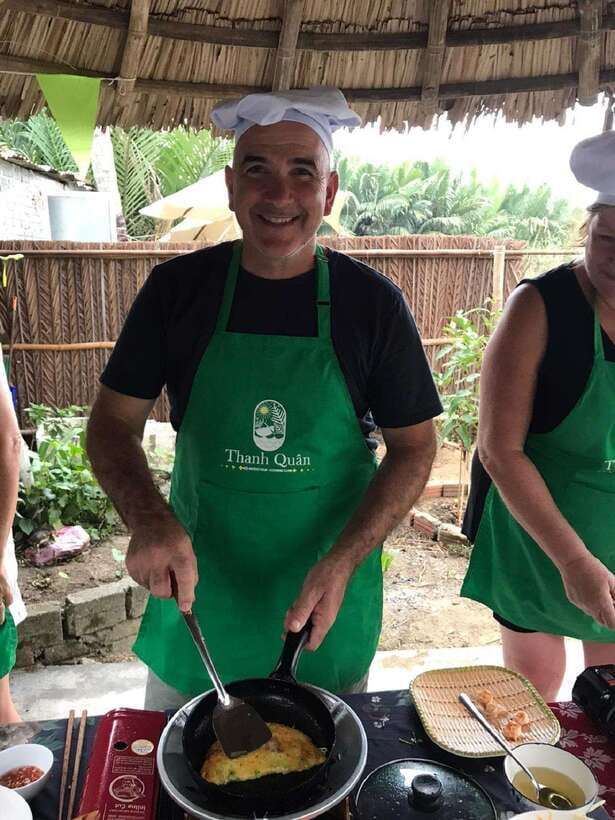
- Four dishes with real local variety: Hoi An rice pancake, Hoi An spring rolls, papaya salad, plus cao lau or fish in clay pot.
- You eat together, not just leave with recipes: After cooking, you savor your food and chat with your group.
- Optional basket boat trip: It is included only if you choose that add-on.
From Your Hotel to Cam Thanh Coconut Village: The Ride That Makes It Easy
This experience is built around convenience. You get hotel pickup and drop-off in Hoi An city center, then head out to the Cam Thanh Coconut Village area for the cooking part. That matters more than it sounds. Cooking classes can turn into a hassle when you have to find the right neighborhood, sort taxis, and arrive already flustered. Here, the transport removes that friction, so you can focus on learning.
The total time runs 150 to 270 minutes, depending on the starting time and how the schedule flows. In practice, that range usually means you are spending meaningful time on the day itself, not just a quick “demo then done.” You also get more than one moment to settle in. You have pickup, travel, a welcome drink, and then cooking. It helps if you want a structured half-day feeling without committing to a full-day tour.
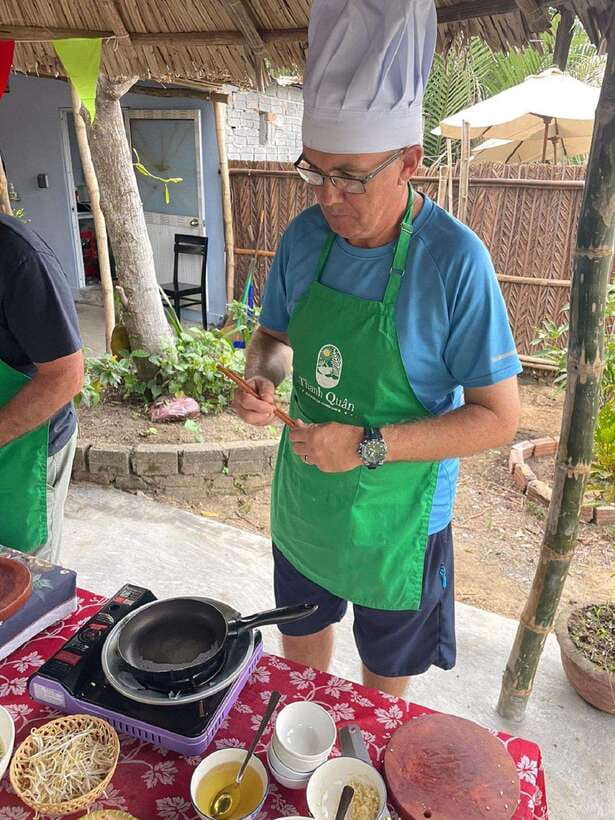
Good shoes matter from the start. Even if the cooking is mostly at a station, you will still be moving between areas and spending time outdoors near the village setting. A hat and sunscreen are smart because you are in central Vietnam and you will likely be outside at least a bit before you begin cooking.
More Cooking Classes in Hoi An
- Cooking Class Hoi An:Local Market, Basket Boat, Fishing & Cooking
★ 5.0 · 3,660 reviews - Hoi An Cooking Class(Market,BasketBoat Crabfishing&Cooking Class)
★ 5.0 · 3,386 reviews - From Hoi An: Market Tour, Basket Boat Ride and Cooking Class
★ 4.8 · 2,208 reviews
Welcome Drink and a Restaurant Reset Before You Cook
Before you reach the cooking stations, the day includes a welcome drink and a rest at the restaurant. This is a small detail, but it changes the tone. Vietnamese cooking can involve chopping, mixing, and frying, and that takes energy. A short pause first keeps you from feeling rushed before the class begins.
I also like that the meal comes as part of the loop. You do not just “learn steps.” You eventually savor what you prepared and chat with the people in your group. That’s a big difference from classes where you taste one bite and the tour moves on. Here, the structure points toward sharing what you made, comparing notes, and actually enjoying the food while it’s still fresh.
If you have dietary needs, this early restaurant stop can be where the team gets organized. You should inform the operator in advance about any food allergies or dietary restrictions. A vegan or vegetarian option is available, which is a big plus if you are traveling with someone who cannot eat the standard dishes.
Chef Hon’s Step-by-Step Style: What the Class Really Feels Like
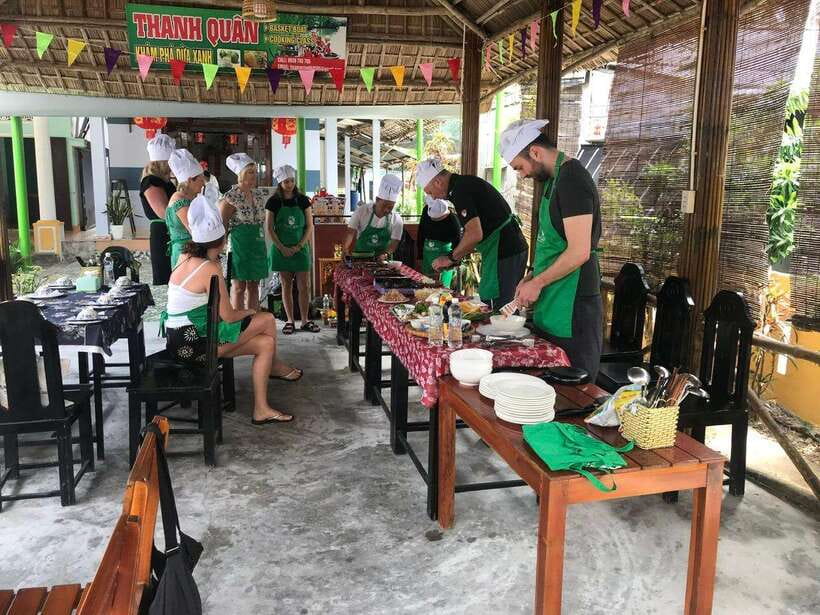
The class is guided by an English-speaking chef and follows detailed, step-by-step instructions. That is the foundation of the experience. It is not just a cultural slideshow. You are learning how to make specific Vietnamese dishes, and you have high-quality ingredients to work with.
Chef Hon is mentioned by name, and that hints at how personal the class can feel. In a good cooking setup, the chef is doing two jobs at once. First, they teach technique clearly. Second, they manage pacing so nobody gets left behind while dishes finish at the right time. When a kitchen is organized, it feels calm even if everyone is cooking.
Still, pace can matter. Some people have felt the class leaned more toward watching than fully cooking every step. That does not mean the class is bad, but it does mean you should set your expectations. If your dream is maximum time at the stove, I’d suggest you ask the team how the hands-on time is divided, especially during the midday slot, where schedules can feel tighter.
The good news is that the class is designed for normal people, not just culinary pros. The instructions are clear and simple, so you can participate even if you have never cooked Vietnamese food before. Bring a curious mindset. You do not have to already know how to make spring rolls or rice pancakes to benefit. You learn by doing.
The Four Dishes You’ll Make, and Why This Mix Works
You prepare and cook four local dishes, chosen from a lineup that covers both street-food favorites and regional specialties. The dishes are:
- Hoi An rice pancake
- Hoi An spring rolls
- Papaya salad
- Cao Lầu or fish in clay pot
This selection is smart because it is not all one style of cooking. Rice pancake and spring rolls give you texture and technique practice. Papaya salad adds the balancing side of Vietnamese cooking, and either cao lau or fish in clay pot gives you a warmer, deeper element. It is a nice mix for people who want variety in what they learn and what they eat.
More Hoi An plans to weigh
- Hoi An: Basket Boat with Lantern-Making & Cooking Class Tour
★ 4.9 · 1,444 reviews - Hoi An Cooking Class(Local market,Basket Boat,Fishing & Cooking)
★ 5.0 · 1,323 reviews - Hoi An: Market Experience with Optional Fishing and Cooking
★ 4.7 · 928 reviews - Hoi An: Basket Boat Ride, Cooking Class by Hangcoconut
★ 4.9 · 802 reviews
Hoi An rice pancake and spring rolls: technique you can repeat at home
Rice pancake and spring rolls both reward patience. You learn how the food comes together, not just the final plate. That is useful if you want to recreate at least one dish later. The key value here is the process. You follow steps, use ingredients that are ready for the class, and you end up with something you can identify and share.
Papaya salad: the flavor lesson, not just a salad
Papaya salad can sound simple until you try to make it. It is a dish where balance matters, and the class gives you the chance to understand how it comes together during prep and mixing. You do not need to already know the flavor profile. The step-by-step instructions help you build it as you go.
Cao Lầu or fish in clay pot: choosing a local specialty
You’ll make cao lau or fish in clay pot. That choice is a highlight because it leans into regional identity. Cao lau is strongly associated with Hoi An, and fish in clay pot is the kind of comfort dish that works especially well after cooking. If you have a preference, consider asking ahead which version you’re likely to get on your day, so you can match the option to your tastes.
Eating What You Cook: The Part You’ll Remember
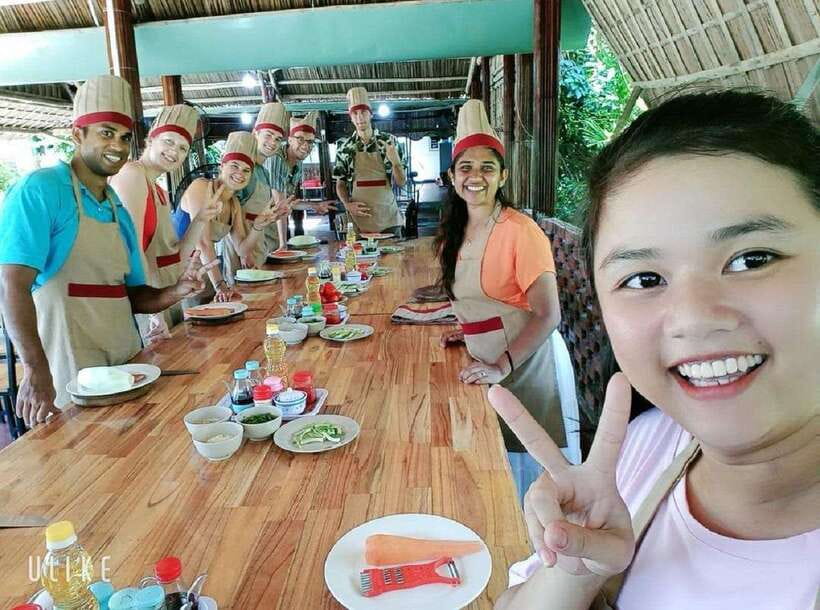
The best cooking class moment is not the chopping. It is the first real bite. After the lesson, you sit down and enjoy what you have cooked. Then you chat with your fellow classmates while the meal finishes.
This is where the class becomes more than instruction. You get a sense of what you learned and whether it tastes right to you. If your rice pancake looks a little different than you imagined, you can still enjoy it, because you understand how the dish should feel from the chef’s guidance.
It also turns your cooking day into a social hour. In Hoi An, food is the common language. When you share a meal you helped make, you end up comparing little choices, like how you folded or mixed, which turns into natural conversation.
Bring a camera if you like food photos, but also bring patience. Cooking teaches you that presentation is not always instant. The experience is about technique and teamwork, and the meal is the payoff.
Basket Boat Trip Option: Worth It, but Decide in Advance
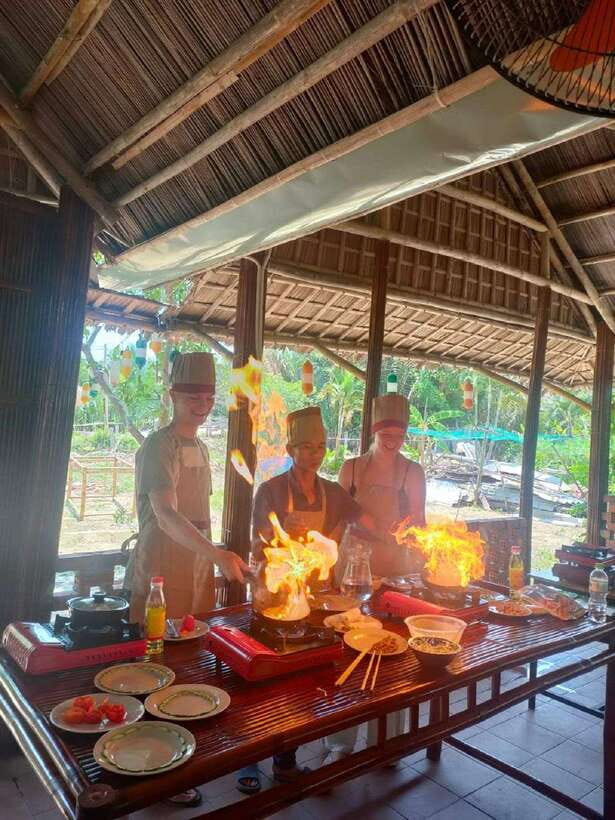
The included option that can add variety is the basket boat trip in the coconut village area. It is not automatic, it depends on the option you select. If you want a watery, scenic contrast to the cooking, this is a logical add-on.
That said, you should be clear with yourself before you get to that part of the day. Some people have felt that add-ons can be pushed more strongly than they wanted. If you are the type who likes to research and decide calmly, set your plan ahead of time: either you want basket boats as part of the day, or you prefer to skip and focus purely on cooking.
If you do choose it, treat it as a separate mini-experience. You are swapping cooking time and then returning to the schedule. It is a good way to make the half-day feel fuller without changing the core activity.
Price and Value: Is $24 a Good Deal in Hoi An?
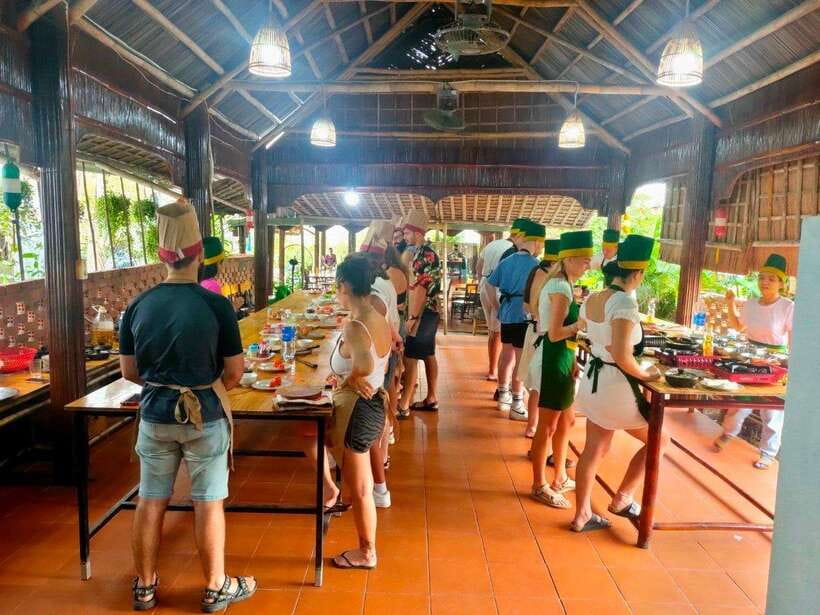
At $24 per person, this class packs in more than the cooking itself. You are paying for:
- Hotel pickup and drop-off
- A welcome drink and restaurant rest
- A cooking class with an English-speaking chef/guide
- Ingredients for the dishes
- A meal of what you prepared
- Basket boat trip if selected
When you itemize it like that, the value gets clearer. Cooking classes can be expensive once you factor in transport and ingredients. Here, the package covers those essentials, so you are less likely to get hit with hidden “logistics costs” after booking.
The main value question is time and how hands-on you feel it is. The duration is listed broadly at 150 to 270 minutes, which suggests there is enough time for travel, the intro break, cooking, and the meal. But there are occasional reports that the active cooking time can feel short compared to expectations. I would treat that as a sign to check the class flow when you reserve. If the schedule is tight for your time slot, choose your priorities accordingly.
When it works best, it’s a friendly starter class. You leave with the confidence to make something Vietnamese at home, at least the basics. And you leave fed.
Practical Tips: What to Bring and What to Ask Before You Go
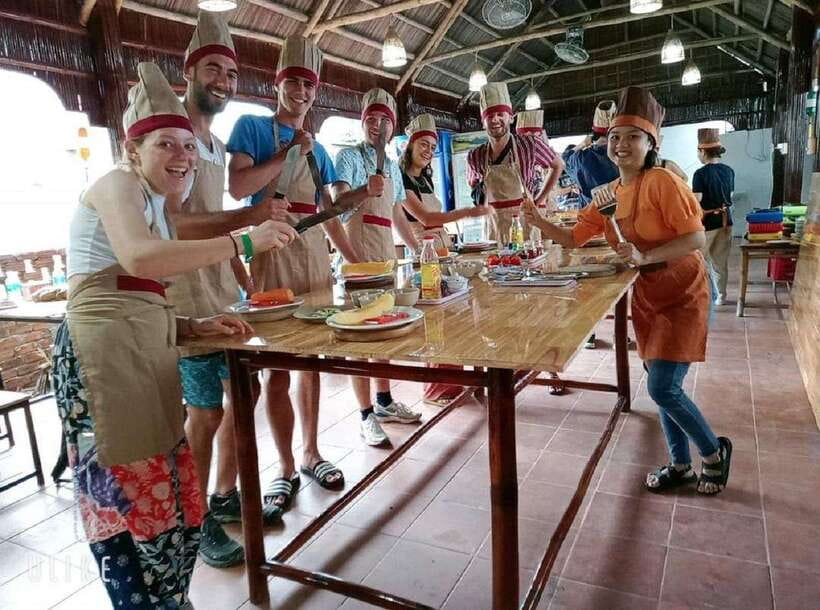
This is the kind of tour where small preparation makes your day smoother. Here is what you should bring:
- Comfortable shoes
- Hat
- Camera
- Sunscreen
- Comfortable clothes
Wear clothing you do not mind getting a little messy. Cooking involves hands-on prep, and even if the ingredients are controlled for the class, you will still be in a working environment.
Before you arrive, send any allergy or dietary restrictions in advance. The class offers vegan/vegetarian option, but you still need the team to know what to adjust. If you keep that info off the booking form, you risk delays or substitutions.
Now the two questions I’d ask when booking:
- How much of the process will we do ourselves for the full four dishes?
- If I select the basket boat option, when does it happen, and can I choose not to add it later?
Those questions align with what actually changes your day experience: hands-on time and add-on pressure. You control your comfort level when you ask early.
Also remember the child policy: children under 3 are free, but they will not participate in cooking. They share services with their parents. That is useful if you are traveling as a family and trying to plan what your kids will actually do during the class.
Who Should Book This Hoi An Cooking Class, and Who Might Prefer Something Else
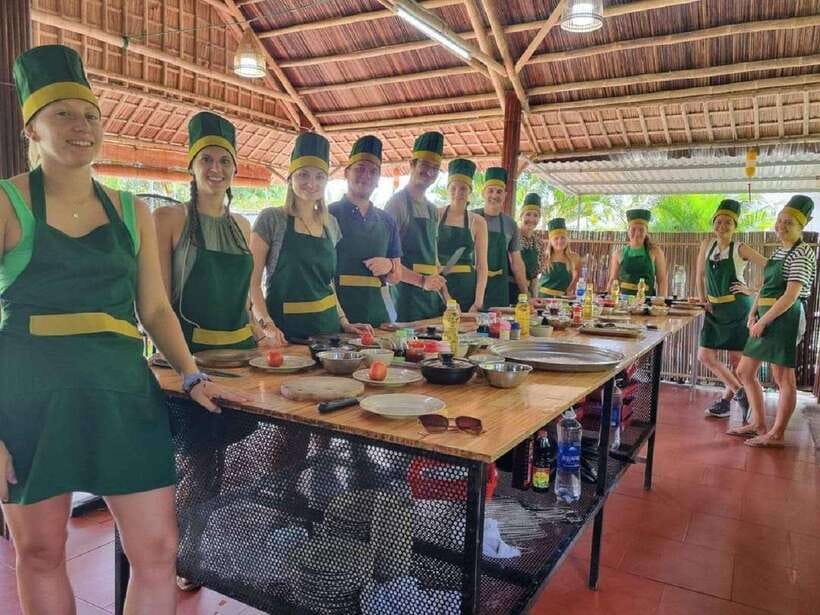
This activity is a strong fit if you:
- Want to cook Vietnamese food in a structured way, even as a first-timer
- Prefer convenience, with pickup and drop-off built in
- Like the idea of learning four dishes and then eating together
- Travel with a friend or partner and want a shared, social food experience
It may be less ideal if your main goal is a long, tradition-heavy talk about the culture behind each dish. This class is fundamentally about cooking. The guide focuses on the steps and getting the food onto your plate. If you want deep historical context and extended dish explanations, you might feel like you’re watching more explanation than learning stories.
Also keep in mind that schedule pacing can affect satisfaction. If you dislike feeling rushed, choose your time slot carefully and communicate what you want from the hands-on part. The experience is well organized, but it still runs on a clock.
If you are deciding between purely “watch and taste” tours and “actually cook” tours, this one is designed to be hands-on. Just confirm what that means in practice for your session time.
Should You Book It?
Yes, if you want a straightforward, value-packed way to learn Hoi An Vietnamese cooking with transport included and a meal as the payoff. The four-dish lineup gives you variety, and the step-by-step English-speaking chef format is beginner-friendly. Chef Hon running the show is a strong sign that the class stays organized.
I’d book with extra attention to timing if you care a lot about maximum stove time. Ask how the class divides hands-on tasks and whether the schedule feels tighter in certain slots. If your priorities are convenience, learning practical dishes, and leaving with a satisfying lunch or dinner, this is a solid pick.
New listings around Hoi An
- Romantic Sunset Dinner Cruise in Hoi An★ 4.7 · 108 reviews
- Snorkeling Cham Island: Snorkeling Tour by Speed Boat★ 3.6 · 26 reviews
- Hoi An: Secret Cocktail Experience★ 4.9 · 16 reviews
- Hoi An: Rural Cycling Tour to Village with Basket Boat Ride★ 5.0 · 174 reviews
- Rural Cycle, Market Tour, Basket Boat & Organic Farm Cooking★ 5.0 · 64 reviews
- From Hoi An or Danang: Private Day Trip to Hue★ 4.9 · 14 reviews
- Private Car Hoi An to Hue Via Hai Van Pass, Lagoon & More★ 5.0 · 22 reviews
- My Son Sanctuary Morning/Afternoon with Boat Trip and Banhmi★ 4.5 · 11 reviews
Cooking Classes, compared.

Hanoi Cooking Class: Culture, Local Market & Meaning CSR Impact
Read our review →
5 Traditional Dishes Hanoi Cooking Class with Market Trip
Read our review →
Cooking Class Hoi An:Local Market, Basket Boat, Fishing & Cooking
Read our review →
Hoi An Cooking Class(Market,BasketBoat Crabfishing&Cooking Class)
Read our review →
Mekong Delta Boat,Khotcake cooking Coconut Village,SmallGroup
Read our review →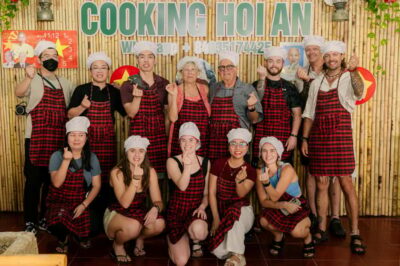
Market Tour, Basket Boat Ride and Cooking Class
Read our review →
Cai Be Mekong Delta Tour: Cooking Class, Cycling & Craft Villages
Read our review →
Basket Boat with Lantern-Making & Cooking Class Tour
Read our review →Browse the lists this tour appears in