
Reviewed · WALKING TOURS
Hoi An Ancient Town Walking Tour with a Local
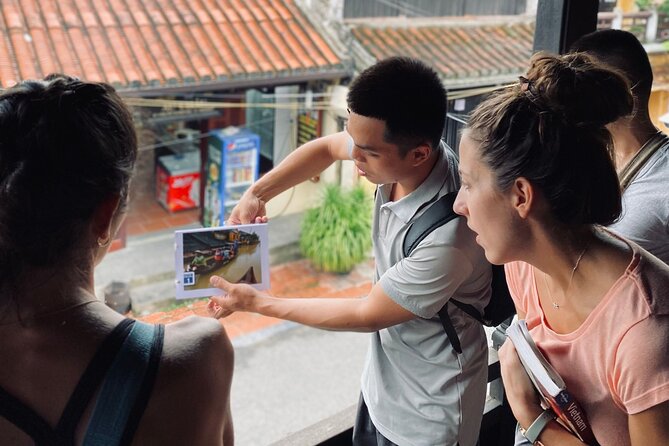
Hoi An stories work best on foot. This 3-hour walking tour is a smart mix of Japanese and Cantonese heritage and real town life, with a local guide keeping the pace easy and the explanations practical from start to finish. I especially like how the route starts at the Japanese Culture Gallery and then moves through major heritage stops before ending at Hoi An Central Market for food and shopping.
One catch to plan for: the UNESCO Entrance Ticket is not included. The price is $9.89 per person, but you’ll still need to budget ₫120,000 per person for the UNESCO ticket, and the experience works best when the weather is good.
In This Review
- Quick hits before you go
- A 3-hour route that gives you structure fast
- Price and tickets: what you really pay for
- Meeting point and where the tour actually ends
- Stop 1: Japanese Culture Gallery and the timeline you need
- Stop 2: Japanese Covered Bridge, beyond the postcard view
- Stop 3: Cantonese Assembly Hall and the meaning in the ornament
- Stop 4: Quan Thang Ancient House, where daily life becomes real
- Stop 5: Traditional Art Performance Theatre, culture you can hear
- Stop 6: Hoi An Central Market, snacks and smart shopping
- Guides make or break a walking tour, and this one is consistently praised
- What to wear and bring for a comfortable old-town walk
- How to get the most out of each stop
- Should you book this Hoi An walking tour?
- FAQ
- How long is the Hoi An Ancient Town Walking Tour with a Local?
- Where does the tour start and where does it end?
- What is the price per person?
- What is included in the tour?
- Is the UNESCO entrance ticket included?
- Do I need to pay for admission at stops?
- What group size should I expect?
- Can I use a mobile ticket?
- Are service animals allowed?
Quick hits before you go

- Japanese Culture Gallery sets up why Japanese merchants and culture mattered in Hoi An
- Small groups (max 10) make it easier to ask questions and keep a comfortable pace
- Architecture stops include the Japanese Covered Bridge, Cantonese Assembly Hall, and Quan Thang Ancient House
- Traditional Art Performance Theatre adds music and performance so you hear the culture, not just read about it
- End at Hoi An Central Market means snacks, local treats, and practical shopping tips on the way out
A 3-hour route that gives you structure fast
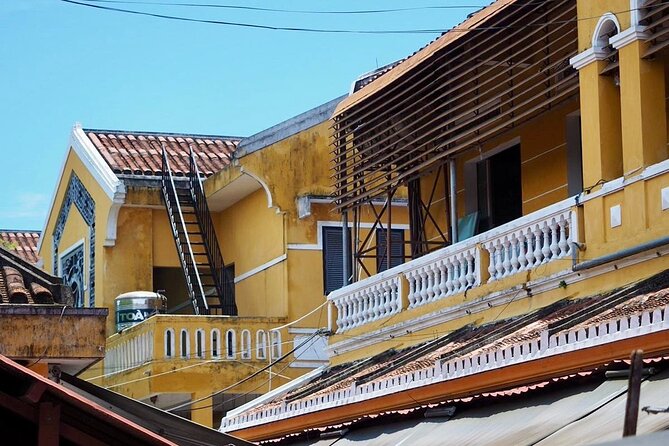
If you’ve only got a half day in Hoi An, this tour is a good way to get your bearings. You’re not wandering randomly through pretty streets. You’re following a plan that connects the dots between different communities who helped shape the town over time.
The tour also respects your energy. With about 3 hours on the clock and stops that typically run 20 to 35 minutes each, it’s long enough to see real places, but not so long that you feel finished before you arrive. It’s a group format, but the limit of up to 10 travelers keeps it from feeling like a moving crowd.
One more practical plus: there’s a coffee or herbal tea break included. That small reset matters in the heat, and it gives you a moment to regroup before the next heritage stop.
More Walking Tours in Hoi An
- Hoi An: Ancient Town Guided Walking Tour
★ 4.9 · 766 reviews - Evening Walking Food Tour, folk game and lantern boat
★ 5.0 · 665 reviews - Hoi An Ancient Town – Walking Tour with Local Guide
★ 4.9 · 385 reviews
Price and tickets: what you really pay for
The headline price is $9.89 per person, which is tough to beat for a guided, multi-stop walk. But you should factor in the UNESCO entrance ticket, since it’s listed as not included: ₫120,000 per person.
Here’s how I’d think about value. You’re paying for three things:
1) a local guide to connect what you’re seeing
2) access to multiple heritage locations and a traditional performance stop
3) a break with coffee or herbal tea
For most people, the guidance is the big win. Hoi An can look like “pretty buildings” if you’re on your own. With a guide, you get the why behind the colors, the community roles, and the architectural choices. That’s the part that makes the cost feel worth it once you’re halfway through the walk.
Meeting point and where the tour actually ends
You’ll start at 125 Đ. Phan Chu Trinh, Phường Minh An, Hội An, Quảng Nam. The end point is Hoi An Market at 19 Trần Phú, Cẩm Châu, Hội An, Quảng Nam.
That matters because the tour finishes in the same place many people want to go anyway. After you’ve toured the heritage core, you land right where you can keep exploring for food and small souvenirs without having to plan your next move.
Stop 1: Japanese Culture Gallery and the timeline you need
The Japanese Culture Gallery is the first stop for a reason. It gives you the background that makes later sites make more sense.
You spend about 25 minutes here, with a quick timeline of how Hoi An started and why Japanese people were present in the town. This is where the tour does its early job well: it frames the later Japanese-linked landmarks so they don’t feel random.
A small note on tickets: admission isn’t included for this stop, so plan to pay whatever the site requires. Your guide will handle the flow, but it helps to be ready.
More Hoi An plans to weigh
- Hoi An Street Food Walking Tour with Tastings
★ 5.0 · 317 reviews - Hoi An/Da Nang: Private Photoshoot & Guided Walking Tour
★ 5.0 · 160 reviews - Cham Island: Underwater Walking & Snorkeling Tour
★ 4.4 · 112 reviews - Hoi An Off the Map – Walking Tour in the Backstreets
★ 4.9 · 28 reviews
Stop 2: Japanese Covered Bridge, beyond the postcard view
Next up is the Japanese Covered Bridge, with about 20 minutes here. Even if you’ve seen it in photos, I’d still give it time. The bridge works as both architecture and symbol, and a good guide will point out details that most people miss when they’re snapping pictures and moving on.
This is also a nice transition stop. You’ve just learned a bit about the Japanese presence. Now you see a piece of it in the streetscape, and you start to notice how the town blends influences instead of putting them in separate boxes.
Again, admission is listed as not included, so expect to handle entry as required by the site.
Stop 3: Cantonese Assembly Hall and the meaning in the ornament
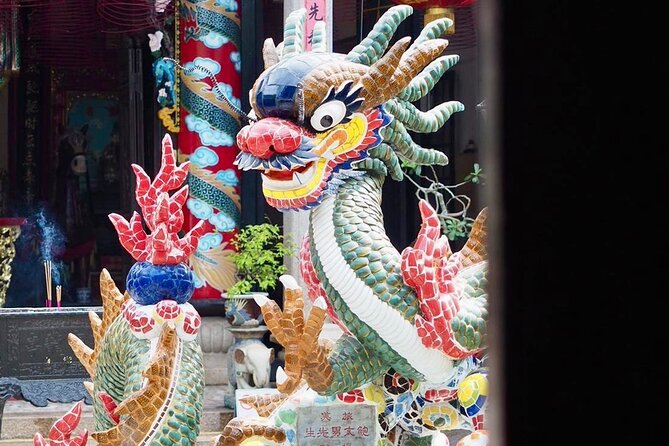
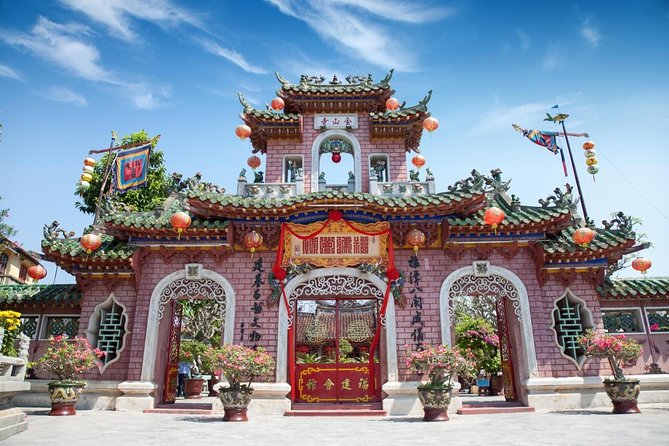
At about 25 minutes, the Cantonese Assembly Hall is one of the key cultural stops on the route. This is where the tour shifts from Japanese-linked stories to Cantonese influence.
What I like about this stop is how it’s presented. The hall is described as beautifully adorned, with intricate design and vibrant colors, and the guide connects that look to the historical significance of the community. If you pay attention here, you’ll start seeing similar patterns of symbolism across other heritage buildings later on.
Admission is not included for this stop, so budget for any entry fee the site requires.
Stop 4: Quan Thang Ancient House, where daily life becomes real
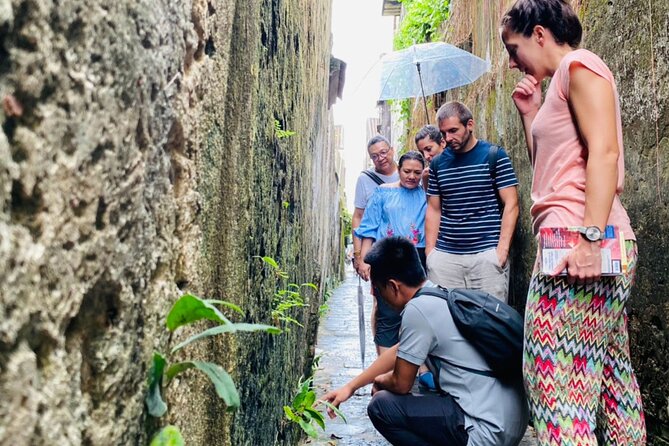
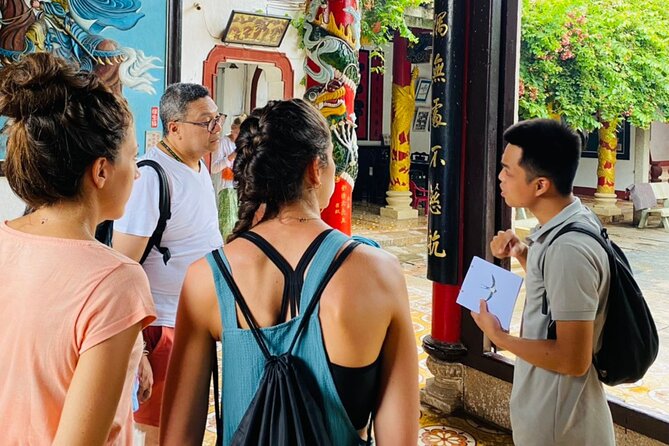
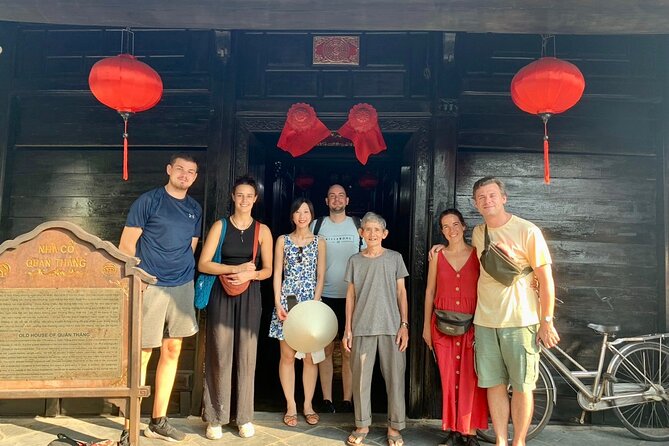
Then you step into Quan Thang Ancient House for about 25 minutes. This is the merchant-house perspective, which is a smart change from bridges and halls.
Instead of only learning about public spaces, you get a window into how a prosperous merchant family lived. The tour focuses on the architecture and the way the house was preserved, which helps you understand why these older homes survive when many other structures have disappeared.
One extra reason I think this stop works: it’s the kind of place where stories can get very specific. Guides often bring in survival details, like how families adapted through floods and changed needs across generations. If your guide shares those kinds of specifics during your visit, you’ll walk away with a stronger sense of what preservation really means.
Admission is not included here, so keep your UNESCO planning in mind.
Stop 5: Traditional Art Performance Theatre, culture you can hear
At the Traditional Art Performance Theatre, you’ll have about 35 minutes. This is one of the best inclusions for anyone who wants more than “look at buildings.”
You’ll see traditional music, dance, and theatrical performances, with traditional instruments used during the show. Even if you don’t speak the language, you can usually catch the basics through rhythm, costumes, and staging. It turns the tour from sightseeing into something closer to lived culture.
As with other stops, admission is listed as not included. Your best move is to go in expecting a performance session, not just a quick look inside.
Stop 6: Hoi An Central Market, snacks and smart shopping
The walk ends at Hoi An Central Market (about 35 minutes). This is where the tour becomes useful in the day-to-day sense.
You can move from stall to stall for local delicacies, handicrafts, and souvenirs. The tour also frames the market around local wisdom, including a mention of the secret behind Hoi An people’s longevity. You may also get a few bite-size tasting opportunities, depending on what the guide offers in practice.
This is a good time to ask for recommendations too. In similar tours run by different guides, I’ve seen them provide end-of-tour lists for where to eat, what to try next, and even pointers for planning a lantern boat ride. Your guide is in the best position to steer you toward places that match what you like, whether that’s casual snacks or a sit-down meal.
Guides make or break a walking tour, and this one is consistently praised
This tour has a repeatable format, but the guide role is huge. The strongest reviews focus on guides who keep things moving at a good pace, maintain friendly energy, and explain with clear English.
You’ll also notice a pattern: many guides go beyond the script. They tend to add small cultural tidbits, answer questions on the spot, and finish with practical suggestions. Names that show up often with this tour include Kun, Trang, Nguyen, Karla, Anh, June, Sanh, and Minh. Whoever you get, you can reasonably expect a warm, engaged approach.
If you want the tour to feel personal, arrive with a couple of questions ready. For example:
- Which building has the most interesting story today
- What is the best snack here that locals actually go for
- If I’m doing one cultural activity tonight, what should I pick
The smaller group size, capped at 10, makes those questions easier to get answered.
What to wear and bring for a comfortable old-town walk
You’re doing a heritage-focused walking route, so plan like you’re walking all afternoon.
- Wear comfortable shoes, preferably with grip
- Bring water, since stops are frequent but you’re still outside
- Expect some sites to involve stairs or uneven floors, especially in older buildings
Also, the experience is described as needing good weather. If the skies turn or rain starts, you may need to accept rescheduling or a refund depending on the provider’s decision for that day.
How to get the most out of each stop
I’d treat this as a guided circuit, not a photo shoot.
At the Japanese Culture Gallery, I’d listen for the connecting facts that explain later landmarks. At the bridge and halls, I’d slow down long enough to look at details the guide points out, then you can take photos with meaning, not just angles. In Quan Thang Ancient House, watch how the tour frames merchant life, because that’s what makes the architecture stop being background decoration.
Finally, at the market, I’d go in with light expectations. You’re not just buying souvenirs. You’re tasting your way through Hoi An in a setting that feels like the town itself, not a display area.
Should you book this Hoi An walking tour?
Book it if:
- You want a structured introduction to Hoi An’s UNESCO core in about half a day
- You like history that connects architecture to everyday life
- You value a guide who keeps things friendly, clear, and moving at a good pace
- You’d enjoy a mix of heritage stops and a traditional performance, not just one or the other
Skip it or consider another option if:
- You hate paying extra on top of the base price, because the UNESCO entrance ticket is required
- You’re traveling during a period when weather is unreliable, since it’s noted as needing good conditions
If you’re figuring out what to do first in Hoi An, this is one of the easiest choices to justify. For $9.89 plus the UNESCO ticket, you get a guided route that explains why the town looks the way it does, then ends where you can immediately use what you learned.
FAQ
How long is the Hoi An Ancient Town Walking Tour with a Local?
The tour lasts about 3 hours.
Where does the tour start and where does it end?
It starts at 125 Đ. Phan Chu Trinh, Phường Minh An, Hội An, and ends at Hoi An Market, 19 Trần Phú, Cẩm Châu, Hội An.
What is the price per person?
The price is $9.89 per person.
What is included in the tour?
Coffee and/or tea are included, specifically a special herbal tea.
Is the UNESCO entrance ticket included?
No. The Hoi An UNESCO entrance ticket is listed separately at ₫120,000 per person.
Do I need to pay for admission at stops?
Admission tickets are listed as not included for the stops on the route, so you should expect to pay any site entry fees that apply.
What group size should I expect?
The tour has a maximum of 10 travelers.
Can I use a mobile ticket?
Yes, a mobile ticket is part of the experience.
Are service animals allowed?
Yes, service animals are allowed.
New listings around Hoi An
- Romantic Sunset Dinner Cruise in Hoi An★ 4.7 · 108 reviews
- Snorkeling Cham Island: Snorkeling Tour by Speed Boat★ 3.6 · 26 reviews
- Hoi An: Secret Cocktail Experience★ 4.9 · 16 reviews
- Hoi An: Rural Cycling Tour to Village with Basket Boat Ride★ 5.0 · 174 reviews
- Rural Cycle, Market Tour, Basket Boat & Organic Farm Cooking★ 5.0 · 64 reviews
- From Hoi An or Danang: Private Day Trip to Hue★ 4.9 · 14 reviews
- Private Car Hoi An to Hue Via Hai Van Pass, Lagoon & More★ 5.0 · 22 reviews
- My Son Sanctuary Morning/Afternoon with Boat Trip and Banhmi★ 4.5 · 11 reviews
Walking Tours, compared.

Private Street Food Evening Walking Tour in Ho Chi Minh City
Read our review →![[HOT] Hanoi Old Quarter Walking Street Food – Small Group Tour](https://up.vietnamesetravelguide.com/wp-content/uploads/hot-hanoi-old-quarter-walking-street-food-small-group-tour-400x267.jpg)
[HOT] Hanoi Old Quarter Walking Street Food – Small Group Tour
Read our review →
Super Niche Walking Street Food Tour in Ho Chi Minh City
Read our review →

Private Hanoi Street Food Walking Tour With Real Foodie
Read our review →

Hanoi Walking Street Food Tour with Train-Street Visit
Read our review →Browse the lists this tour appears in