Reviewed · HANOI TOURS & ACTIVITIES
Highlights of Vietnam, Cambodia and Laos Tour – 17 Days
Three countries in 17 days, and it works. I love the way this route strings together Halong Bay time on an overnight boat and Hanoi’s Old Quarter feel in the same trip, so you get both scenery and street-level history. One thing to consider: it is a fast-moving highlights plan, so you will have long travel days and less time to wander on your own than on slower trips.
My second big win is the built-in value: English-speaking guides plus entrance fees, dinners, and most meals are wrapped into the price, so you spend less time figuring things out and more time looking at what you came for. The coordination is also a strong theme in feedback, with names like Julie, Daphne, Stella, and Lana showing up as people who kept plans on track.
In This Review
- Quick hits to know before you go
- Why this Vietnam to Laos route feels like a highlights route that still has meaning
- Hanoi’s Old Quarter and Ho Chi Minh Mausoleum, the city’s two faces
- Halong Bay overnight boat time, plus Da Nang’s coast reset
- Hoi An Ancient Town and My Son, trading-town charm and temple scars
- Huế and Saigon, royal river stories and French-era streets
- Cu Chi Tunnels and the Mekong Delta, war lessons and everyday river life
- Siem Reap’s Angkor region, Banteay Srei’s pink stone and Aki Ra’s landmine story
- Angkor Wat at temple city scale, with time to look instead of rush
- Luang Prabang’s palace museum and Pak Ou caves, Lao history with Mekong framing
- Price and logistics: what $2,600 covers, and what you must plan for
- Should you book this Highlights tour?
- FAQ
- How long is the tour?
- What is the price per person?
- What’s included in the tour price?
- Are international flights included?
- Are domestic flights in Vietnam included?
- Does the tour include entrance fees and tickets?
- Is pickup offered, and what is the group size?
- Where is the start point and start time?
- What is the cancellation policy?
Quick hits to know before you go
- Overnight boat time in Halong Bay instead of a rushed same-day stop.
- All entrance fees included across temples and major sites, so your budget stays calmer.
- Banteay Srei plus the Landmine Museum adds real-world context beyond photo temples.
- Mekong Delta by sampan with time around Dragon, Unicorn, Phoenix, and Tortoise islands.
- Small group size (max 15) helps the schedule feel manageable.
- Hanoi, Siem Reap, and Luang Prabang bookend the route, with coastal and river days in between.
Why this Vietnam to Laos route feels like a highlights route that still has meaning
This is the kind of trip that takes “best of” seriously. You start in Hanoi, then roll through central Vietnam’s coast and royal old-world atmosphere, continue to southern Vietnam’s war history and the Mekong’s river life, and then switch gears to Cambodia’s Angkor region. After the temple scale shock, you land in Luang Prabang, where the pace slows just enough to appreciate palace history and cave worship on the Mekong.
What makes it more than a checklist is the mix of eras and emotions. You are not only seeing carved stone and colonial façades, you are also getting context about Vietnam and Cambodia’s modern conflicts through places like the Cu Chi Tunnels and a landmine museum in Siem Reap’s countryside.
The tradeoff is pace. With a 17-day structure, you will move often. If you dislike structured days, or you want a lot of free time to shop, snack, and drift, you may feel squeezed. If you like guided momentum and want major sights handled for you, this format can feel surprisingly efficient.
More Hanoi plans to weigh
- Hanoi Jeep Tour: Food, Culture and Fun by Vietnam Army Jeep
★ 5.0 · 15,222 reviews - Full-Day Ninh Binh Highlights Tour from Hanoi
★ 5.0 · 7,761 reviews - Hanoi: Ha Long Bay Day Cruise – Swimming, Meal, Kayaking
★ 4.7 · 7,415 reviews
Hanoi’s Old Quarter and Ho Chi Minh Mausoleum, the city’s two faces
Hanoi’s Old Quarter is the perfect opener. You start with the area known for its 36 streets and guilds, with street names tied to old trades like food, materials, and goods. Even if you have only a little time on foot, the mix of small storefronts and traditional street patterns is the fast way to understand why Hanoi feels layered.
Then you shift from street history to national story at the Ho Chi Minh Mausoleum. It is a “first-time in Hanoi” stop for a reason: you are visiting a centerpiece tied to Vietnam’s independence and the life of Uncle Ho. The visit is short, but it is the kind of stop that makes later history stops click into place.
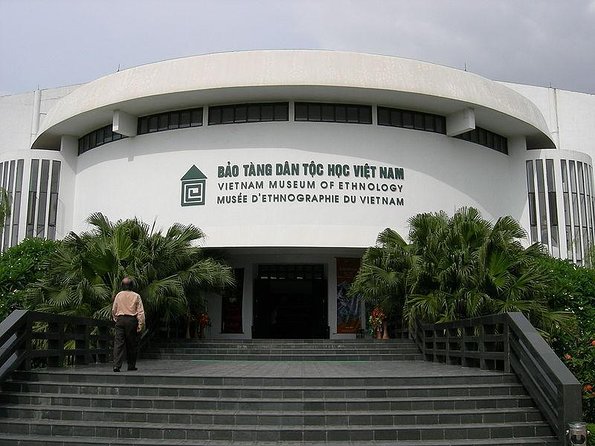
If you want a calmer, more reflective break, the Vietnam Museum of Ethnology is a smart addition. It focuses on Vietnam’s multiple ethnic groups, and it comes with the bonus of a greener, less frantic feel than some central-city museums. It is a good spot to recharge before the long haul toward Halong Bay.
Practical note: the mausoleum and major cultural sites often involve lines and rules. Wear something you can sit in comfortably and keep your schedule flexible.
Halong Bay overnight boat time, plus Da Nang’s coast reset
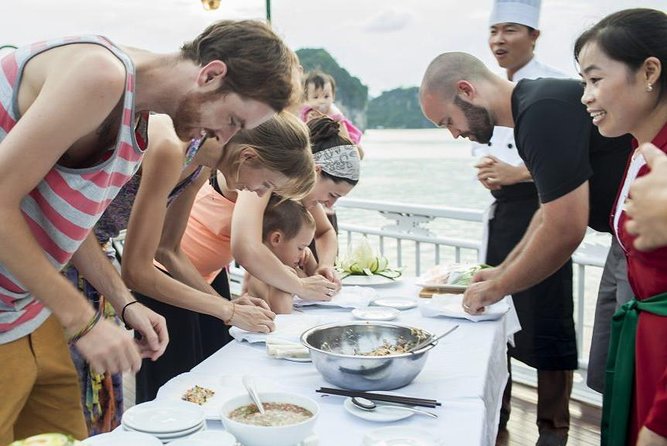
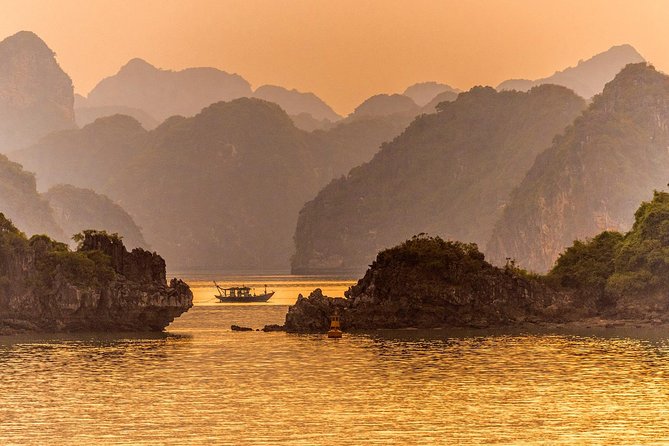
Halong Bay is the dramatic mid-trip reset, and the numbers help explain why. You are looking at a UNESCO World Heritage Site with about 1,600 limestone islands and islets spread across more than 1,500 square kilometers. The surreal shapes are exactly what movies borrow from, but the real value is how the scenery changes with light when you are not rushing.
The drive from Hanoi is about 170 km, and transport is typically by car, minibus, or bus. The tour also describes an optional helicopter transfer if you want to skip some time, but the main point for most people is that this itinerary includes the overnight boat stay, so you are not only seeing the bay in one quick window.
After that, the route jumps to central Vietnam’s Da Nang area, a halfway point between Hanoi and Ho Chi Minh City. Da Nang is less about one single landmark and more about access. From here you reach beaches and nearby historic stops like Hoi An and My Son.
You will also get a short stop at Da Nang Cathedral. It is the kind of quick add-on that breaks up coastal time and gives you another layer of colonial-era architecture to compare with the rest of the trip.
Hoi An Ancient Town and My Son, trading-town charm and temple scars
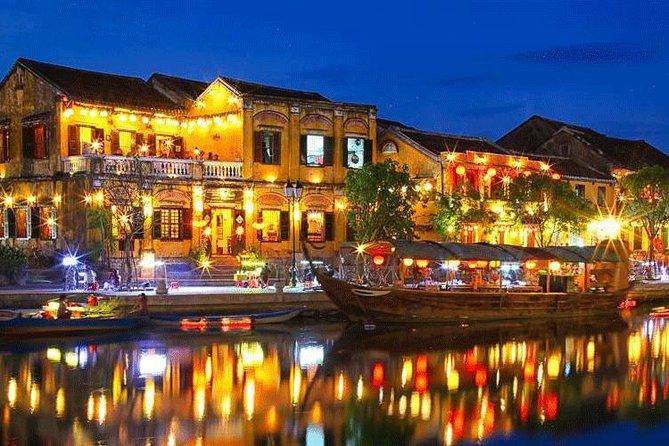
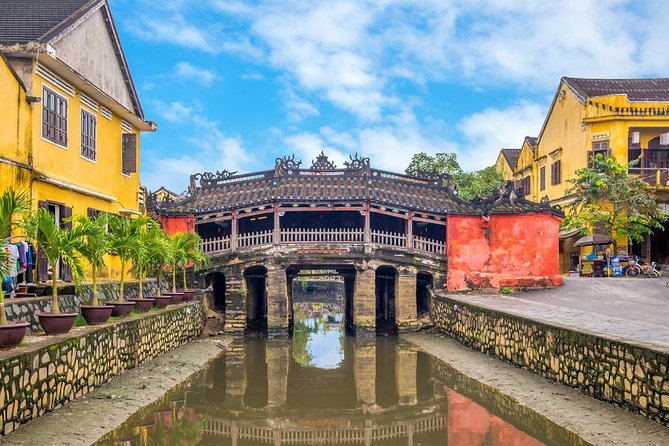
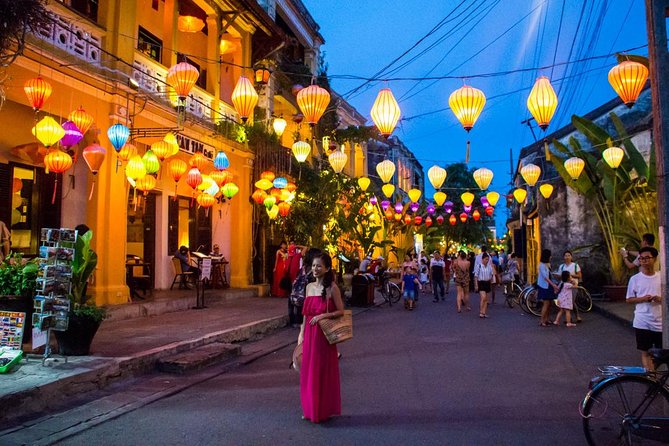
Hoi An works because it feels lived-in, not staged. The old town was once a major trading post in the 16th and 17th centuries, and it has held onto its historic bones. You can expect heritage buildings like Chinese temples, a Japanese-designed bridge, pagodas, wooden shop-houses, and French-colonial structures alongside older canals. The result is a “walking museum” vibe that still reads as real life.
At night, the riverside becomes the main event, lit by old-fashioned lanterns. This is the time when your photos look better and your walking pace slows down, even if you are tired from earlier days.
Then you head to My Son Sanctuary, which is a different kind of spectacle. This site was a political center and royal burial ground for Hindu gods and goddesses, with Shiva called out as a key protector for Champa kings. The craftsmanship matters here: red bricks and sandstone are what give the complex its fine detail.
My Son also carries the weight of war. The sanctuary suffered destruction over time, and in the more recent conflict era it was damaged by American bombing because the area was believed to be linked to Viet Cong hiding places. If you are someone who appreciates context as part of travel, My Son lands hard in a good way.
Same region, different pace:
- Hanoi: Water Puppet Show Tickets
★ 4.6 · 7,029 reviews - Hanoi Motorbike Tour: Food, Culture and Fun by Vintage Motorbike
★ 5.0 · 6,699 reviews - Hanoi: Guided Food Tour with Train Street Visit
★ 4.9 · 6,239 reviews - Hanoi Cooking Class: Culture, Local Market & Meaning CSR Impact
★ 5.0 · 5,147 reviews
Huế and Saigon, royal river stories and French-era streets
Huế is built for people who like atmosphere and slower sightseeing. The Nguyễn Dynasty kings made it their feudal capital along fertile riverbanks and forested hills. The city’s story is not only political, it is also sensory: refined cuisine, leafy streets with mossy pagodas, art déco mansions, and busy markets. The Perfume River threads through the city like a moving reference point.
Saigon, or Ho Chi Minh City, is the contrast. The trip describes it as Vietnam’s business and financial hub, with history reaching far back. You also get a clear colonial layer: the French conquered Saigon in 1859 and turned it into the capital of Cochin China in 1862, leaving behind broad boulevards and elegant architecture you can still recognize as you walk.
The war history is part of the backdrop, too. In 1969, the city had about 4.5 million inhabitants, and during the fall of South Vietnam in 1975, Saigon and the region were evacuated. You do not need to study a textbook before you go, because later stops like Cu Chi Tunnels help fill in the shape of those events.
If you are choosing when to take photos, I like planning one “light walking” stop like Huế and one “architecture watching” stop like Saigon rather than trying to brute-force both on the same energy level.
Cu Chi Tunnels and the Mekong Delta, war lessons and everyday river life
Cu Chi Tunnels gives you a concrete look at the war era from the Vietnamese side of the story. It is described as rewarding, especially as a short trip from central Ho Chi Minh City. Even if you only spend a few hours there, the tunnels and surrounding context push your understanding beyond vague history dates.
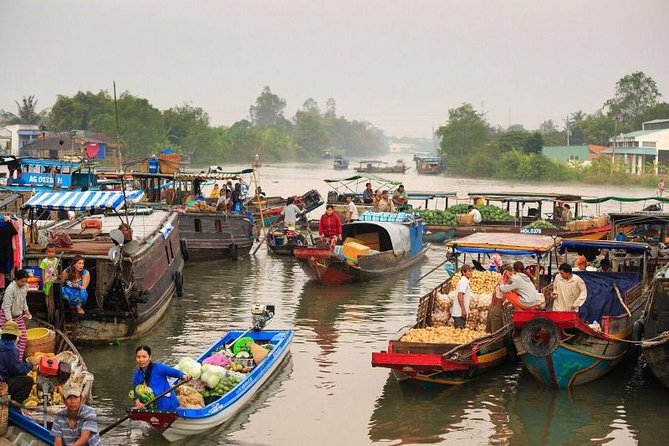
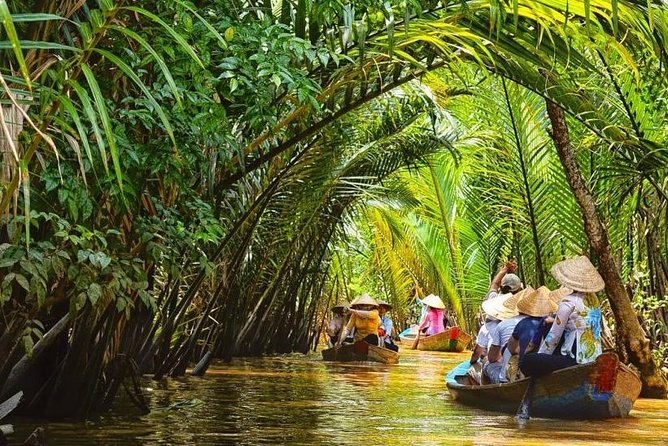
Then the itinerary turns toward water, starting with a Mekong Delta sampan ride around Dragon, Unicorn, Phoenix, and Tortoise islands. This is one of the most “human” sections of the trip because it focuses on how people live with the river. You stop at Unicorn Island and go walking in village paths. That time includes orchards, tropical fruits, and Vietnamese folk music performed by local people. There is also mention of a fruit plantation visit, which helps you connect what you see on the water to what you would actually taste on land.
From there you head toward floating market time. The Cai Be plan starts with breakfast at the hotel, then you take a leisurely boat ride to tributaries of the Lower Mekong, including the Bassac River. The goal is Cai Rang Floating Market, described as vibrant and full of activity, with a 3-hour window that is long enough to watch how sellers and boats operate.
Tip that saves money and stress: bring cash for small snacks and keep your hands free for your camera. It is the kind of place where you see the best moments while people are moving.
Siem Reap’s Angkor region, Banteay Srei’s pink stone and Aki Ra’s landmine story
Siem Reap is where “scale” becomes your theme. The city sits next to the Angkor Archaeological Park, a huge complex described as covering about 150 square miles. Angkor Wat is about four miles north of the city center, so the location makes it easy to base yourself here.
Before Angkor Wat, the trip adds Banteay Srei, which is smaller but more intensely detailed. This temple is largely built of pink sandstone, and the description explains why that matters: the harder rock survives time well and holds up to intricate carving. You also get a rural stop to visit families producing palm sugar. That gives you a break from temple walls and adds a living, local craft piece to your day.
Then comes one of the most meaningful stops on the whole route: the Landmine Museum. The tour specifically highlights Mr. Aki Ra, a former child soldier in the Khmer Rouge who later dedicated his life to helping others. After fighting, he was trained by the United Nations to detonate land-mines. His work earned him a CNN Hero nomination in 2010.
If you want travel that connects to the real cost of conflict, this museum section is the kind of stop that will stay with you long after the temple photos fade.
Angkor Wat at temple city scale, with time to look instead of rush
Angkor Wat is the headline for a reason, and the description gives you real scale markers. It is an enormous temple complex in northern Cambodia, originally built in the first half of the 12th century as a Hindu temple. Over time, it became a Buddhist temple complex, and its size is what shocks first-time visitors: spread across more than 400 acres and described as the largest religious monument in the world.
You get the Khmer meaning of its name too. It translates to temple city, tying the architecture to Emperor Suryavarman II, who ruled from 1113 to 1150. The site was his state temple and political center.
With only a couple of hours on the ground, the key is not trying to see everything. Instead, use the guide to point out the main geometry and focal areas, then spend your extra moments where the carvings and layouts actually pull you in. This is one of those places where looking slower beats rushing for more pictures.
Luang Prabang’s palace museum and Pak Ou caves, Lao history with Mekong framing
Luang Prabang feels different from the rest of the route. The trip frames it as the capital of the first Lao kingdom, Lan Xang, from 1353 onward. The city’s name is tied to the Pha Bang Buddha image brought in the early 1500s during Lan Xang’s golden age, and the museum stop later points out that the Buddha image is now housed in the Royal Palace Museum.
You also get a political shift story: the late 16th century fragmentation left Luang Prabang as a weaker independent city state paying tribute to neighboring kingdoms. Then the 1887 sacking by the Chinese Haw led the monarchy to accept French protection, shaping the colonial-era architecture you see today.
Pak Ou Caves is the other big nature-and-spiritual stop. The cave system sits on the Mekong River, north of Luang Prabang. You visit two caves, Tam Ting and Tam Pum. Tam Ting is described as the cave of a thousand Buddha statues, with a total count given in the tour info: about 4,000 statues across both caves. The upper cave, Tam Pum, is described as having around 1,500 statues, while the main cave has around 2,500. Many are wooden and painted red or black.
Finally, the Royal Palace Museum wraps the history. Built in 1904, it is described as blending Lao traditional and French style. It housed King Sisavang Vong and his family, and after the revolution in 1975, the government took over the building and converted it into a national museum. This is a great last-stop option because it helps you understand the visual mix you noticed in Luang Prabang’s architecture.
Price and logistics: what $2,600 covers, and what you must plan for
At $2,600 per person, the best way to judge value is to look at what is already bundled. This tour includes 3-star hotels and a cruise, English-speaking tour guides, and all the entrance fees during the tour days. Food coverage is solid too: dinner is included, plus breakfast is included for 16 days and lunch for 10 days. That matters because meals and entry tickets add up quickly in three different countries.
What is not included is just as important. International flights to Cambodia and Laos are not included, and domestic flights in Vietnam are not included. The route spans multiple cities, so you will need to plan your own air arrangements around the tour’s schedule.
Two practical items I would double-check before you go:
- The meeting point info lists Luang Prabang International Airport with a 10:00 am start time. Yet the sightseeing described starts with Hanoi. Confirm your actual tour start city and timing so there is no scramble on day one.
- Pickup is offered, which usually helps with airport stress. Still, ask whether pickup is available for your exact arrival time and airport.
Also, the group size is capped at 15, so you are not in a huge crowd. That usually makes guides easier to hear and transfers easier to manage.
Should you book this Highlights tour?
Book it if you want a strong first-time overview across Vietnam, Cambodia, and Laos, and you like having guides, entry tickets, and most meals handled. I especially think it is a good fit if you want Halong Bay as an overnight experience and you want Angkor paired with more than just the main temple highlight, thanks to stops like Banteay Srei and the Landmine Museum.
Skip it or consider a different pace if you hate early starts or you want long unstructured hours to roam alone. This itinerary is built for momentum, and that is not everyone’s travel style.
One more personal decision point: if you care about understanding history and not just collecting sights, this route gives you multiple entry points into the war-era context, including Cu Chi Tunnels and Aki Ra’s work. That can make the whole trip feel more meaningful, not less fun.
FAQ
How long is the tour?
The tour is listed as 17 days (approx.).
What is the price per person?
The price is $2,600.00 per person.
What’s included in the tour price?
The inclusions listed are dinner, English-speaking tour guides, 3-star hotels and a cruise, all the entrance fees during the tours, breakfast (16), and lunch (10).
Are international flights included?
No. International flights to Cambodia and Laos are not included.
Are domestic flights in Vietnam included?
No. Domestic flights in Vietnam are not included.
Does the tour include entrance fees and tickets?
Yes. Entrance fees during the tours are included, and the tour mentions mobile ticket support.
Is pickup offered, and what is the group size?
Pickup is offered. The tour/activity has a maximum of 15 travelers.
Where is the start point and start time?
The meeting point shown is Luang Prabang International Airport (W529+C97, Phetsarat Rd, Luang Prabang, Laos), with a start time of 10:00 am.
What is the cancellation policy?
You can cancel up to 6 days in advance of the experience for a full refund.
New listings around Hanoi
- Ninh Binh Full Day Tour from Hanoi to Hoa Lu, Trang An & Mua Cave★ 5.0 · 31 reviews
- Beautiful Female Riders Vespa Red River Countryside Tour 5 Hours★ 5.0 · 23 reviews
- Female Riders Vespa Night Street Food + Train Street food 4 Hours★ 5.0 · 35 reviews
- The insider’s Hanoi 4.5 hours All highlight Places & Train Street★ 5.0 · 41 reviews
- Street Foods Hanoi Kim Tours Vietnam★ 5.0 · 140 reviews
- Red River Delta Countryside+ Rural Villages, rice Paddies fields★ 5.0 · 134 reviews
- 5 Days 4 Nights Highlight Vietnam Tours★ 5.0 · 9 reviews
- Hanoi Vespa After Dark Street food + Train Street+ Live Music★ 5.0 · 18 reviews
Hanoi Tours & Activities, compared.
Hanoi Jeep Tour: Food, Culture and Fun by Vietnam Army Jeep
Read our review →
Full-Day Ninh Binh Highlights Tour from Hanoi
Read our review →
Ha Long Bay Day Cruise – Swimming, Meal, Kayaking
Read our review →
Hanoi Motorbike Tour: Food, Culture and Fun by Vintage Motorbike
Read our review →
Hanoi Cooking Class: Culture, Local Market & Meaning CSR Impact
Read our review →