
Reviewed · COOKING CLASSES
Hanoi: Maya Traditional Cooking Class & Market Tour
Egg coffee and pho rolls, taught step by step. This small-group class pairs a visit to Yen Thai market with hands-on cooking, then you eat what you make, including Hanoi’s signature egg coffee. I love the clear step-by-step format and the way the market shopping ties directly into the flavors in the dishes. One catch to plan around: afternoon sessions may skip the market on some days since local markets usually run in the morning.
I also like how the menu covers Hanoi favorites in a practical order, so you build confidence from frying to mixing to rolling. In past sessions, instructors such as Lee, Devin, Stephanie, and Ruby are praised for friendly, patient teaching in English and Vietnamese, which matters when you are learning techniques with your hands. Expect a lot of food by the end, but it is served after cooking, not during.
In This Review
- Key highlights at a glance
- Starting at the Crossing Vietnam Tour office, then heading to Yen Thai market
- The market lesson that makes Vietnamese cooking click
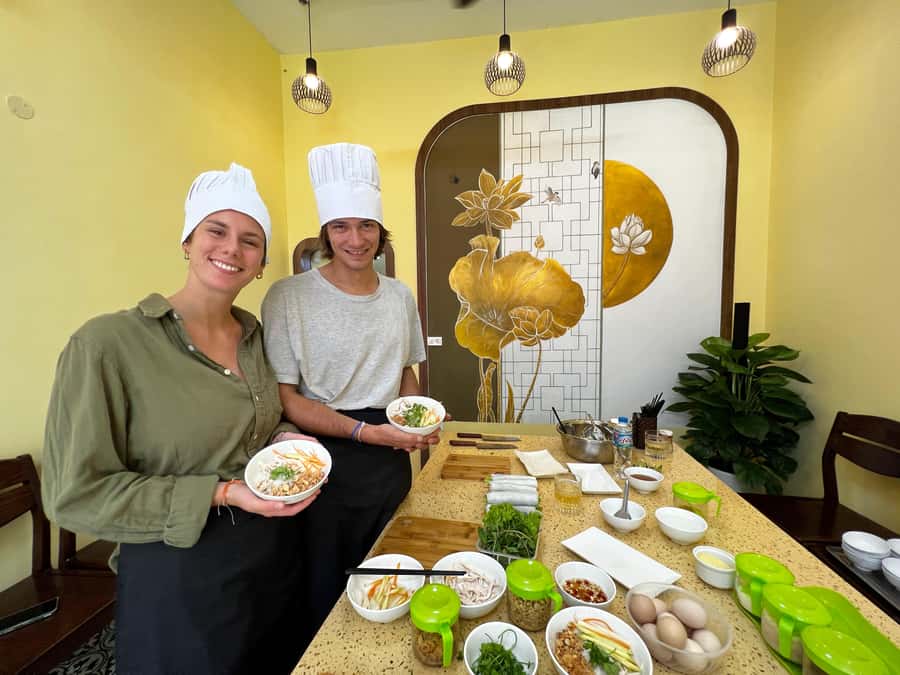
- Your hands-on menu: spring rolls, papaya salad, pho rolls, and mixed pho
- Nem Ran (fried spring rolls): the festival skill
- Nom Du Du (papaya salad): balancing sour and sweet
- Pho Cuon (pho rolls): learning to build texture and fill
- Pho Tron (mixed pho): understand the mix, not just the bowl
- Hanoi’s signature drink: making egg coffee without mystery
- Egg coffee, local wine tasting, and dessert fruits
- What the class environment feels like, and why it matters
- Dietary notes you should know upfront
- Getting value from US$22: what is included (and why it adds up)
- Timing and practical tips for your Hanoi half-day
- Should you book this Hanoi cooking class with market tour?
- FAQ
- What dishes will I learn to make in this Hanoi class?
- How long does the Maya Traditional Cooking Class and Market Tour take?
- Where do I meet for the tour?
- Is hotel pickup and drop-off included?
- How big is the group, and what languages are offered?
- What should I know about afternoon sessions?
- What is the cancellation policy?
Key highlights at a glance
- Yen Thai market ingredient hunt that helps you spot what to buy, and what you can swap if something is missing
- Step-by-step cooking of Nem Ran and Pho Cuon, with real technique tips for rolling and frying
- Mixed Pho Tron and Papaya Salad balance of sour, sweet, and savory, taught in a way you can repeat later
- Egg coffee plus local wine tasting, so you get more than just savory dishes
- Small group size (up to 10), which usually means you get help when you need it
- Recipes included, so you can recreate your favorites at home
Starting at the Crossing Vietnam Tour office, then heading to Yen Thai market
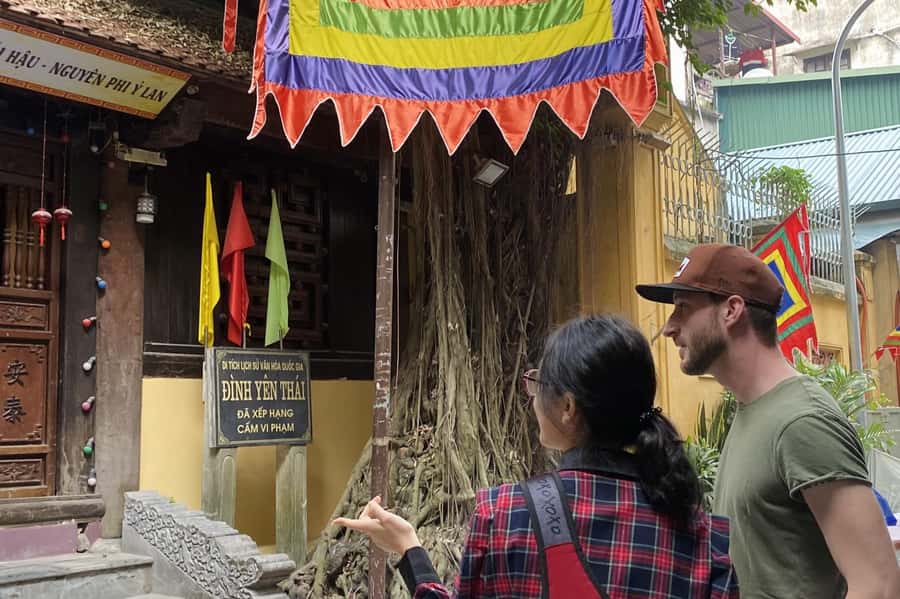
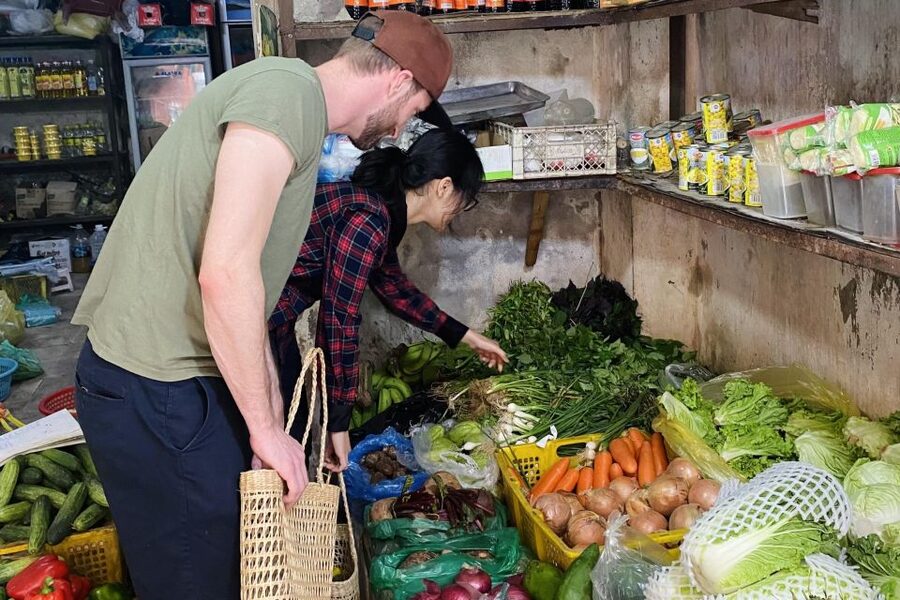
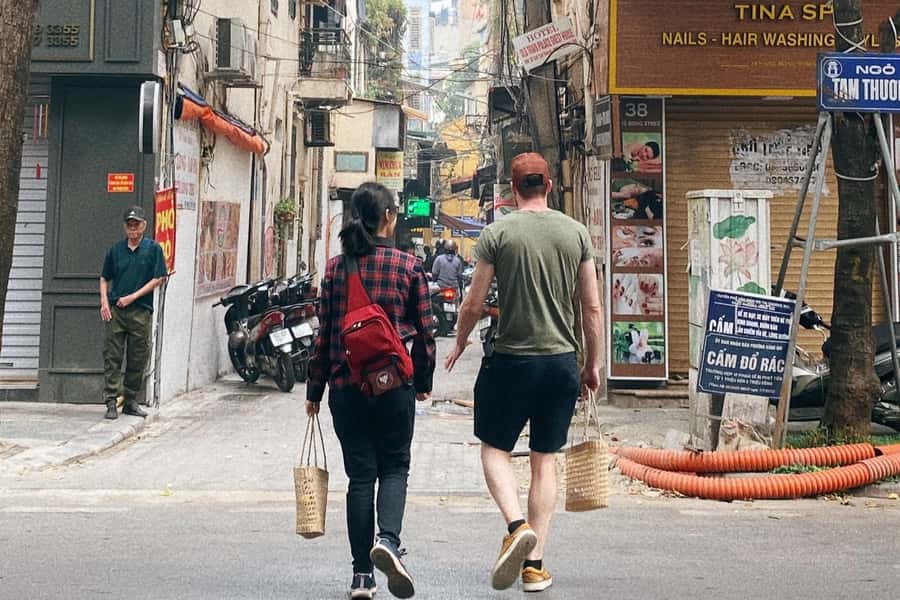
The day begins with a welcome at the Crossing Vietnam Tour office. From there, you head out to Yen Thai market, a nearby local market that is built for everyday shopping, not a show.
This part is more than a quick photo stop. You are seeing what Vietnamese cooks actually grab at the market: the ingredients that shape the dish, plus the little decisions that keep the flavors right even when you cannot find the exact same item elsewhere. That is why the market visit feels useful, not just scenic.
If you book an afternoon session, keep a small expectation adjustment in mind. Markets may not be available some days because local markets typically happen in the morning. If your schedule is flexible, mornings usually make for a smoother flow.
More Cooking Classes in Hanoi
- Hanoi Cooking Class: Culture, Local Market & Meaning CSR Impact
★ 5.0 · 5,147 reviews - 5 Traditional Dishes Hanoi Cooking Class with Market Trip
★ 5.0 · 4,890 reviews - Vietnamese Food Cooking Class in Hanoi with Market Experience
★ 5.0 · 778 reviews
The market lesson that makes Vietnamese cooking click
I like how this market stop is designed to connect the dots. You do not just wander. You buy ingredients for the class, and you learn what each item contributes.
One of the most repeated joys in the feedback is how much people learn about fruits and produce they did not know before. Instructors such as Devin and Aurora are specifically mentioned for explaining the fruits they find and how they fit into Vietnamese taste.
You will also hear guidance about substitutions. That is huge if you cook later at home, where one herb or spice is always missing. Even if you only remember one or two swaps, it can turn a frustrating recipe into something you can actually cook again.
Your hands-on menu: spring rolls, papaya salad, pho rolls, and mixed pho
After the market, you move to the kitchen for a structured class with step-by-step instruction. The format is hands-on from the start, which is why this tour works well for people who want more than a tasting.
Nem Ran (fried spring rolls): the festival skill
The class starts with Nem Ran, fried spring rolls. It is described as the kind of dish Vietnamese people associate with holidays and gathering feasts, so you are learning a technique that carries real cultural weight, not just a snack recipe.
The instruction emphasizes getting the roll even and tidy. You learn how to handle the wrapping so it stays intact, and how to aim for consistent shape, which is what helps frying turn out better. If you have ever tried to roll something thin and it kept sticking or tearing, you will appreciate the practical tips here.
More Hanoi plans to weigh
- Hanoi: 5 Local Dishes Cooking Class with Meal & Market Visit
★ 5.0 · 420 reviews - Hanoi Cooking Class and Market Tour in Ancient House
★ 5.0 · 379 reviews - Rose Kitchen Hanoi: Market, Cooking & Culture Tour + Free PickUp
★ 5.0 · 342 reviews - Hanoi: Cooking Class in a Local Villa with Market Tour
★ 4.9 · 320 reviews
Nom Du Du (papaya salad): balancing sour and sweet
Next comes papaya salad, where the goal is balance. The class highlights the main flavors of sour and sweet, and you learn how Vietnamese cooks think about flavor first, then ingredients.
Papaya salad is a great dish to learn because it is not only about chopping. It is about tuning taste. Once you understand the sour-sweet direction, you can better adjust later when your papaya is greener, your lime is sharper, or your sweetener varies.
Pho Cuon (pho rolls): learning to build texture and fill
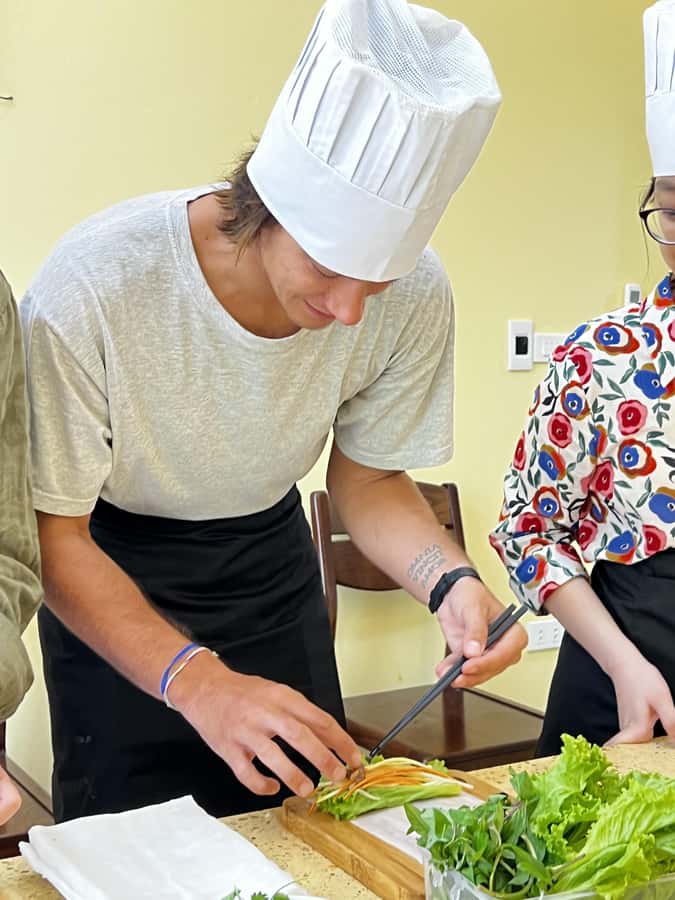
Then you move into Pho Cuon, pho rolls. Rolling is where technique matters most, and you are guided through it step by step so you do not feel lost when it is time to do it yourself.
Pho rolls also tend to teach you how Vietnamese cooking builds texture. You are usually mixing soft, fresh, and savory elements together, and you get a better sense of how those components work when you handle them rather than just eat them.
Pho Tron (mixed pho): understand the mix, not just the bowl
Finally you tackle Pho Tron, mixed pho. This dish is a good fit for a cooking class because it shows how Vietnamese flavors can be combined into one bowl without losing identity.
If you already love pho from restaurants, mixed pho helps you understand why the dish tastes the way it does. You get practice thinking in components, not just copy-paste directions.
Hanoi’s signature drink: making egg coffee without mystery
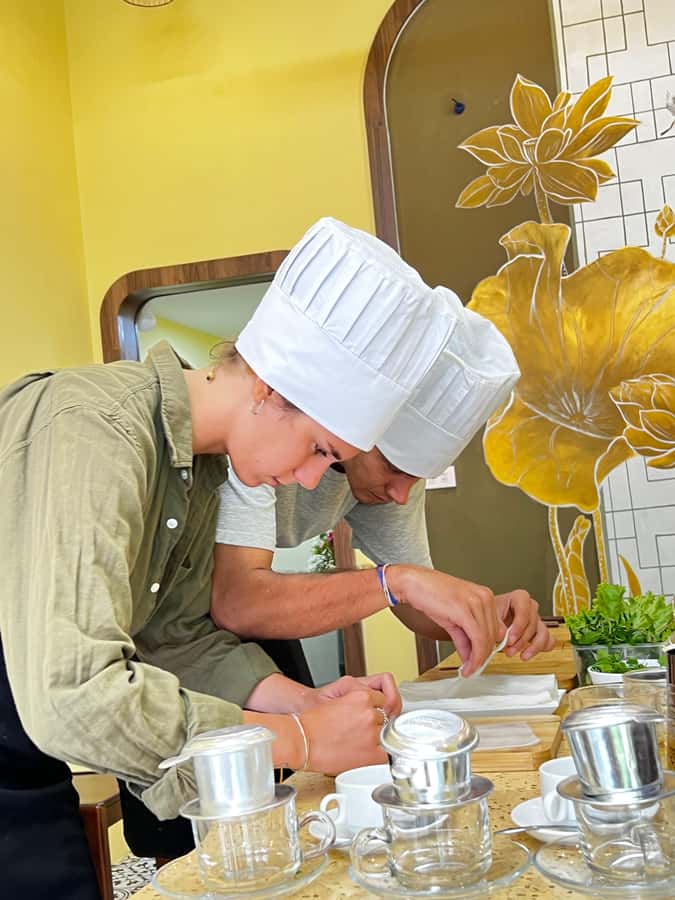
In addition to the four core dishes, the menu includes Ca Phe Trung (egg coffee), a Vietnamese specialty. You learn how to make it as part of the class, not as a separate add-on.
Egg coffee is one of those drinks that can feel intimidating if you only ever see it served in cafes. In this format, you get coached through the process so you understand what you are aiming for, not just what the final cup looks like.
From a “will I actually do this again later?” point of view, egg coffee is a smart inclusion. It is memorable, it is tied to Vietnam, and once you know the basic method, you can recreate the experience at home.
Egg coffee, local wine tasting, and dessert fruits
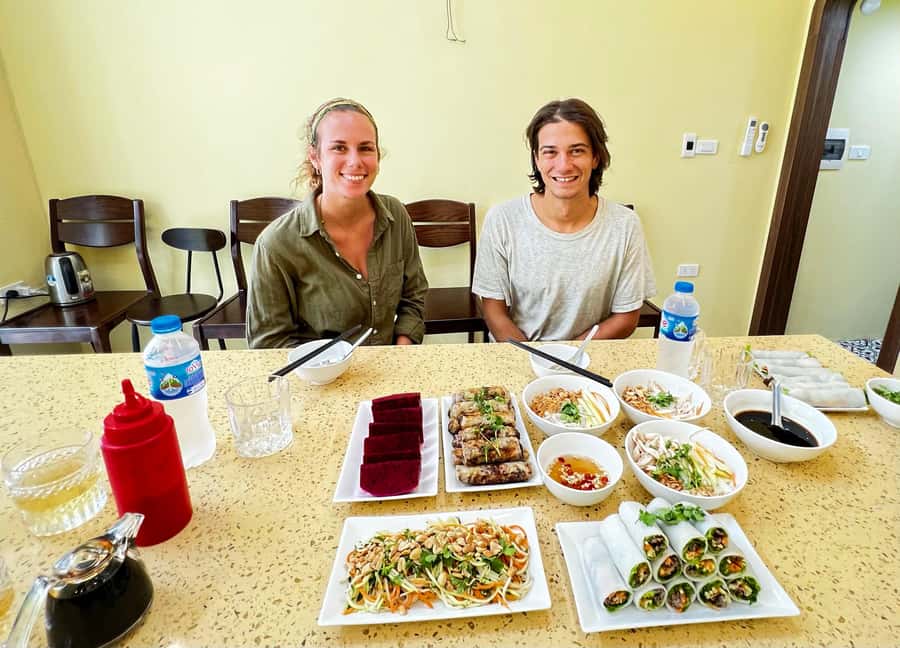
Your meal is the reward. After cooking, you sit down and enjoy the dishes you made. The class also includes seasonal fruits for dessert and drinking water throughout the activity.
A unique extra here is local wine tasting, which is included in the experience. It gives you a small taste of something beyond the food-only angle, and it adds variety without stretching the schedule.
One practical detail to plan around: you typically eat at the end of the course, not during the cooking. So if you are sensitive to long gaps between meals, plan your day so you are not starving when you arrive.
What the class environment feels like, and why it matters
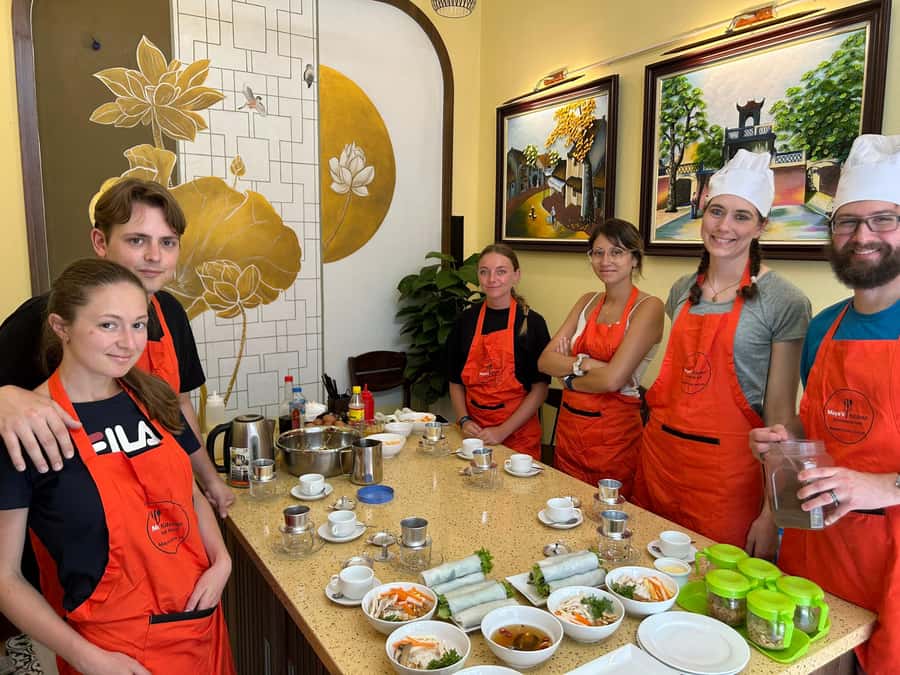
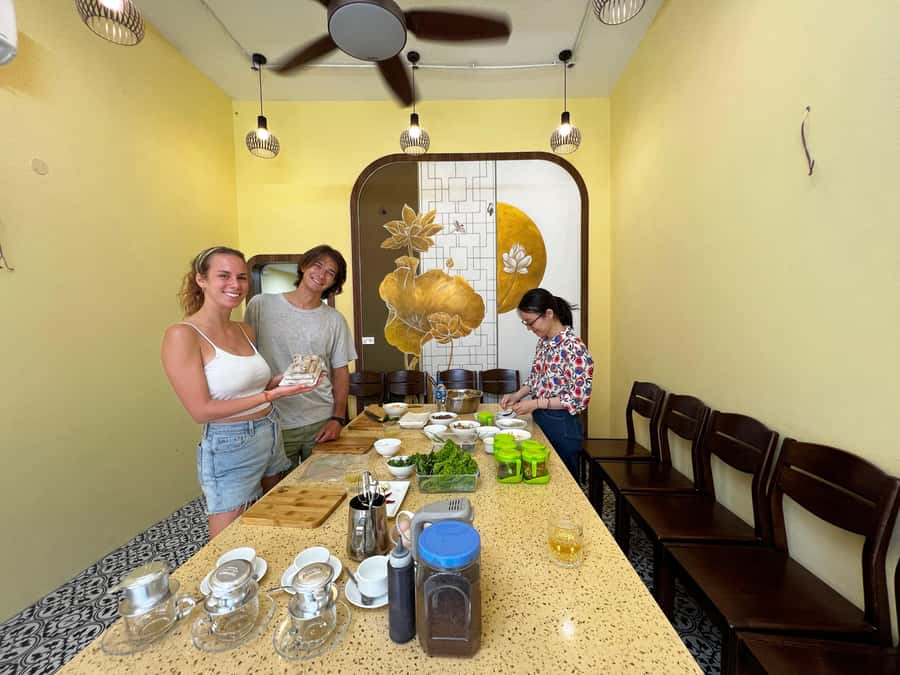
This is a small-group class, limited to 10 participants. That size helps the teaching flow. You are not just watching. You are doing, and you can get help when something goes off track.
I especially appreciate that the instruction is listed as English and Vietnamese. In practice, past classes are praised for clear English and for teachers who explain what you are doing and why. Names that come up often include Lee, Devin, Stephanie, Stefanie, and Ruby, with many comments about patient guidance and friendly interaction.
Another reason this setting works: the class structure supports different confidence levels. Even if you have never cooked Vietnamese food before, you start with one dish at a time and move forward in a logical sequence.
Dietary notes you should know upfront
The tour data does not list a specific dietary policy. However, one participant notes the menu can be adjusted for dietary requirements or allergies. If that matters for you, it is worth asking before you go so you are not surprised on the day.
Getting value from US$22: what is included (and why it adds up)
US$22 per person is the headline number, but the real value is what comes attached to it.
You get:
- Market tour plus purchases at the market for the class
- An instructor
- All food and drinks, plus drinking water
- Seasonal fruits for dessert
- Cooking recipe handed to you
- Local wine tasting
- A cooking session that covers multiple classic dishes
When you put that together, the cost feels less like a “cooking demo” and more like a guided food-and-skills experience. The market step matters because you learn ingredients in context. The cooking step matters because you practice techniques you can repeat. And the recipe matters because it gives you a pathway to recreate what you learned.
Timing and practical tips for your Hanoi half-day
A few planning tips make this experience smoother:
- Choose your session time carefully. Afternoon classes may have market limitations on some days, since local markets are usually busiest in the morning.
- Arrive at the meeting point on Crossing Vietnam Tour time. Hotel pickup and drop-off are not included.
- Wear shoes you can stand in. Market walking plus a hands-on kitchen adds up.
- Save space for the end meal. You cook first, then eat. Portions are often described as “just right,” but you are still making multiple dishes.
- Bring curiosity. The best part is not only eating pho, it is learning how Vietnamese cooks build flavor.
Should you book this Hanoi cooking class with market tour?
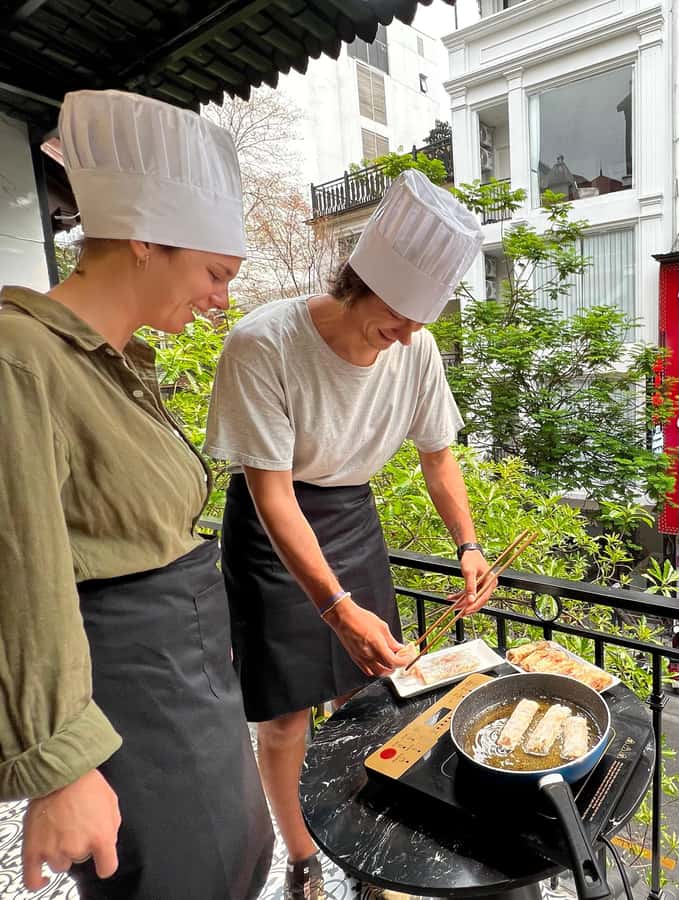
Book it if you want a hands-on way to understand Vietnamese cuisine, not just a restaurant meal. This class is especially good for you if you like practical cooking, enjoy local markets, and want to leave with a repeatable skill set, including pho rolls, fried spring rolls, papaya salad, and egg coffee.
Skip it if you strongly prefer hotel pickup, need a light snack rather than a full end-of-class meal, or you are trying to minimize time spent cooking with your hands. Also note that afternoon sessions may not always include the market.
If your goal is to connect Hanoi’s food culture to real techniques, this is a solid, value-forward choice for a 3 to 4 hour window.
FAQ
What dishes will I learn to make in this Hanoi class?
The cooking class menu includes Pho Tron (mixed pho), Pho Cuon (pho rolls), Nem Ran (fried spring rolls), Nom Du Du (papaya salad), Ca Phe Trung (egg coffee), plus dessert made from seasonal fruits.
How long does the Maya Traditional Cooking Class and Market Tour take?
The duration is listed as 3 to 4 hours.
Where do I meet for the tour?
You meet at the Travel agency Crossing Vietnam Tour.
Is hotel pickup and drop-off included?
No, hotel pickup and drop-off are not included.
How big is the group, and what languages are offered?
The group is small, limited to 10 participants. The instructor speaks English and Vietnamese.
What should I know about afternoon sessions?
For afternoon sessions, markets may not be available on some days because local markets usually happen in the morning.
What is the cancellation policy?
You can cancel up to 24 hours in advance for a full refund.
More Shopping Tours in Hanoi
- Hoi An Cooking Class(Market,BasketBoat Crabfishing&Cooking Class)
★ 5.0 · 3,386 reviews - From Hoi An: Market Tour, Basket Boat Ride and Cooking Class
★ 4.8 · 2,208 reviews - Can Tho: Floating Market & Mekong’s Legacy( About 6 Pax)
★ 5.0 · 1,438 reviews - Hoi An Cooking Class(Local market,Basket Boat,Fishing & Cooking)
★ 5.0 · 1,323 reviews
More Markets in Hanoi
- Hanoi: Old Quarter Market Tour and Cooking Class with Meal
★ 4.8 · 192 reviews - Weekend Hanoi Night Market & Street Food Tour
★ 4.5 · 47 reviews - Hanoi Cooking Class: Market Tour, Free Recipe & Beverages
★ 5.0 · 10 reviews - Cooking Class Hoi An:Local Market, Basket Boat, Fishing & Cooking
★ 5.0 · 3,660 reviews
New listings around Hanoi
- 2Days-1Night Halong Bay Luxury Genesis Regal Cruises★ 4.5 · 39 reviews
- 20-Day Vietnam Itinerary | Discovery and Beach Relaxation★ 5.0 · 18 reviews
- 3 Day 2 Night Trek★ 5.0 · 18 reviews
- La Regina 2 days tour in Halong Bay & Bai Tu Long Bay – 4 star★ 5.0 · 61 reviews
- 21-Day Vietnam Itinerary Explore North to South Highlights★ 5.0 · 16 reviews
- Full-Day Hop On Hop Off Bus Tour in Hanoi★ 4.0 · 12 reviews
- 2 Days Ha long Sapphire Cruise★ 5.0 · 45 reviews
- 2 Weeks Vietnam and Cambodia – Super Saving – Amazing Experience★ 5.0 · 20 reviews
Cooking Classes, compared.
Hanoi Cooking Class: Culture, Local Market & Meaning CSR Impact
Read our review →
5 Traditional Dishes Hanoi Cooking Class with Market Trip
Read our review →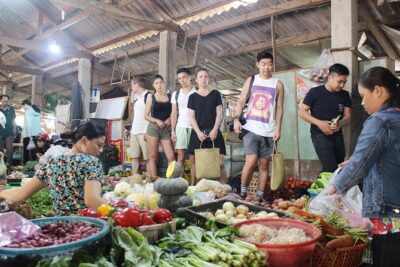
Cooking Class Hoi An:Local Market, Basket Boat, Fishing & Cooking
Read our review →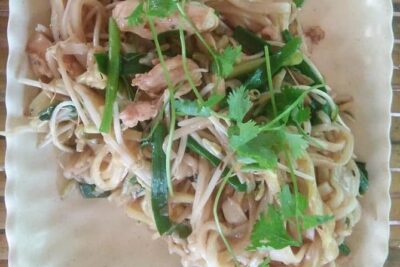
Hoi An Cooking Class(Market,BasketBoat Crabfishing&Cooking Class)
Read our review →
Mekong Delta Boat,Khotcake cooking Coconut Village,SmallGroup
Read our review →
Market Tour, Basket Boat Ride and Cooking Class
Read our review →
Cai Be Mekong Delta Tour: Cooking Class, Cycling & Craft Villages
Read our review →
Basket Boat with Lantern-Making & Cooking Class Tour
Read our review →Browse the lists this tour appears in