
Reviewed · WORKSHOPS
Hanoi Knife Making Traditional Workshop
A knife starts with a fire and a hammer. In Hanoi’s Da Sy village (Dong Bac), you follow real knife-making steps from sketching to sharpening, and English translation helps you actually understand what the master is doing. I love that you get hands-on time, and I love the chance to chat with the craft family as a working village, not a stage set.
One thing to consider: the most dangerous or technical stages are kept under tight control, so you might not do every motion start to finish. If you expect total DIY blacksmith training, your experience may feel more like guided participation than a full trade apprenticeship.
This workshop is also a practical way to spend your day, with hotel pickup included and a finished keep-your-own-knife souvenir after about 3 hours.
In This Review
- Key highlights before you go
- Knife making in Dong Bac, why this workshop feels like a real craft day
- The 3-hour flow, step-by-step (what you do and what you watch)
- 1) Pick your design and sketch the blade
- 2) Forging: cut out the blade and tang in the embers
- 3) Shaping: hammering, trimming, and getting the edge geometry right
- 4) Sharpening on the grindstone, with a tar-based wash step
- Choosing your knife and making it yours, not just theirs
- How “hands-on” really works here, and how to set expectations
- The village context you’re actually paying for
- Your guide matters: Tee, Nathan, Khoi, Minh, and the translation effect
- Price and value: why $50 can feel fair (if you use it right)
- What’s included (and what isn’t) in plain terms
- Timing, day choice, and how to plan your Hanoi morning
- Who should book this Hanoi knife-making class (and who might not love it)
- Quick verdict: should you book?
- FAQ
- Where is the knife-making workshop located?
- How long does the class last?
- What is included in the price?
- Do they pick me up from my hotel?
- What should I bring, and what should I avoid?
- Is there a surcharge on holidays?
- Is the workshop refundable if my plans change?
Key highlights before you go
- Da Sy forging village: centuries-old knife and implement tradition in Dong Bac
- From sketch to sharpening: design, forging, shaping, and grinding steps in one session
- Hands-on, with coaching: you work alongside the master and her team
- English support: guides such as Tee, Nathan, Khoi, and Minh help with translation
- Take home a useful blade: not just a demo, you finish with a real knife
- Cold day friendly: a warm, indoor workshop rhythm with a structured flow
Knife making in Dong Bac, why this workshop feels like a real craft day
Hanoi has plenty of markets and museums, but this is different. You’re heading out to a forging village in the Dong Bac area, where knife making has been part of local work for hundreds of years.
What I like best is that the class is built around process, not performance. You’ll see how the blade starts as metal stock, how it gets shaped through repeated hammering, and how it ends up sharpened for real use. And because the guides often translate as you go, you can ask questions instead of just nodding.
Also, this isn’t just about making a novelty. The village originally supported weapons during the Vietnam wars, and today the same forging skills are used for agricultural tools. That gives the whole day an honest sense of continuity, even if your takeaway is a kitchen or general-purpose knife.
More Hanoi plans to weigh
- Hanoi Jeep Tour: Food, Culture and Fun by Vietnam Army Jeep
★ 5.0 · 15,222 reviews - Full-Day Ninh Binh Highlights Tour from Hanoi
★ 5.0 · 7,761 reviews - Hanoi: Ha Long Bay Day Cruise – Swimming, Meal, Kayaking
★ 4.7 · 7,415 reviews
The 3-hour flow, step-by-step (what you do and what you watch)
The schedule is tight and hands-on, with each stage leading clearly to the next. Plan on about 3 hours total, and check availability for the exact start time.
1) Pick your design and sketch the blade
You begin by choosing the shape of the knife you’ll make. Depending on the session, you might pick from a selection, or use guidance to shape the design you want.
Then you sketch the blade shape on a sheet of metal. This matters more than it sounds. Your sketch becomes the blueprint for the forging cuts, so paying attention here saves frustration later when the tang and blade match your intended profile.
2) Forging: cut out the blade and tang in the embers
Next comes forging. You use tools like a hammer, cutter, and anvil, and you work the metal after it’s brought into embers.
This is where you feel the village craft most directly. The master team demonstrates the sequence, and you get your turn with supervision. You’re not just painting a souvenir, you’re forming metal into a blade blank.
A good sign you’re in the right place is that people keep emphasizing the steps, not speed. The goal is shape and control, not a dramatic moment for photos.
Same region, different pace:
- Hanoi: Water Puppet Show Tickets
★ 4.6 · 7,029 reviews - Hanoi Motorbike Tour: Food, Culture and Fun by Vintage Motorbike
★ 5.0 · 6,699 reviews - Hanoi: Guided Food Tour with Train Street Visit
★ 4.9 · 6,239 reviews - Hanoi Cooking Class: Culture, Local Market & Meaning CSR Impact
★ 5.0 · 5,147 reviews
3) Shaping: hammering, trimming, and getting the edge geometry right
After forging, you shape the blade through alternating hammer blows with guidance from the maker. This part is about getting thickness and form consistent.
When imperfections show up, trimming may be done with a hydraulic cutting machine. That’s also one of those moments where you see the trade-off between learning and safety. You’ll still understand what the trimming fixes, but some of the heavy cutting is kept in the staff’s hands.
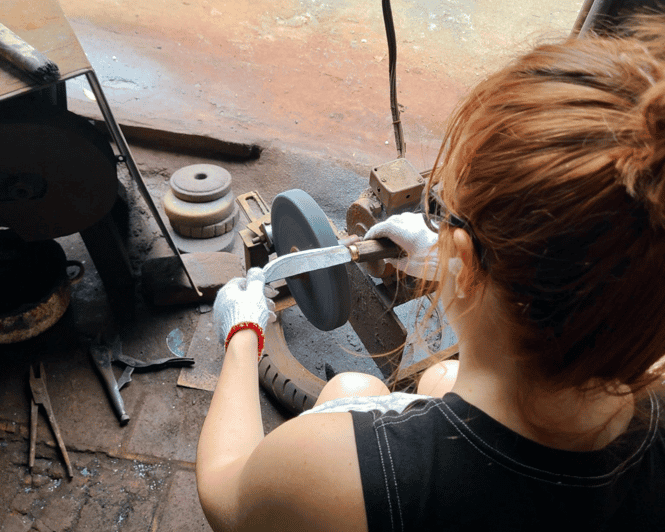
4) Sharpening on the grindstone, with a tar-based wash step
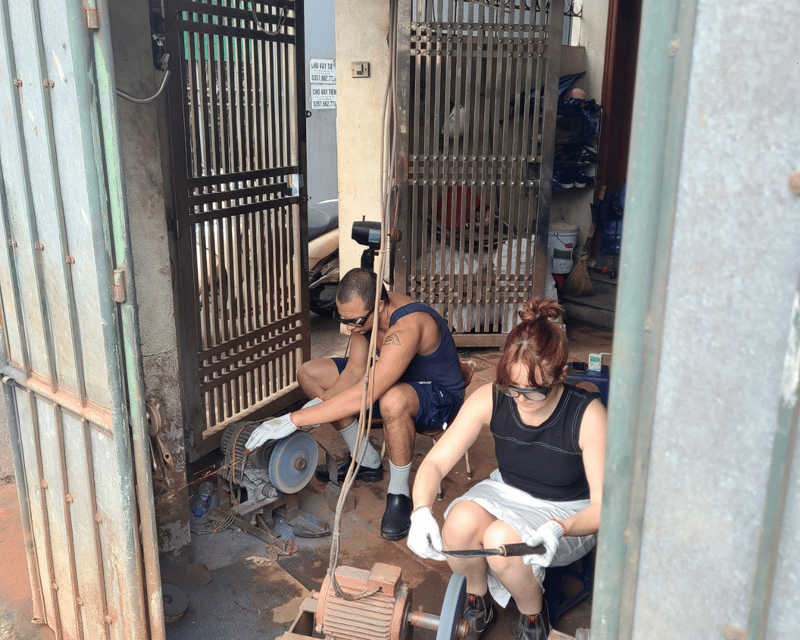
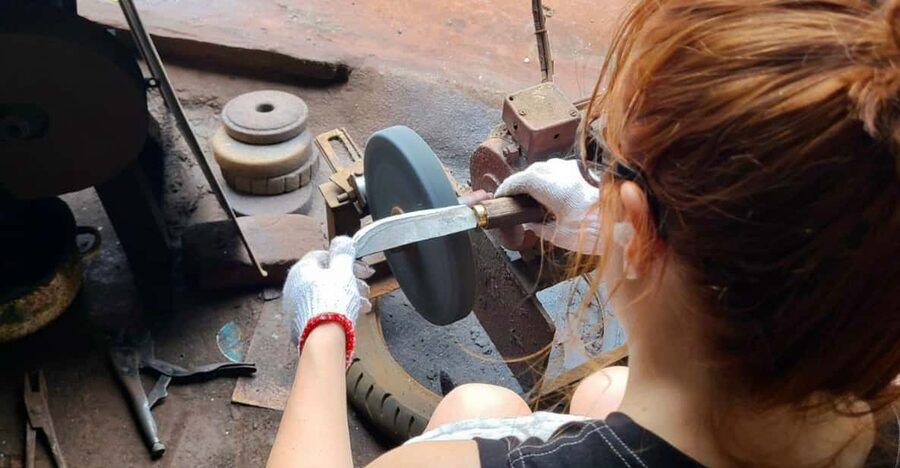
The blade then goes to sharpening. You grind and refine the edge through phases on a grindstone.
One step that gets special attention is a soaking wash using a tar-based chemical, described as a secret family recipe. Even if you don’t work that specific step yourself, you’ll see where it fits in the sharpening logic.
By the end, you’re leaving with a blade that looks sharp and feels crisp, not just “for display.”
Choosing your knife and making it yours, not just theirs
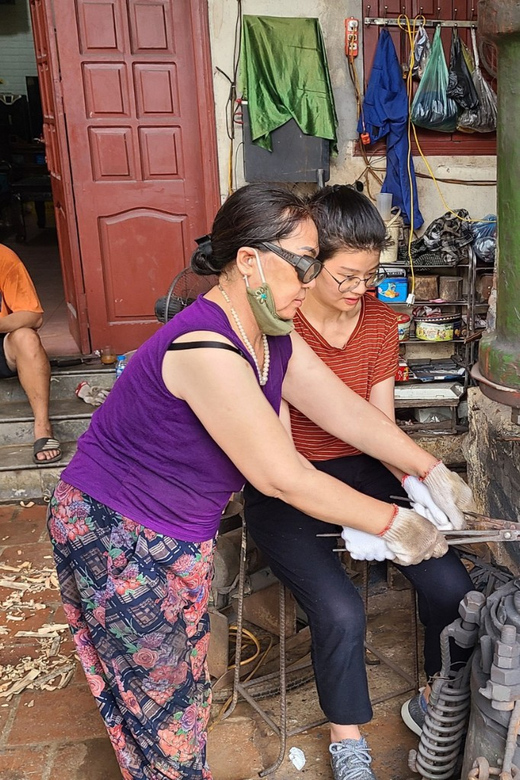
One of the strongest reasons to book is personalization. You usually get to select the knife style before you start forging, and you can often tailor details during the process.
Many people also get hands-on time with the handle. Expect some work carving and shaping the handle section, then fitting it so your knife feels comfortable in your hand. That’s the part that turns a made-by-hand blade into something you’ll actually remember every time you use it.
If you want something practical, choose a style that fits your everyday needs, like a general kitchen shape. If you want something symbolic, go for a design you can recognize from Japanese or Vietnamese styles you’ve seen, since guides can help you pick a form that matches your idea.
How “hands-on” really works here, and how to set expectations
This workshop is hands-on, but it has guardrails. The staff will control the steps that are too dangerous or too technical for beginners to freestyle.
In practice, you’ll likely do most of the visible, core work like forging time, hammering, and shaping under guidance. But you might also hear options explained, like doing everything yourself with close supervision versus having the master take the most sensitive steps.
If you’re the kind of person who wants total control, you can often take a more active role, but you should still expect staff to step in when equipment gets risky. In some processes, they’re clearly trying to prevent mistakes that could cause injury.
The best approach is to treat it like guided making, not a DIY challenge. Ask questions, watch the instructor’s technique, and focus on quality over speed.
The village context you’re actually paying for
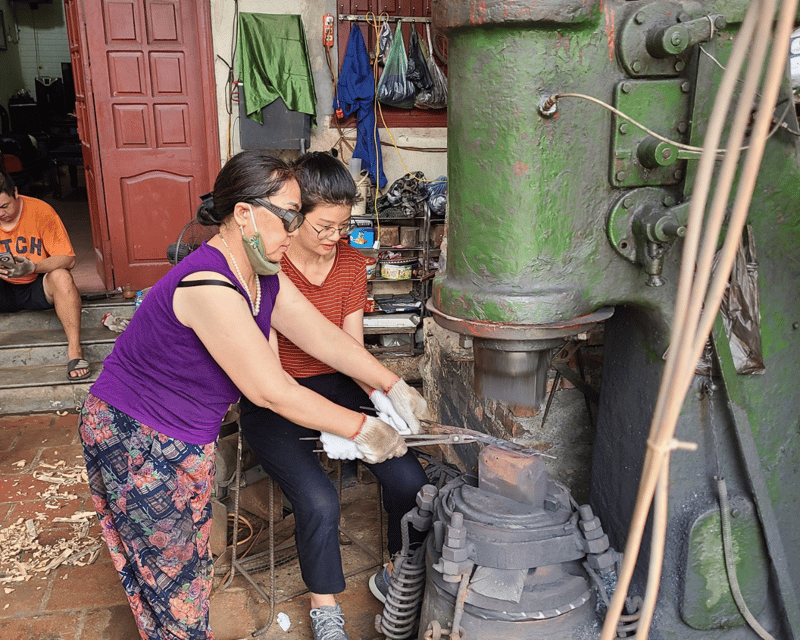
A lot of workshops claim local authenticity. This one delivers something more grounded because of the place itself.
Da Sy village is known for forging. The historical link to weapons during the Vietnam wars is part of how the craft is told, and the shift to agricultural implements today shows the skills didn’t disappear. They got repurposed for work that still matters.
That context makes a difference in how you interpret the tools and steps. When you hold the hammer and see how the metal changes, it makes more sense why the makers care about process and consistency. They aren’t chasing novelty, they’re doing the same kind of problem-solving they’ve done for generations, just for your knife today.
And because you visit an area on the outskirts of Hanoi, you’re not just bouncing between shops. You see the daily rhythm of a craft family, including how hospitality works in a working space.
Your guide matters: Tee, Nathan, Khoi, Minh, and the translation effect
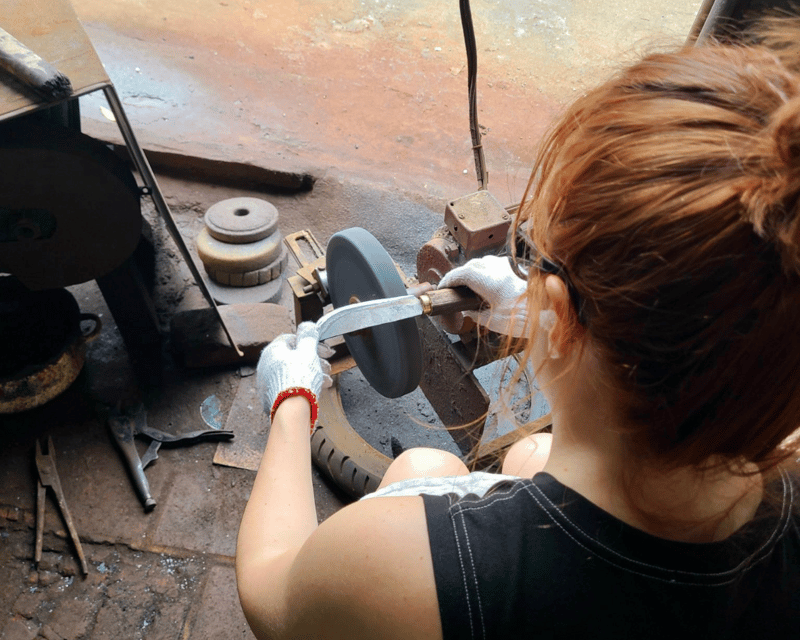
English support is a big deal in this kind of class, because metalwork is full of small cues. The guides make those cues understandable, so you can match your hand movements to what the master expects.
People commonly mention guides such as Tee, Nathan, Khoi, and Minh, and they’re praised for clear English and friendly hosting. You’ll also see guides take extra time, like explaining safety and tool handling, or helping with photos so you can remember the steps accurately.
One practical tip: ask your guide to explain each step right before you start it, not after you finish. The guides tend to be fluent in both craft terms and plain-language instruction, so you’ll get more value if you align your understanding before you swing the hammer.
Price and value: why $50 can feel fair (if you use it right)
At $50 per person, this workshop can be good value because it bundles more than a short demonstration. You get English instruction, a master and equipment, and you keep the knife you make. You’re also getting hotel pickup included, plus water.
For many people, the “included products” part is the real value. You’re paying for transportation, guided making, and a tangible item that you’ll use at home, which beats paying for another generic souvenir.
Also, the workshop is about 3 hours. That length matters because you’re not rushed through the process. You get enough time to feel involved in the workflow, and you see each stage clearly.
Two cost notes to watch:
- There is a $10 surcharge on New Year, Tet holidays, Liberation Day or Reunification Day (30/4), International Workers’ Day (01/05), and National Day (02/09).
- Starting times depend on availability, so build in a flexible morning if you can.
What’s included (and what isn’t) in plain terms
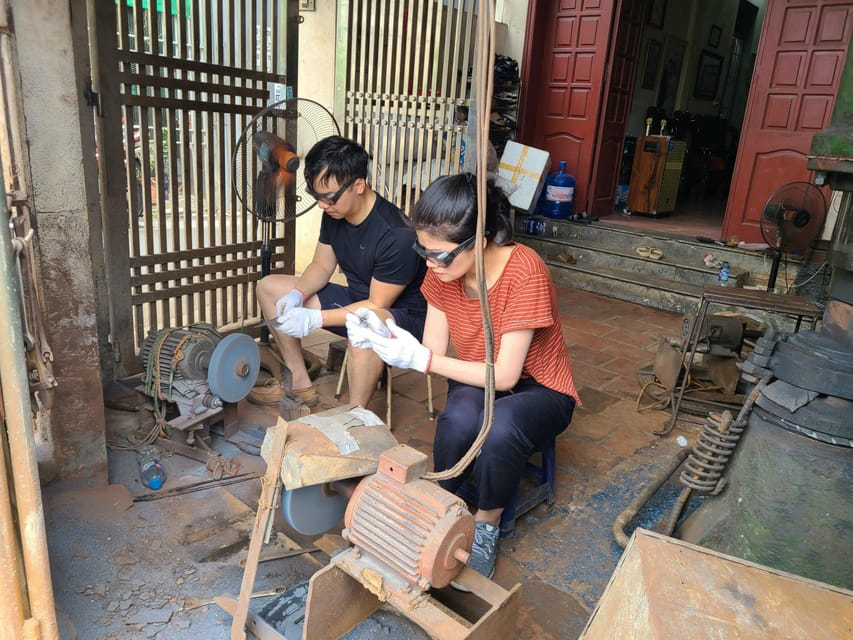
Included:
- English speaking instruction
- 1 bottle of water (500ml)
- Master and equipment
- Products (you take home what you make)
- Live tour guide
- Pickup from your hotel, with a request to wait about 5 minutes in the lobby
- Small group availability
Not included:
- Extra drinks or snacks beyond the 500ml water mentioned
- Any alcohol, since alcohol is not allowed during the workshop
For your comfort:
- Wear comfortable shoes. You’ll be standing and moving around the work area.
- Skip sandals. You’ll want stable footing.
Timing, day choice, and how to plan your Hanoi morning
Most people treat this as a morning activity. The workshop takes about 3 hours, and it’s structured enough that you can pair it with a light lunch afterward and still have time for other Hanoi sights.
If the weather is cool, this kind of class can be a pleasant change of pace from walking. One of the themes from the experience is that the workshop is warm, focused, and organized, which helps when you want a break from street noise.
I’d plan around realistic timing:
- Be ready for hotel pickup and that brief lobby wait.
- Wear shoes that won’t slip if the ground is uneven.
- Bring patience for the shaping and sharpening stages. Those steps take time because they’re precision work.
Who should book this Hanoi knife-making class (and who might not love it)
You’ll probably enjoy it if:
- You like hands-on crafts and want a real skill lesson, even if you’re not a metalworking expert
- You want a practical souvenir you can actually use
- You enjoy meeting people in a working craft village, not just sightseeing
You might hesitate if:
- You want to control every part of the process yourself, end to end
- You’re sensitive to the idea that some technical or dangerous steps are done by the master team
- You’re hoping for something like a long, multi-day apprenticeship
One more fit note: it’s not suitable for people over 95 years.
Quick verdict: should you book?
Book this if you want a hands-on Hanoi activity with real output, a take-home knife, and an experience that explains the craft while still letting you do the work. The English guide support and the chance to chat with the craft family are a big part of the payoff.
Skip it only if you’re mainly looking for a relaxed cultural tour with minimal making. This workshop is structured around forging, shaping, and sharpening, so it rewards curiosity and participation more than passive sightseeing.
If you’re on the fence, I’d choose one rule: bring comfortable shoes, listen carefully to safety, and treat the master’s methods as the playbook. You’ll leave with something that feels genuinely made.
FAQ
Where is the knife-making workshop located?
It takes place in the historic Da Sy village in the Dong Bac area of Hanoi, Vietnam.
How long does the class last?
The experience lasts 3 hours. You should check availability to see the starting times.
What is included in the price?
The price includes English speaking instruction, a master, equipment, and the products you make, plus 1 bottle of water (500ml each). Pickup and a live English tour guide are also included.
Do they pick me up from my hotel?
Yes. Pickup is included, and you should wait about 5 minutes in your hotel lobby before the pickup time.
What should I bring, and what should I avoid?
Bring comfortable shoes. Alcohol and drugs are not allowed during the activity.
Is there a surcharge on holidays?
Yes, there is a $10 surcharge on New Year and Tet holidays, Liberation Day or Reunification Day (30/4), International Workers’ Day (01/05), and National Day (02/09).
Is the workshop refundable if my plans change?
Free cancellation is available up to 24 hours in advance for a full refund.
If you tell me what day of the week and time window you’re aiming for in Hanoi, I can help you decide if a 3-hour knife class will fit smoothly with your other plans.
New listings around Hanoi
- 2Days-1Night Halong Bay Luxury Genesis Regal Cruises★ 4.5 · 39 reviews
- 20-Day Vietnam Itinerary | Discovery and Beach Relaxation★ 5.0 · 18 reviews
- 3 Day 2 Night Trek★ 5.0 · 18 reviews
- La Regina 2 days tour in Halong Bay & Bai Tu Long Bay – 4 star★ 5.0 · 61 reviews
- 21-Day Vietnam Itinerary Explore North to South Highlights★ 5.0 · 16 reviews
- Full-Day Hop On Hop Off Bus Tour in Hanoi★ 4.0 · 12 reviews
- 2 Days Ha long Sapphire Cruise★ 5.0 · 45 reviews
- 2 Weeks Vietnam and Cambodia – Super Saving – Amazing Experience★ 5.0 · 20 reviews
Workshops, compared.

Hanoi Cooking Class: Culture, Local Market & Meaning CSR Impact
Read our review →
5 Traditional Dishes Hanoi Cooking Class with Market Trip
Read our review →
Vietnamese Coffee Culture and Coffee Making Class
Read our review →

Cooking Class Hoi An:Local Market, Basket Boat, Fishing & Cooking
Read our review →
Hoi An Cooking Class(Market,BasketBoat Crabfishing&Cooking Class)
Read our review →
Market Tour, Basket Boat Ride and Cooking Class
Read our review →
Hoi An Full Lantern Making Class- A special Foldable lantern
Read our review →Browse the lists this tour appears in