
Reviewed · COFFEE EXPERIENCES
Experience specialty coffee with sustainable coffee farmers
Coffee tasting in Da Lat gets real fast.
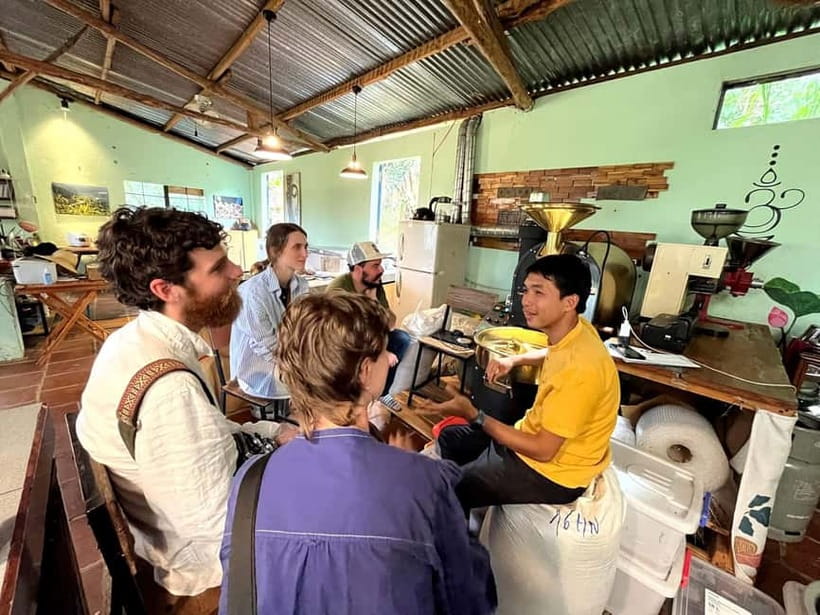
At HuyEco Coffee & Culture, I like that you taste five coffees from the farm and see how different processing and roasting changes flavor. I also love the hands-on part, roasting beans yourself and making a traditional Phin cup. One thing to consider: this experience can run anywhere from 90 minutes to 5 hours, so you will want to leave some slack in your day.
This is not a coffee lecture. You taste, smell, roast, brew, and then connect it to how the beans are grown by the farmer behind the shop. You will sit in a small group (max 10) in central Da Lat, and you’ll come away with clearer expectations for what coffee should taste like when it is not mixed with anything extra.
In This Review
- Key points before you go
- A farmer-led coffee experience in central Da Lat
- Where to meet, and how to plan your timing
- What happens first: the coffee tasting flight (and why it matters)
- Roasting your own beans, from green to brown
- Comparing Light, Medium, and Dark roast like a pro
- Brewing techniques and making your own Phin cup
- Sustainable farming talk, translated into what you taste
- The vibe at HuyEco Coffee & Culture
- Price and value: what $14 really buys you
- Who should book this coffee experience
- Should you book HuyEco Coffee & Culture?
- FAQ
- What is the meeting point for the experience?
- What does the price include?
- How long does the experience take?
- Is this a small group?
- What languages are available during the tour?
- What should I bring?
- Can I cancel or pay later?
Key points before you go
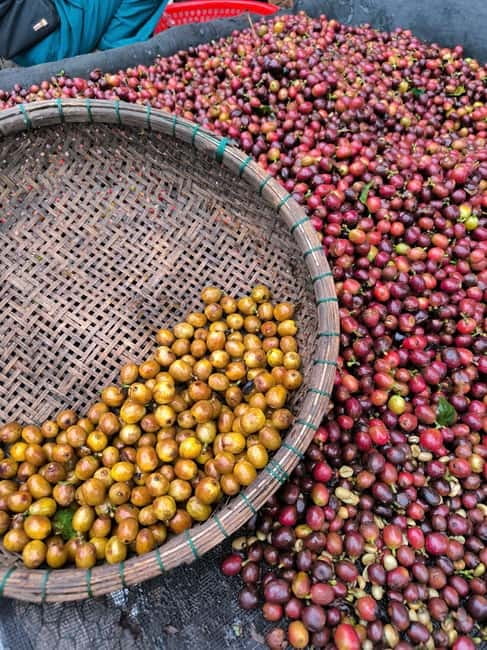
- Five farm coffees, not a generic menu: you sample a lineup from the farm, including Arabica and Robusta.
- Roasting with your own hands: you start with green beans and roast them to the brown beans you recognize.
- Light, medium, and dark comparisons: you taste how roast level shifts sourness, sweetness, and fruit notes.
- Traditional Phin coffee making: you brew your own cup while watching the city.
- Sustainability talk that connects to flavor: the farmer explains how sustainable growing practices aim to protect the coffee’s quality.
- A chill, friendly hangout: the atmosphere is relaxed, and yes, there are kittens around for added distraction.
A farmer-led coffee experience in central Da Lat
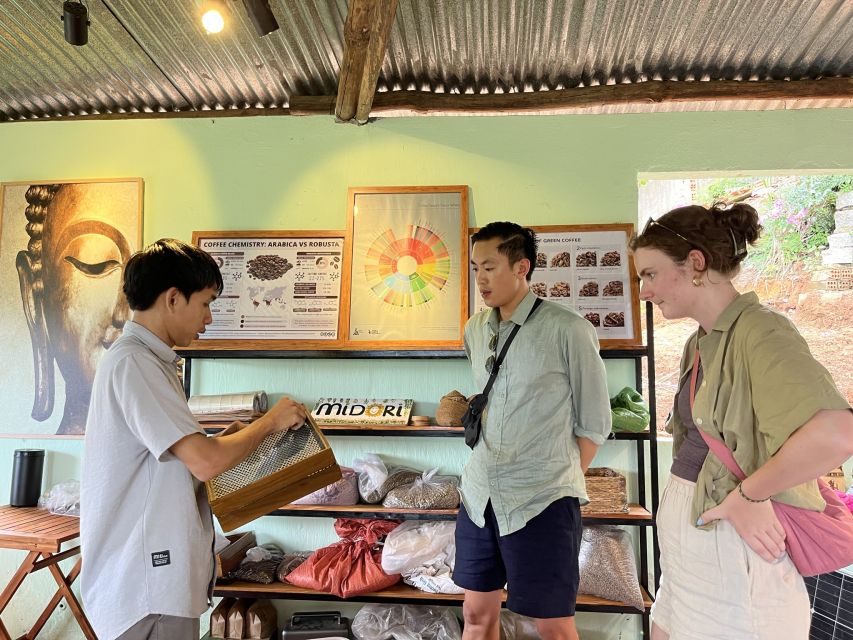
Da Lat has plenty of coffee shops. This one feels different because the story sits with the person who grows the coffee. You are meeting HuyEco Coffee & Culture in the middle of Da Lat city, so the experience starts without the usual “first, take a long ride, then wait” feeling.
Price is $14 per person, which is not cheap for a quick drink. But it is also not “just a tasting.” You get five coffee drinks plus the tour guide ticket, and you do hands-on work: roasting, brewing comparisons, and your own Phin. If you like coffee enough to care about differences between beans, processes, and roast styles, that value adds up quickly.
If you are just looking for caffeine with no learning, you might feel it is more than you need. If you want to understand why some coffee tastes sour, sweet, or fruity (without added flavors), this is the kind of experience that rewires your taste expectations.
More Dalat plans to weigh
- Dalat: Three Waterfalls Small Group Tour – Alpine Coaster
★ 4.9 · 1,256 reviews - Dalat: 3 Waterfalls Day Tour — Datanla, Pongour & Elephant
★ 4.9 · 931 reviews - Dalat: Go Kart – Mongo Land – Countryside Small Group
★ 5.0 · 600 reviews
Where to meet, and how to plan your timing
Meet at HuyEco Coffee & Culture in central Da Lat. The simplest way is to search it on Google Maps by that exact name, because the shop is meant to be easy to reach by normal city transport.
You can get there by walking, motorbike, taxi, or a booking app. Transfers are not included, so I recommend planning your own ride if you are staying outside the center.
Duration is listed as 90 minutes to 5 hours depending on your time slot. Some sessions can feel closer to the shorter end, especially when the group is moving smoothly through tasting, roasting, and brewing. Bring one flexible block of time, not a tight schedule with no margin.
What happens first: the coffee tasting flight (and why it matters)
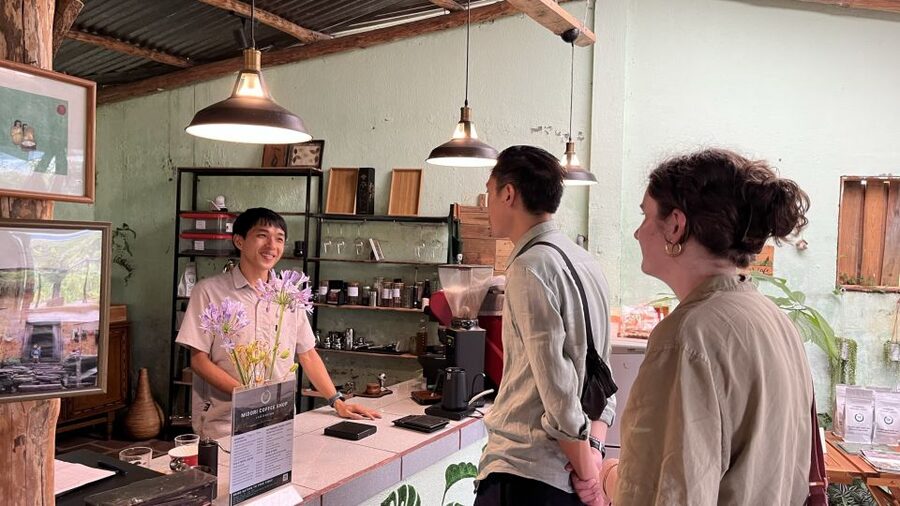
The tour begins at the cafe with a tasting lineup from the farm. You are there to experience what the farmer says is the coffee’s original character, the flavors that show up when the coffee is not blended with extras.
You will try five types of coffee, including Arabica and Robusta. The key is that these are not five identical drinks with different labels. They are tied to different processing and roasting methods, so the differences you taste are connected to real production choices.
This is where your palate starts getting organized. After a few cups, you stop thinking in vague terms like “good” or “strong.” You start noticing patterns. You start picking up sourness versus sweetness, and fruit-like notes versus heavier, darker roast flavors. That matters because Vietnam coffee culture often gets simplified into just one strong style. This experience pushes beyond that.
A small group (up to 10) helps here. You are more likely to ask questions without feeling like you are talking into a crowd.
Roasting your own beans, from green to brown
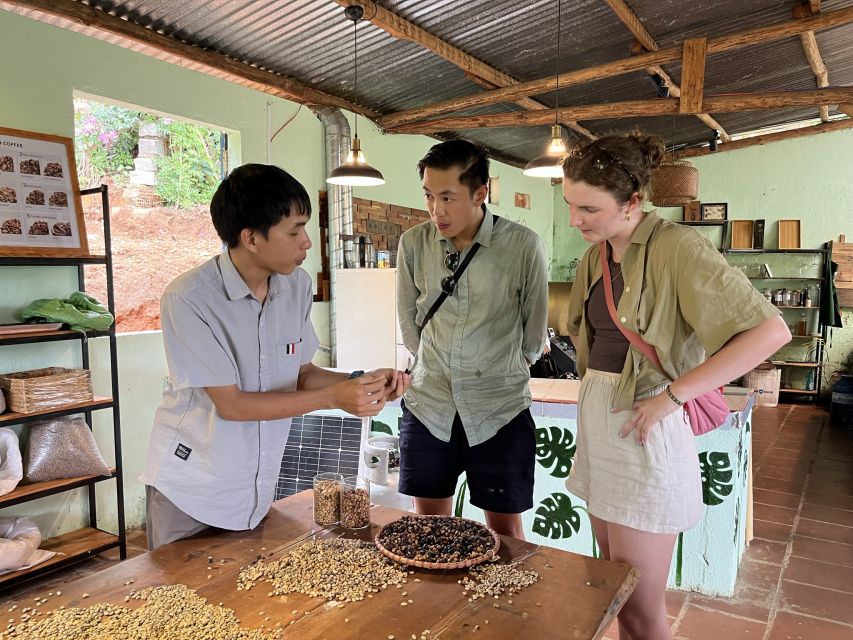
Then comes the hands-on part that people talk about for a reason. You roast the coffee beans yourself. You begin with green beans, then watch them change as the roast happens, turning into the brown beans you recognize as coffee.
This step changes how you taste everything afterward. It is one thing to be handed a cup and told what it should taste like. It is another thing to roast your own beans, because you feel the timing, the heat, and the transformation. Even if you do not become a roaster overnight, you get a direct connection between roast decisions and flavor outcomes.
Roasting also makes the comparison tastings more meaningful. When you later sample different roast levels, you have a memory in your body of what that roast stage feels like.
One practical note: plan to stay present. If you are distracted by phone photos the whole time, you will miss the best part, the cause-and-effect between roast level and what ends up in your cup.
Same region, different pace:
- Dalat: Countryside Tour with Silk Village & Elephant Falls
★ 5.0 · 300 reviews - Dalat: Extreme Canyoning Adventure
★ 4.9 · 223 reviews - Dalat: Cloud Chasing packaged hike – Sunrise Pickup Included
★ 5.0 · 182 reviews - Dalat: Canyoning Extreme Adventure Vietnam
★ 4.9 · 178 reviews
Comparing Light, Medium, and Dark roast like a pro
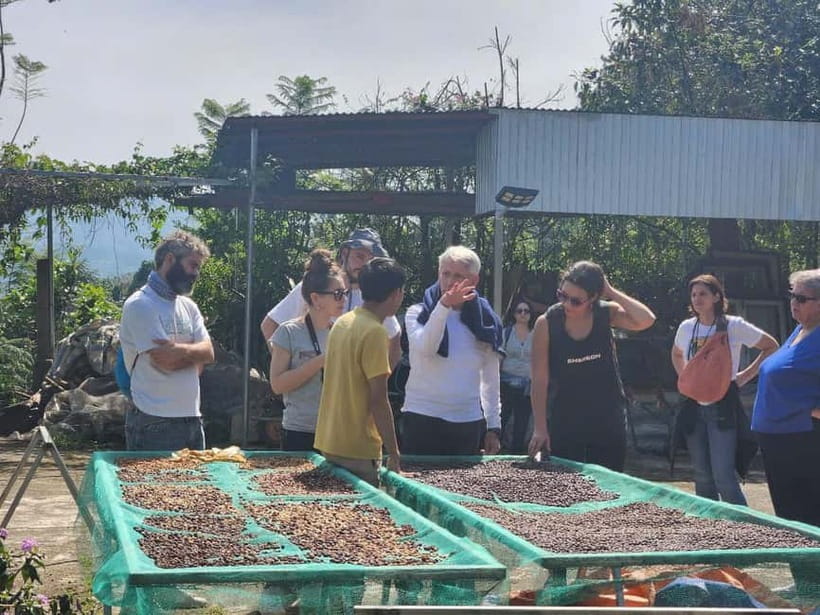
After roasting, you shift into tasting with brewing techniques and roast comparisons, specifically Light, Medium, and Dark Roast.
The point is not to memorize a chart. The point is to learn what each roast style tends to highlight. Light roast often shows more brightness, including sour notes and fruit-like impressions. Medium roast usually feels like a balanced middle ground. Dark roast tends to push the profile toward heavier flavors and can reduce some of the sharper brightness.
You are doing this in a guided way, so you get the “why” behind what you taste. That helps you stop guessing when you buy coffee later in Vietnam, or back home.
From what I can tell from how the experience is run, the comparisons are designed to make you notice differences even if you normally buy coffee based only on strength. You start learning to identify flavor families, not just caffeine.
Brewing techniques and making your own Phin cup
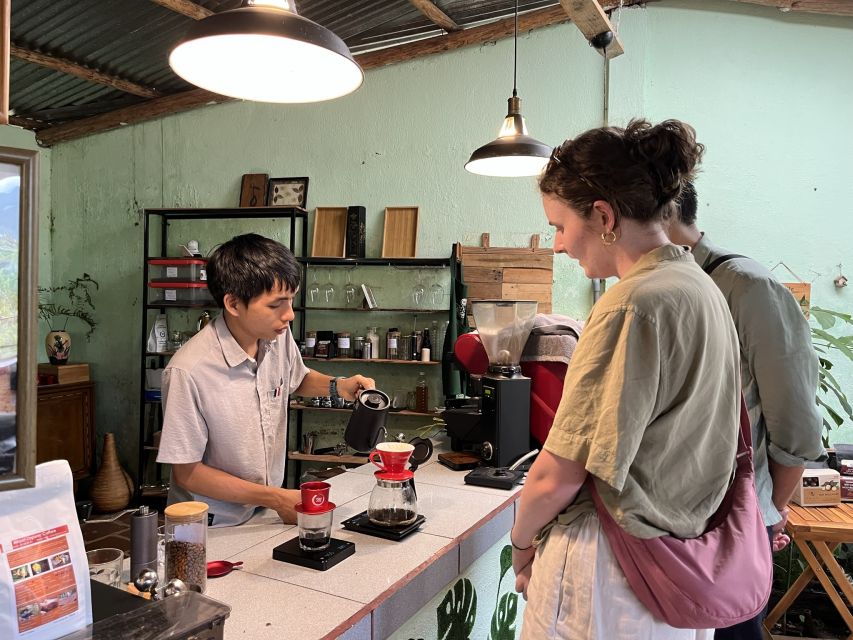
Next, you brew and build your own traditional Phin coffee. A Phin is Vietnam’s classic metal drip filter, and making it yourself is a fast way to understand why Vietnamese coffee is often described as bold and aromatic.
You will make your cup while watching the city. That detail sounds small, but it helps. The experience stops being “class time” and becomes a coffee moment.
If you have only had Phin coffee pre-made, this is where you learn what you can control, and what you can learn from the process. Your cup becomes a feedback loop. If it tastes too sharp or too weak, you remember how the brewing steps felt.
This is also a great time to ask your questions. People tend to ask better questions once they are holding something warm and brewing is already in progress.
Sustainable farming talk, translated into what you taste
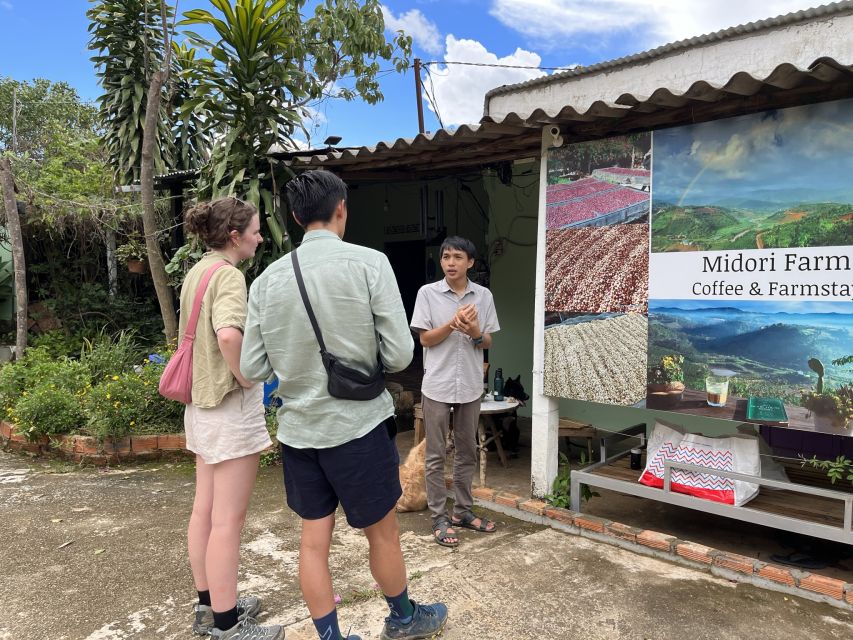
A big promise here is sustainable coffee farming. You should expect the farmer to share how sustainable practices are part of the coffee’s end flavor, not just part of a mission statement.
The practical connection is this: sustainable growing can influence plant health, consistency, and bean quality. The coffee you drink is the end result, so when you taste differences across coffees and processes, you also start understanding why “how it is grown” is not separate from “how it tastes.”
You will also hear how the farm works as a coffee ecosystem. Some sessions may include a wider farm view experience, and in past experiences people have talked about seeing additional garden areas like vegetables on the property. Even if you do not get a full walk far from the cafe, you still get the farming perspective, because the tour is led by Huy himself.
The vibe at HuyEco Coffee & Culture
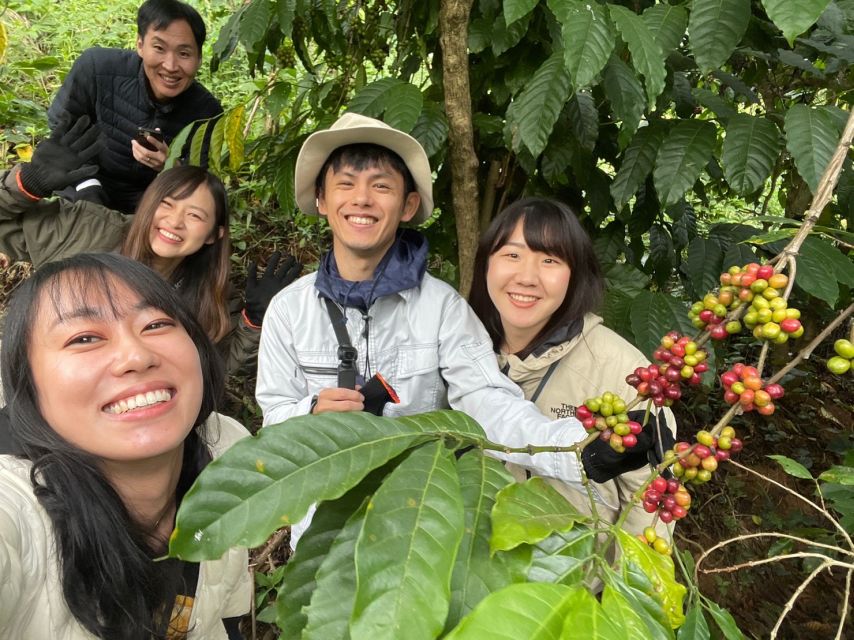
This place runs like a calm, friendly coffee workshop, not a rushed tasting line. The atmosphere is repeatedly described as pleasant, and the host energy is part of the value.
Huy is the main guide, and people often mention that he is passionate, funny, and willing to answer questions at a relaxed pace. That matters for your experience because good Q and A turns a tasting into real learning.
There are also kittens around, and they can steal your attention in a harmless way. If you love animals, consider that a bonus. If you do not, it is still easy to focus, because the tour is structured and you always have the next step in progress.
If you visit in cooler weather, bring a light layer. One person mentioned needing a jacket, and Da Lat can feel chilly in the wrong moment.
Price and value: what $14 really buys you
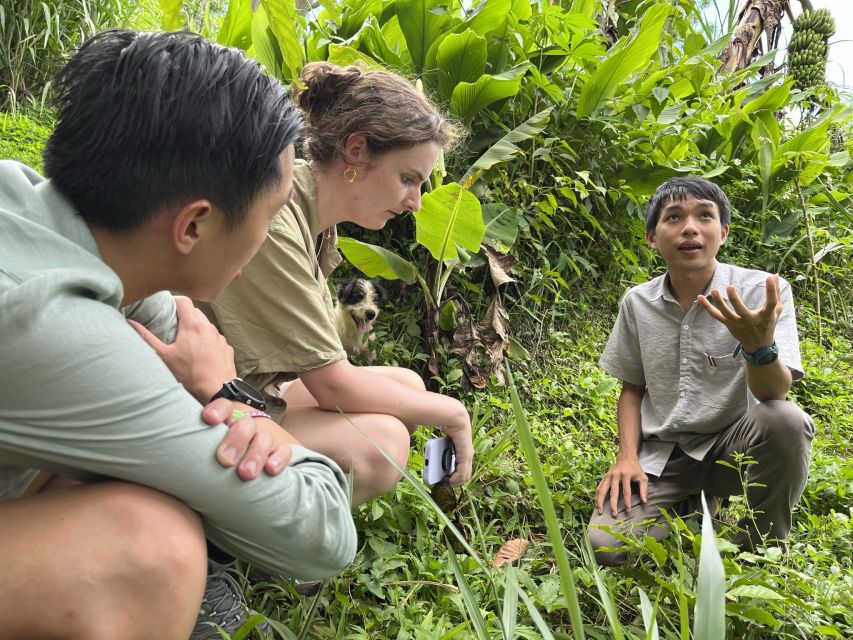
$14 per person includes five coffee drinks at the cafe and the tour guide ticket. That is the base value.
Then you add the real pricing advantage: you are not paying extra for each activity. Your “included” package covers roasting beans, brewing comparisons across Light, Medium, and Dark, and making your own Phin cup.
If you tried to recreate this at home, even using a modest home roasting setup, you would pay for beans, roasting tools, and brewing gear over time. Here, you get it in one sitting with a farmer to explain the connections between decisions and flavor.
Group size also affects value. With a small group (max 10), the attention does not feel like a bottleneck.
So, is it worth it? For coffee lovers, it is one of the stronger options in Da Lat because it teaches you how to taste, not just what to drink.
Who should book this coffee experience
I think you will enjoy this most if:
- You like coffee and want to taste the difference between Arabica and Robusta in a serious way.
- You care about how processing and roasting change sourness, sweetness, and fruity notes.
- You want a hands-on activity, not just sipping.
- You like meeting the producer behind the product. Here that person is Huy.
It may not be the best fit if:
- You are only in town for one quick coffee stop and need something strictly short.
- You hate guided tasting formats and prefer independent wandering.
- You are very sensitive to time windows, since the duration can vary from 90 minutes to 5 hours.
Should you book HuyEco Coffee & Culture?
If you want a coffee experience that stays practical and grounded, I would book it. The blend of farm-led sustainability talk, five coffee tastings, and hands-on roasting and Phin brewing is exactly the sort of activity that makes your next café order smarter.
My final advice is simple: go hungry for learning, not just caffeine. Ask questions while you taste. Pay attention during roasting. And when you make your Phin, treat it like a small experiment, then note what changes you can taste in the next cup.
If you can fit a flexible chunk of time, you will probably leave with clearer tastes and a better sense of what coffee really is when it is allowed to be itself.
FAQ
What is the meeting point for the experience?
Meet at HuyEco Coffee & Culture in the center of Da Lat city. The instructions say to search by that exact name in Google Maps.
What does the price include?
The experience includes five coffee drinks at the cafe and the tour guide ticket.
How long does the experience take?
Duration is listed as 90 minutes to 5 hours. You are meant to check availability to see starting times.
Is this a small group?
Yes. The group is limited to 10 participants.
What languages are available during the tour?
The live tour guide is available in English and Vietnamese.
What should I bring?
The additional info says to bring your passport.
Can I cancel or pay later?
Free cancellation is available up to 24 hours in advance for a full refund. It also offers reserve now and pay later, so you can book without paying today.
New listings around Dalat
- Secret Tour Dalat★ 5.0 · 10 reviews
- Scented candle workshop at Twin Beans Farm – Da Lat suburb★ 5.0 · 10 reviews
- From Nha Trang: Best Seller Top Site Luxury Da Lat City Trip★ 4.5 · 32 reviews
- Dalat: Best of the Countryside Tour in a Private Car★ 5.0 · 35 reviews
- 7-hour Datanla waterfall, Clay Tunnel and Holy See temple★ 4.7 · 47 reviews
- Datanla, Pongour, Elephant: 3 stunning and majestic falls★ 4.8 · 110 reviews
- Dalat: Sunrise Trekking and Cloud Hunting experience★ 4.9 · 43 reviews
- Dalat : City Tour With Local Guide★ 5.0 · 15 reviews
Coffee Experiences, compared.

Vietnamese Coffee Culture and Coffee Making Class
Read our review →
Hanoi Coffee Experience: 6 Brews, 9 Recipes & 3 Liquor Tastings
Read our review →
Hanoi Coffee Workshop: Taste Salt, Coconut and Egg Coffee
Read our review →
Salt Coffee Workshop Awake Your Senses With 6 Brews
Read our review →
Early Morning My Son Sanctuary Trip w. Champa Food & Coffee
Read our review →
Da Nang Cooking Class with Coffee Tasting and Market Visit
Read our review →Browse the lists this tour appears in